- The 16th Emir of Kano, Muhammadu Sanusi II, has challenged the Federal Government’s rising debt profile, questioning why borrowing remains high despite the termination of the petrol subsidy.
- The former Central Bank Governor argued that while reforms like subsidy removal and exchange rate liberalization were necessary, poor timing and loose monetary conditions have led the Naira into a “bottomless pit.”
- Sanusi hailed the shift toward domestic petroleum production and exports to Europe, calling it a vital move away from the systemic failure of supporting foreign refineries.
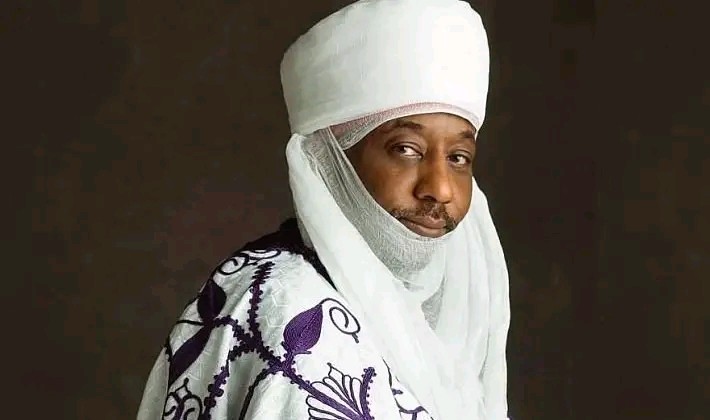
The 16th Emir of Kano, Muhammadu Sanusi II, has raised critical questions regarding Nigeria’s fiscal management, specifically targeting the contradiction between major policy reforms and a ballooning debt stock.
Eko Hot Blog reports that speaking in a recent interview on Friday, April 24, 2026, the renowned economist and monarch expressed concern that the potential benefits of the petrol subsidy removal are being threatened by a lack of fiscal consolidation.
EDITOR’S PICKS
- JAMB Delists 23 CBT Centres, Warns 89 After Mock UTME Review
- NASA Astronauts Return to Earth After First Human Trip to the Moon in 50 Years
- INEC Shifts Nationwide Voter Revalidation Until After 2027 General Election
“If you’re not paying the subsidy and you’ve got the money, why are we still borrowing and borrowing? What are we borrowing for?” Sanusi asked.
While supporting the fundamental shift away from an “unsustainable” subsidy regime and artificial exchange rates, Sanusi noted that the sequence of these reforms was flawed.
He explained that liberalizing the currency in an environment of excessive money supply caused the rapid depreciation of the Naira.
According to the monarch, the government must demonstrate tighter fiscal discipline to match its aggressive monetary policies, especially as recent reports indicate the 2026 borrowing plan has been upwardly revised by ₦11.31 trillion, bringing the year’s total projected borrowing to ₦29.20 trillion.
On a positive note, Sanusi commended the country’s transition from a heavy importer of petroleum to an exporter.
He described the era of supporting foreign refineries while domestic ones sat idle as a major systemic failure that is finally being corrected.
However, he maintained that for the economy to truly stabilize, the government must account for the savings accrued from the subsidy removal rather than continuing to pile on foreign and domestic debt.
The monarch’s intervention comes at a sensitive time as President Bola Tinubu recently sought Senate approval for a fresh $516 million loan intended for the Sokoto-Badagry Superhighway.
Amidst these fiscal debates, other national developments continue, including the Federal Government’s approval of a ₦10 billion housing loan scheme for civil servants and the resignation of key cabinet members Wale Edun and Ahmed Dangiwa prior to a recent reshuffle.
The Emir’s stance adds significant weight to the ongoing discourse regarding Nigeria’s path to economic recovery and long-term sustainability.