- Court Stops Police, FRSC From Fining Motorists Over Insurance
- Agencies can enforce insurance compliance but not penalise motorists
- Ruling expected to curb arbitrary fines on Nigerian drivers
A Federal High Court in Abuja has ruled that the Nigeria Police Force and the Federal Road Safety Corps cannot impose fines on motorists for failing to obtain third party motor insurance without a valid court order.
Delivering the judgment, Justice Hauwa Yilwa held that while law enforcement agencies are empowered to check compliance with insurance regulations, they do not have the authority to directly penalise offenders.
EDITOR’S PICKS
- FA Introduces New Rules To Limit Heading In Football
- President Tinubu Has Not Endorsed Any APC Candidate for 2027 – Jandor
- Police Arrest 2 Over Trafficking of Nigerian Woman to Côte d’Ivoire
EKO HOT BLOG reports that the court drew a distinction between enforcement and sanctioning powers, stressing that penalties can only be imposed through due judicial process.
The ruling followed a suit filed by activist lawyer Deji Adeyanju against the Inspector General of Police, the Attorney General of the Federation and the Federal Road Safety Corps. The case sought clarity on whether security agencies could enforce and penalise motorists under the Motor Vehicles Third Party Insurance Act and other related laws.
Counsel to the applicant, Marvin Omorogbe, said the court affirmed that the agencies could enforce compliance but lack the powers to impose fines.
He said, “The police and the road safety may enforce compliance but outrightly lack the powers to impose fines on third parties or vehicle owners.”
He added that the court restrained the agencies from imposing fines on Nigerians without due process.
Reacting to the judgment, Adeyanju said the decision addressed the key issue raised in the suit.
“The sole reason why we came to court is because we wanted the court to make a positive declaration that the police and the road safety do not have the right to impose fines… And we have succeeded,” he said.
He noted that the ruling would help curb arbitrary penalties imposed on motorists across the country.
Counsel to the defendants, Victor Okoye, described the judgment as partly favourable and indicated plans to challenge it at the Court of Appeal.
“We envisage that we will likely challenge the proceedings at the court of appeal,” he said.
Despite the ruling, the court affirmed that both agencies retain the authority to stop motorists and verify compliance with third party insurance requirements.
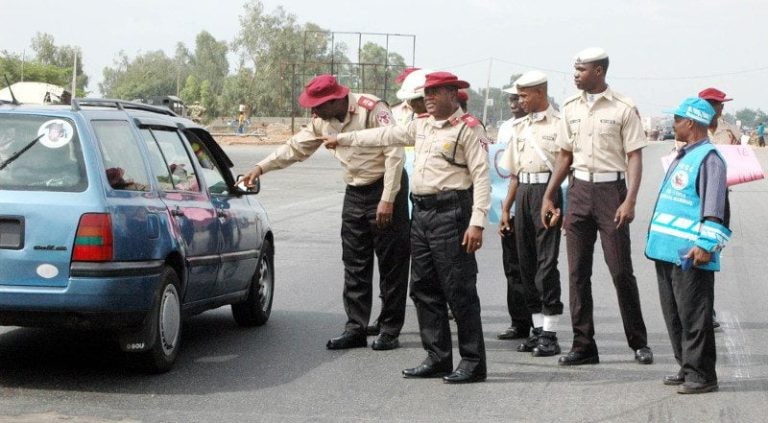
The judgment is expected to influence how traffic and insurance laws are enforced nationwide, particularly in relation to penalties imposed on motorists.