- FG Identifies 470 Grazing Reserves to End Cattle Roaming, Boost Livestock Production
- Government aims to end cattle roaming in major cities.
- New dairy policy targets higher milk production and fewer imports.
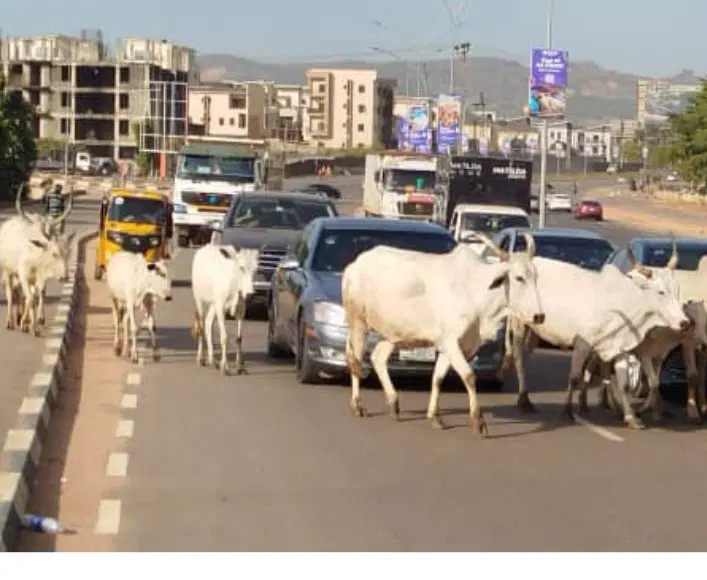
The Federal Government has identified 470 gazetted and legally protected grazing reserves across the country for the rehabilitation and resettlement of pastoralists as part of efforts to end cattle roaming in Abuja, Lagos and other cities.
The Minister of Livestock Development, Idi Maiha, disclosed this during an interview on Arise News while discussing the implementation of the National Dairy Policy Framework and plans to transform Nigeria’s livestock sector.
EDITOR’S PICKS
- Panic as Flood Sweeps Man Away After Heavy Rainfall in Delta
- Boko Haram Releases 416 Abducted Women, Children In Borno
- MTN Boss Rejects Claims of Expensive Data in Nigeria
EKO HOT BLOG reports that Maiha said relocating herders to designated grazing reserves would improve disease surveillance, animal health management and livestock breeding programmes.
Responding to questions on whether Nigerians should expect an end to cattle roaming in major cities, the minister said the government was committed to achieving that objective, stressing that open grazing was no longer sustainable.
According to him, long-distance cattle movement contributes to low productivity and has hindered efforts to meet the country’s dairy needs.
“We are sensitising pastoralists to adopt a sedentary lifestyle. Once they settle in designated reserves, all the interventions required to improve productivity become easier to implement,” Maiha said.
“We are also introducing jaw-tagging of animals so that once a cow steps outside its designated boundary, an alarm is triggered, indicating it has either strayed or been stolen, and it can be returned immediately.”
The minister said Nigeria currently records average milk yields of between 1.2 and 2 litres per cow daily, far below countries such as Kenya, where milk production can reach as much as 30 litres per cow per day.
He attributed the gap to poor livestock genetics, inadequate feeding systems and weak disease management practices.
Maiha noted that despite Nigeria’s estimated population of 270 million ruminants, including cattle, sheep, goats and camels, the country has made limited progress in modernising livestock genetics.
He said many African countries have deliberately improved their livestock breeds over the years, while Nigeria has largely retained traditional cattle breeds with lower productivity levels.
The minister added that although Nigeria has several research institutes and veterinary faculties, efforts to improve livestock genetics have not been implemented on a large scale.
“While every other thing in our national space has changed, we have not been able to transform our livestock by introducing new genetics or selecting based on performance traits.
“Either of those approaches would have lifted yields from two litres to 15, 20, 30 or even 50 litres per cow per day,” he said.
Maiha said the government was addressing the challenge through a strategy focused on improved feeding systems, disease control and genetic enhancement.
He added that the National Dairy Policy Framework would play a key role in increasing local milk production, improving livestock productivity and reducing Nigeria’s dependence on imported dairy products.
FURTHER READING
- Fresh Controversy Erupts In Trial Of 36 Soldiers Over Coup Plot
- Police Nab ‘Aza Woman’ for Alleged Fake School Abduction Report
- Man Jailed for Fatal Stabbing of Friend in London Debt Dispute