- Amid the escalating situation, questions have emerged about the potential impact on the 2026 World Cup
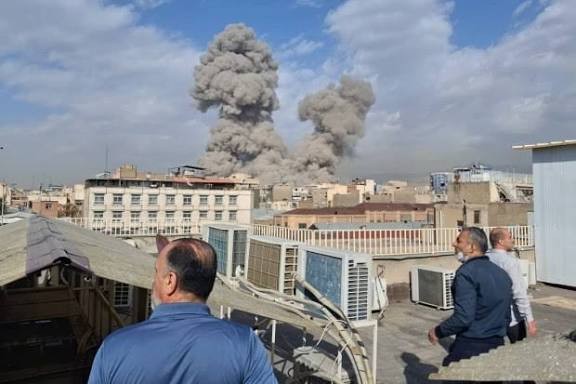
- the United States and Israel carried out airstrikes on several Iranian cities, including Tehran
- The White House World Cup taskforce declined to comment on the issue
FIFA has said its priority is ensuring full participation and safety at this summer’s World Cup following the recent U.S. military strikes on Iran.
Eko Hot Blog gathered that the United States and Israel carried out airstrikes on several Iranian cities, including Tehran, after weeks of rising diplomatic tensions.
EDITOR’S PICK
- Grand Wedding Reception: Halimot, Saheed Mark Their Union
- Ikosi-Ejinrin LCDA Celebrates Former Chairman, Hon. Segun Adetola, on Birthday
- Sanwo-Olu Flags Off Free Eye Screening for 1,000 Lagos Police Officers
Iran responded with missile attacks targeting sites in Israel and U.S. military bases across the Gulf, including locations in the United Arab Emirates, Qatar and Bahrain.
Amid the escalating situation, questions have emerged about the potential impact on the 2026 World Cup.
Iran qualified in March 2025 for its fourth consecutive tournament and is scheduled to play group matches in June against New Zealand and Belgium in Los Angeles, and Egypt in Seattle. The team is expected to be based in Tucson, Arizona, during the competition.
Speaking at the International Football Association Board (IFAB) meeting in Wales, FIFA general secretary Mattias Grafstrom said it was too early to provide detailed comment on the geopolitical developments.
“I saw the reports this morning like everyone else,” he said. “It would be premature to go into specifics, but we are monitoring global developments. Our objective remains to deliver a safe World Cup with all qualified teams taking part.”
The White House World Cup taskforce declined to comment on the issue. The U.S. government and the Iran Football Federation have also been approached for responses.
Iranian citizens are currently subject to U.S. travel restrictions introduced in June 2025. However, the policy includes exemptions for athletes, coaches, support staff and immediate family members traveling for major sporting events such as the World Cup and the Olympics.
Despite that provision, several Iranian officials were reportedly denied visas ahead of last year’s World Cup draw.
At the time, Andrew Giuliani, who leads the White House’s World Cup task force, stated that visa determinations are made on national security grounds.
Following the tournament draw, Iran head coach Amir Ghalenoei avoided political discussion and expressed confidence that FIFA would work to ensure the team’s participation.
Through a translator, he said that efforts were being made to guarantee that players and staff would be able to attend the tournament.
The military tensions have also had wider sporting repercussions in the region. While the doubles final at the Dubai Tennis Championships went ahead as planned, the singles final was cancelled after Tallon Griekspoor withdrew due to injury.
Football fixtures in Israel and Qatar were postponed, and Qatar-based broadcaster beIN Sports temporarily relocated production of its live Premier League coverage to London, according to its presenter Richard Keys.
As preparations for the World Cup continue, FIFA has reiterated that maintaining safety and ensuring the involvement of all qualified teams remain its central concerns.
FURTHER READING