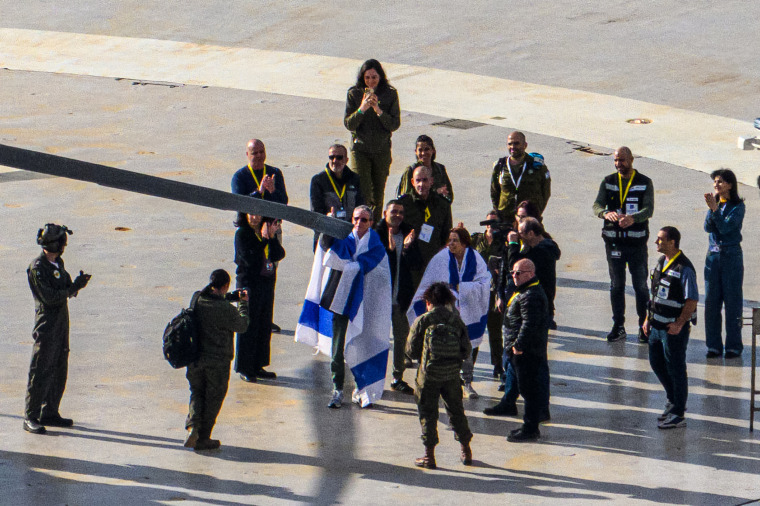
Today, Monday, October 13, 2025, there was renewed hope for peace in the Middle East for the first time in two years after Israel and the Palestinian resistance group Hamas exchanged hostages and prisoners following a brutal war that led to tens of thousands of deaths in Israel and Gaza.
An Israeli onslaught on Gaza and other Palestinian territories was launched on October 8, 2023, after an attack by Hamas fighters on October 7, 2023, at a concert in Israel killed 1,139 people and led to about 200 being taken captive. The Israeli offensive since October 2023 killed at least 67,000 people and wounded 170,105 in Gaza, leading to accusations of genocide by critics across the globe — charges which Israel repeatedly denied.
EDITOR’S PICKS
EKO HOT BLOG gathered war came to an end last Friday, October 10, 2025, after Israel and Hamas agreed to the first phase of a ceasefire plan brokered by United States (US) President Donald Trump that would see the release of all hostages and a withdrawal of Israeli troops to an agreed line in Gaza.
The first phase was executed today as 20 remaining living Israeli hostages were released by Hamas, while Israel released 250 Palestinians serving time in its prisons and 1,700 detained in Gaza.
Years of Pain, Sorrow, and Starvation
When Hamas attacked innocent Israeli concertgoers and residents in their homes on October 7, 2023, many countries and people across the world expressed outrage over the bloodshed and stood in solidarity with Israel. But as Israel responded with constant bombardment of Gaza and other cities in Palestine and an aid blockade, it gradually lost global support.
After international pressure mounted, Israel allowed humanitarian aid to resume entering Gaza in May, primarily through the controversial US-backed Gaza Humanitarian Foundation (GHF). Aid organisations that had worked inside Gaza during and before the war said GHF did not have the experience to operate effectively inside the conflict zone and that more aid was needed.
As if to confirm these criticisms, humanitarian aid distributions by GHF were often chaotic and deadly. In July, at least 20 people were killed in a crush at an aid distribution centre in southern Gaza, according to the organisation and a local hospital.
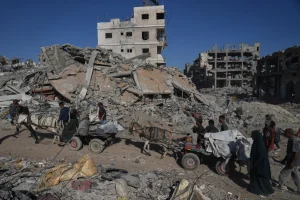
The same month, the UN human rights office revealed that nearly 900 desperate and hungry Gazans had been killed in recent weeks while trying to fetch food, with most deaths linked to private aid hubs run by GHF. Eyewitnesses also reported how aid points in Gaza became “death traps” for Palestinians, including children, seeking assistance. Doctors Without Borders/Médecins Sans Frontières (MSF), an international medical humanitarian organisation, also revealed that its staff at two clinics in Gaza regularly received mass influxes of casualties following violence at sites run by GHF, describing the aid distribution points as sites of orchestrated killing.
However, despite these revelations and more than 170 NGOs calling for GHF to be shut down over accusations of violating the principles of humanitarian aid, Israel refused to sanction the resumption of aid from alternative sources, leading to severe starvation in Gaza. In July alone, the Hamas-run Gaza Ministry of Health reported more than 40 hunger-related deaths, including 16 children, and 111 since the beginning of the war.
How the Ceasefire Deal Came Together
As the war raged on and Israel continued to block aid into Gaza, its support among some international allies started to crack. At the UN General Assembly (UNGA) in September, France, Belgium, the United Kingdom (UK), Canada, and Portugal — who had previously hesitated to recognise a Palestinian state — announced that they were officially doing so. Addressing the UNGA, French President Emmanuel Macron said, “We can no longer wait,” adding that recognition was a necessary step to break the spiral of violence and secure peace.
However, Israel’s lead backer — the US — disagreed with that assessment, joining Israel in denouncing the recognition of a Palestinian state as rewarding Hamas. Nonetheless, the move by France and others appeared to have put greater pressure on Israel and the US to quickly bring an end to the brutal war.
Earlier in September, Israel conducted an air strike to try to assassinate Hamas leaders in Doha, Qatar, violating the latter’s sovereignty and marking the first time Israel had ever struck inside Qatar. But the strike failed to kill the Hamas leaders, instead killing a Qatari security officer. The strike angered Qatar, a US ally, which had been instrumental in ceasefire talks.
On September 20, Axios, a US media outlet, reported that Qatar wanted an apology from Israel for its strike in Doha before it resumed its mediation on a Gaza peace deal. And by September 29, during a White House meeting, Trump had persuaded Netanyahu to apologise for violating Qatari sovereignty and to express regret for the killing of a Qatari security officer to hasten a deal.
The same day, the US government released a 20-point peace plan, which Israel agreed to, to end the war in Gaza and warned Hamas to accept it or face destruction. Qatar, Egypt, and Turkey subsequently urged Hamas to give a positive response to Trump’s proposal for bringing the war to an end.
Last Wednesday, October 8, after negotiations between US representatives and Hamas officials, the latter agreed to release all Israeli hostages, prompting the US president to announce that both warring parties had agreed to halt hostilities.
“I am very proud to announce that Israel and Hamas have both signed off on the first Phase of our Peace Plan. This means that ALL of the Hostages will be released very soon, and Israel will withdraw their Troops to an agreed-upon line as the first steps toward a Strong, Durable, and Everlasting Peace,” Trump wrote on his Truth Social platform.
"I am very proud to announce that Israel and Hamas have both signed off on the first Phase of our Peace Plan… BLESSED ARE THE PEACEMAKERS!" – President Donald J. Trump pic.twitter.com/lAUxi1UPYh
— The White House (@WhiteHouse) October 8, 2025
The announcement kick-started a timeline that led to Israeli forces withdrawing to an agreed line, ceasing all fighting, and releasing Hamas prisoners on Monday as the Palestinian resistance group also freed the hostages in its captivity, leading to new hopes of a lasting peace.
Notably, this is not the first time both sides have ceased fire. Just before Trump began his second term in office, an agreement reached in January failed in March as Israel and Hamas accused each other of violating the terms of the ceasefire deal, leading to the resumption of hostilities that caused thousands more deaths in Gaza. But Trump has expressed hope that the latest agreement would mark “eternal peace” in the Middle East.

The release of hostages and prisoners is only the first phase of the peace plan, as the US and Israel are seeking to force Hamas to relinquish its arms. Trump travelled to Egypt on Monday to meet with at least 20 other world leaders to discuss what comes next in the region to ensure stability and prevent the resumption of hostilities. Part of the US president’s peace proposal includes him chairing a transitory Board of Peace that would administer Gaza with a view to transferring governance to Palestinian technocrats in the future.
FURTHER READING
But Hamas leaders have pushed back on this plan, saying only Gazans should govern Gaza. The talks in Egypt are expected to determine the future of the conflict — whether it restarts soon or ushers in an enduring peace.
Philip Ibitoye is a Special Correspondent with EKO HOT BLOG. Click here to find daily analysis and critical insight on trending issues in Lagos and other parts of Nigeria.
Click here to watch the video of the week below: