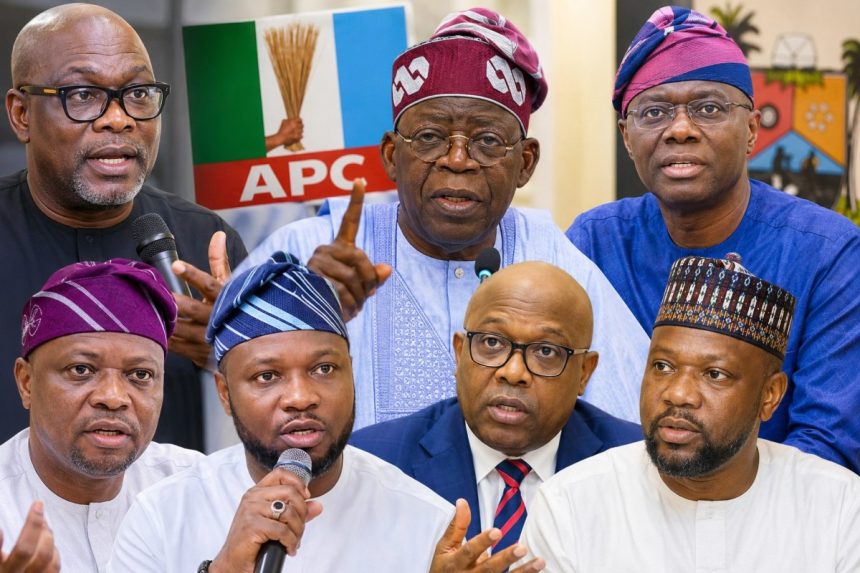
Within a remarkably short period, a chain of political alignments unfolded that appeared to consolidate support around a preferred successor within the Lagos APC structure. The sequence involved influential lawmakers, senior party figures, the state executive leadership, and the powerful Governor’s Advisory Council (GAC), culminating in what many observers describe as a near uniform political direction.
For critics, the speed and coordination of these endorsements have reignited long-standing concerns that Lagos politics is increasingly driven by elite consensus rather than open competition. For supporters, however, the process reflects strategic unity and political stability within one of Nigeria’s most dominant party structures.
EDITOR’S PICK
- Fani-Kayode, Omokri Oppose Return Of Power To North Before 2031, Endorse Tinubu For 2027
- Putin defends Ukraine war amid NATO aggression claims
- Epe Stakeholders Unite in Massive Endorsement for Wale Raji, Tobun, Tinubu, Others
A Rapid Sequence of Political Alignments
The unfolding events reportedly began with public endorsements by key political actors, including Hon. James Faleke, a prominent member of the House of Representatives representing Ikeja Federal Constituency. His early support was followed by a more visible political alignment from the state executive, as Governor Babajide Sanwo-Olu publicly endorsed his preferred successor, describing him in strongly affirmative terms that suggested continuity of governance direction.
Shortly afterward, the Governor’s Advisory Council (GAC), widely regarded as one of the most influential political decision-making bodies within the Lagos APC, also aligned in support of the emerging consensus candidate. The GAC’s endorsement is often seen as politically decisive, given its historical role in shaping leadership transitions within the state party structure.
The final layer of alignment reportedly came through what party insiders describe as signals from the national leadership of the APC, including President Bola Ahmed Tinubu, a central figure in Lagos and national politics.
Together, these endorsements created what observers describe as a structured political pathway that left little room for open contestation within the party’s internal process.
Withdrawals and Rising Tensions Within the Party
As the endorsements gained momentum, political recalibration followed within the party ranks. Former Governor Akinwunmi Ambode, whose potential return to frontline politics had been the subject of speculation, publicly stepped aside from the emerging contest.
Similarly, Abdul-Azeez Olajide Adediran, popularly known as Jandor, who had recently obtained nomination forms, eventually withdrew from the race. His withdrawal was widely interpreted as a sign of the political weight behind the emerging consensus.
However, not all voices aligned with the narrative of consensus. Samuel Aros, another aspirant, strongly rejected the idea that a genuine consensus had been reached. He argued that any legitimate consensus must include the full agreement of all aspirants who purchased nomination forms, insisting that the current process reflected imposition rather than agreement.
Aros further questioned why candidates would withdraw or step aside if the process were truly competitive, suggesting that the political environment may discourage genuine electoral contest within the party.
Dr. Jide Johnson and the Question of “Consensus Democracy”
Amid the unfolding debate, public affairs analyst Dr. Jide Johnson offered a critical interpretation of the developments in a televised interview that has since gained significant attention in political circles.
According to Dr. Johnson, what is often described as “consensus” in Nigerian party politics is frequently closer to selection than genuine electoral competition.
He argued that decision-making power within political parties is often concentrated among elite actors, meaning that outcomes are shaped long before formal party procedures take place.
In his words, consensus politics reflects a system where “candidate emergence is determined through informal bargaining among influential actors before formal processes are conducted.”
Dr. Johnson further situates this within what he describes as broader patterns of elite-driven political organisation, where internal negotiations among powerful stakeholders often outweigh grassroots participation.
His analysis suggests that while formal democratic structures such as primaries exist, they may in practice serve to validate decisions already made within elite circles.
The Influence of the Governor’s Advisory Council
A central focus of the current debate is the role of the Governor’s Advisory Council (GAC), an influential but informal political structure within the Lagos APC.
The GAC has historically played a significant role in shaping political succession and maintaining internal party cohesion. However, critics argue that its influence raises important questions about transparency and democratic participation.
In the present case, the council’s reported alignment with the emerging consensus candidate has reinforced perceptions that key political outcomes are often determined through elite negotiation rather than open contestation.
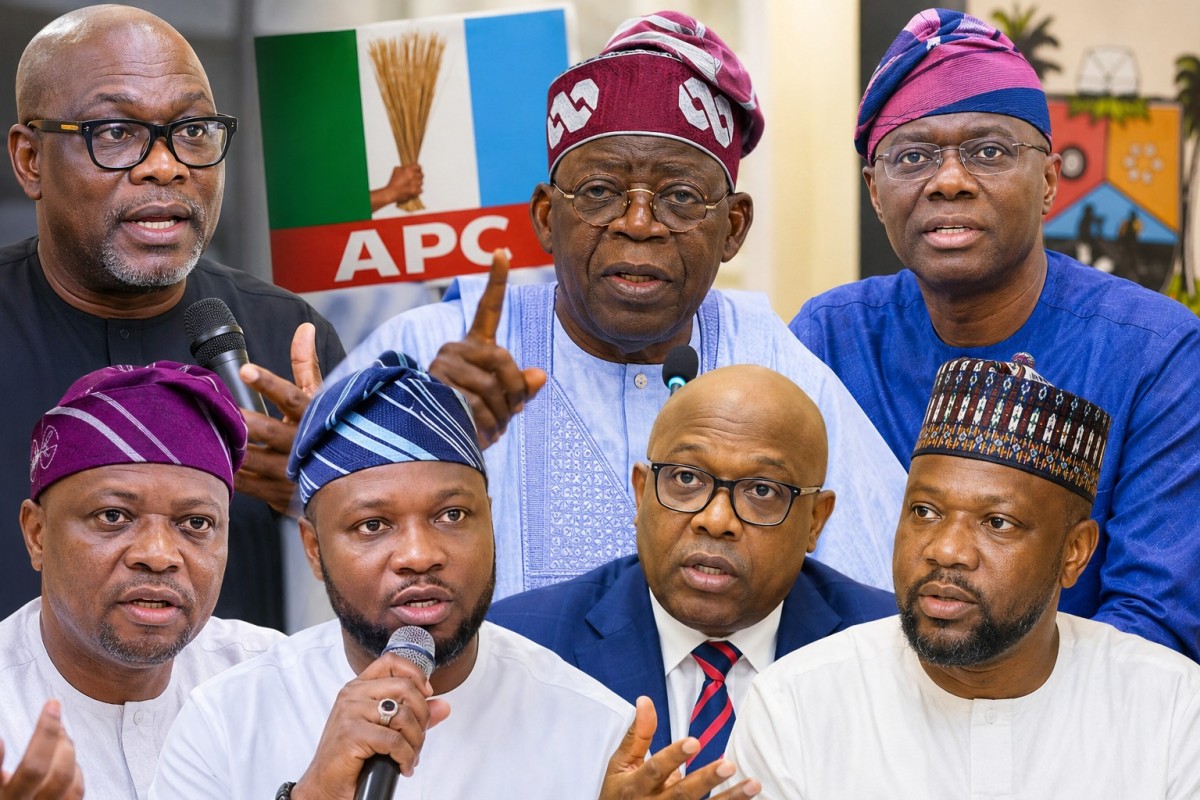
Supporters of the system, however, argue that such structures are necessary to maintain stability in a complex and competitive political environment like Lagos. They maintain that without elite coordination, internal divisions could weaken the party’s performance in elections.
Democracy, Stability, and the Question of the Electorate
At the heart of the ongoing debate is a fundamental democratic question: what role do ordinary party members and voters actually play in determining leadership outcomes?
Critics argue that when endorsements from top political actors align in rapid succession, the electorate is often presented with predetermined choices, reducing their role to endorsement rather than selection.
This raises broader concerns about whether the principle of popular sovereignty is fully reflected in internal party processes.
Supporters of consensus politics counter that political parties are not purely electoral institutions but also organisational structures that require internal cohesion, discipline, and strategic planning.
While the current debate is centred on Lagos, analysts note that the implications extend beyond a single state. Lagos, as Nigeria’s economic and political nerve centre, often sets the tone for broader national political behaviour within the APC.
The patterns observed in Lagos are therefore seen by some analysts as reflective of wider structural realities in Nigerian party politics, where elite negotiation often intersects with formal democratic processes.
Between Consensus and Competition
The unfolding developments in Lagos APC highlight a recurring tension in Nigerian democracy: the balance between elite coordination and open political competition.
For supporters, the consensus approach ensures unity, stability, and electoral readiness. For critics, it risks narrowing political participation and weakening public trust in democratic processes.
As Lagos continues to play a central role in shaping Nigeria’s political direction, the debate over how leaders are selected is likely to remain a defining feature of the state’s political landscape.
Ultimately, the question remains whether consensus politics strengthens democracy through stability, or weakens it by limiting genuine competition — a debate that continues to shape Nigeria’s evolving democratic experience.
FURTHER READING