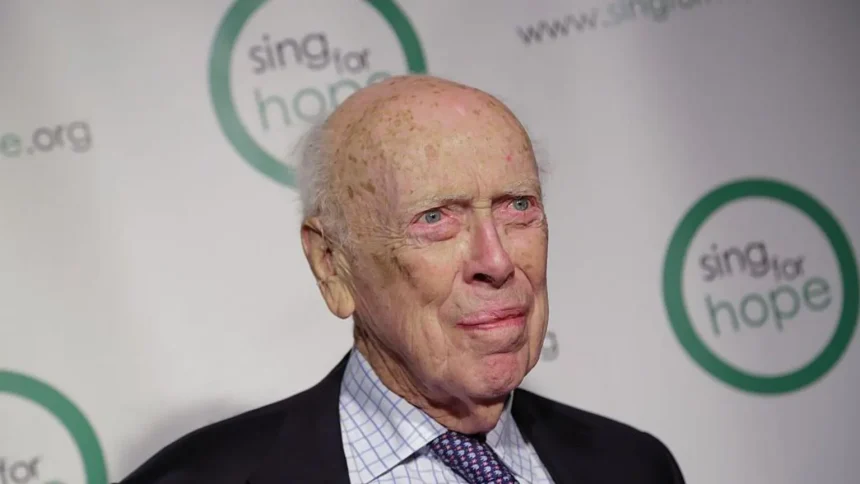
- He partnered with Crick to construct DNA models
- He made repeated public comments linking race to intelligence
- He joined Harvard University as a biology professor
Nobel Prize-winning scientist James Watson, co-discoverer of the DNA double-helix structure, has died at the age of 97.
Eko Hot Blog gathered that Watson’s death was confirmed by Cold Spring Harbor Laboratory, where he spent decades researching genetics and molecular biology.
EDITOR’S PICK
- We’ll Drag Osinbajo’s Ex-Aide to Court – Senate Reacts to $10m Bribe Claim
- NSCDC Warns Officers Against Misconduct During Anambra Poll
- Damagum: PDP Ready to Restore Nigeria’s Democracy
In 1953, Watson, alongside Francis Crick, unveiled the double-helix structure of DNA, a landmark discovery that transformed modern biology. The pair, with Maurice Wilkins, were awarded the 1962 Nobel Prize in Physiology or Medicine, famously describing their finding as “the secret of life.”
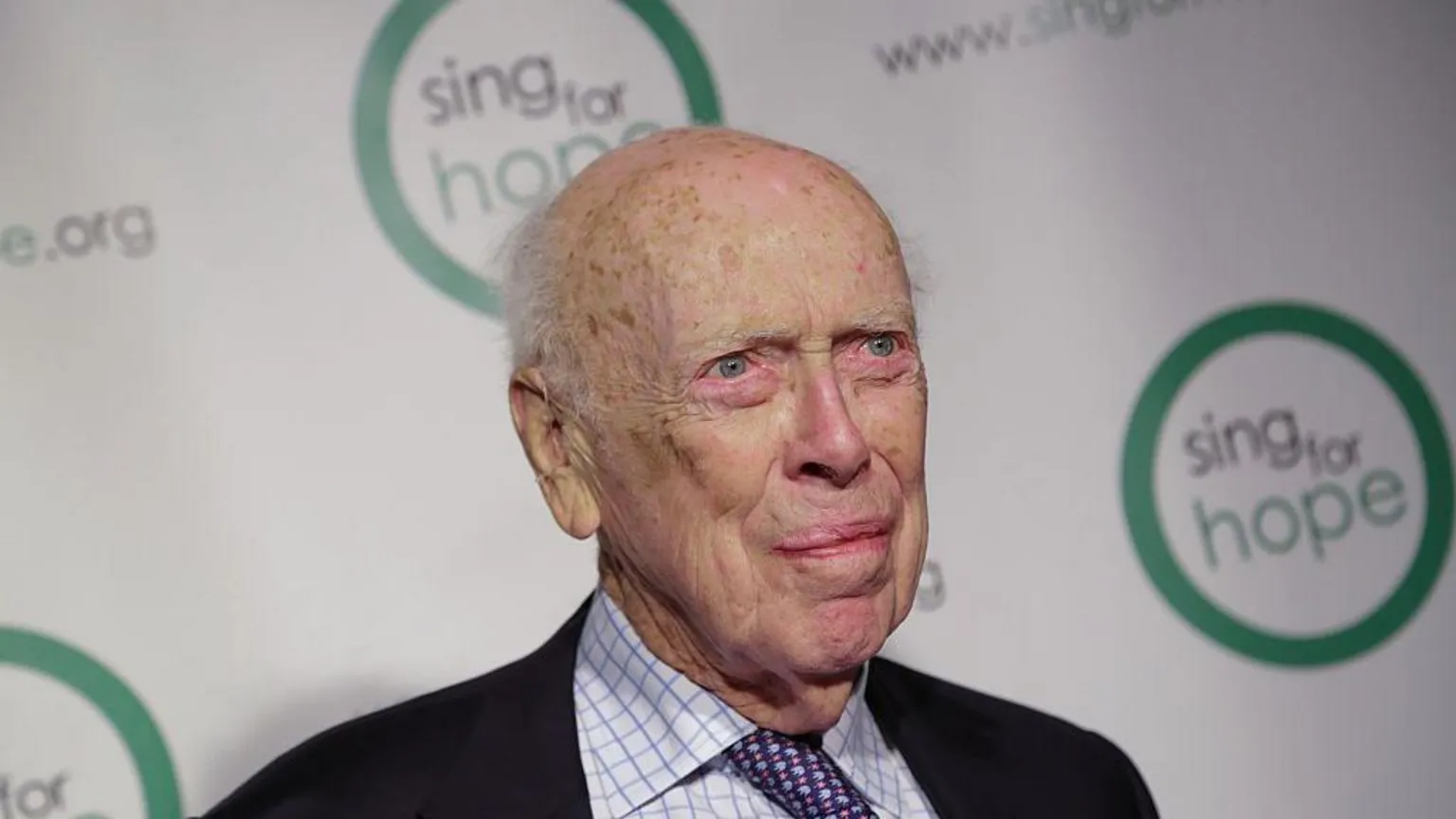
Their work was informed by X-ray images from researcher Rosalind Franklin, which helped model the DNA molecule.
Watson’s scientific legacy was later clouded by controversy. He made repeated public comments linking race to intelligence, which drew widespread criticism.
In 2007, his statements about Africa led to national outrage, and in 2019, Cold Spring Harbor Laboratory revoked his honorary titles, calling his remarks “reprehensible, unsupported by science.”
Born in Chicago in April 1928, Watson earned a scholarship to the University of Chicago at 15. He later studied X-ray diffraction and moved to Cambridge, where he partnered with Crick to construct DNA models.
Afterward, he joined Harvard University as a biology professor and later transformed Cold Spring Harbor Laboratory into a leading research institute.
Watson and his wife, Elizabeth, had two sons, one of whom suffered from schizophrenia. In 2014, he sold his Nobel gold medal for $4.8 million, citing feelings of ostracism from the scientific community due to his controversial views.
Watson’s career leaves a complex legacy a mix of groundbreaking scientific achievement and contentious public statements that sparked debate across the world.
FURTHER READING