- Umar’s legal team further alleged that his health has deteriorated significantly during his years in detention
- Kabiru Sokoto was convicted on charges linked to allegedly facilitating terrorist activities
- Umar was not convicted for masterminding the 2011 Christmas Day bombing of St. Theresa Catholic Church in Madalla
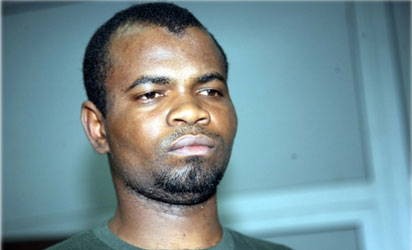
Convicted terrorist Kabiru Umar, widely known as Kabiru Sokoto, has approached the Court of Appeal in Abuja to challenge his 2013 conviction and life imprisonment, insisting that he was wrongly found guilty of terrorism-related offences.
Court documents obtained by Sunday PUNCH revealed that Umar, through his legal representatives, Don Akaegbu & Company, filed an application dated May 13, 2026, seeking permission to appeal the judgment delivered by Justice A.F.A. Ademola of the Federal High Court, Abuja, on December 20, 2013, Eko Hot Blog gathered.
EDITOR’S PICK
- Fani-Kayode, Omokri Oppose Return Of Power To North Before 2031, Endorse Tinubu For 2027
- Putin defends Ukraine war amid NATO aggression claims
- Epe Stakeholders Unite in Massive Endorsement for Wale Raji, Tobun, Tinubu, Others
The application requests an extension of time to file his appeal and asks the appellate court to recognise the notice of appeal already submitted as properly filed.
Kabiru Sokoto was convicted on charges linked to allegedly facilitating terrorist activities and failing to disclose information connected to a terrorist attack.
In the court filing, his lawyers argued that the delay in pursuing the appeal resulted from circumstances beyond his control, including prolonged detention, repeated transfers between correctional facilities across different states and the deaths of two lawyers previously handling his case.
According to the documents, Umar has remained in custody since his conviction and faced difficulties accessing legal representation due to frequent movement between prisons.
An affidavit submitted by his nephew, Lawal Suleiman, stated that family members only succeeded in locating him in March 2026 at the Maximum Security Custodial Centre in Kirikiri, Lagos.
The affidavit also claimed that the transfers disrupted communication with relatives in Sokoto State and worsened the family’s financial burden.
Umar’s legal team further alleged that his health has deteriorated significantly during his years in detention.
The appeal also questions the legal foundation of the conviction, arguing that the trial court relied on provisions of the Economic and Financial Crimes Commission Establishment Act instead of the Terrorism (Prevention) Act.
According to the defence, the EFCC law is intended for financial crimes and should not have been used to secure a terrorism conviction.
His lawyers additionally challenged the admissibility of his confessional statement, claiming it was prepared by an investigating police officer in a question-and-answer format rather than being voluntarily written by Umar himself.
In a separate statement, the defence maintained that Umar was not convicted for masterminding the 2011 Christmas Day bombing of St. Theresa Catholic Church in Madalla, Niger State.
They argued that the conviction was based on allegations that he possessed prior information about the attack and failed to report it to authorities.
The legal team stressed that the distinction between direct involvement in the bombing and alleged prior knowledge remains central to the appeal before the court.
Despite his imprisonment, Umar reportedly earned a Bachelor of Science degree in Biology from the National Open University of Nigeria while in custody.
He is asking the Court of Appeal to overturn the judgment of the Federal High Court and acquit him of all charges.
The application has already been served on the Attorney-General of the Federation and Minister of Justice, although no hearing date has been fixed.
FURTHER READING