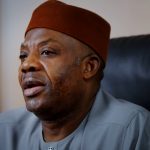
- Benjamin Kalu says funding will not prevent the establishment of state police
- The National Assembly is developing a sustainable financing framework
- He says the proposed law includes safeguards against political abuse
The Deputy Speaker of the House of Representatives, Benjamin Kalu, has assured Nigerians that funding will not stand in the way of establishing state police, saying the National Assembly is developing a sustainable financial framework for the proposed security reform.
Eko Hot Blog gathered that Kalu gave the assurance on Friday while speaking with journalists in Abuja after returning from a week-long engagement at Chatham House and the London Climate Action Week in the United Kingdom.
EDITOR’S PICK
- UN Mobilizes Humanitarian Aid For Venezuela Following Twin Earthquakes
- Dollar To Naira Exchange Rate Today, June 26, 2026
- Concerns As Repentant Boko Haram Members Allegedly Join Army Recruitment
His remarks come amid growing concerns over whether state governments would have the financial capacity to establish and maintain independent police services if the constitutional amendment creating state police is approved.

According to him, lawmakers are already exploring practical funding options to ensure the new policing structure operates effectively without placing excessive pressure on state finances.
He noted that transferring some policing responsibilities from the Federal Government to the states would require a carefully planned funding model.
Kalu also argued that the current administration’s fiscal policies have significantly increased revenue allocations to state governments, making it easier for them to shoulder additional responsibilities.
He said President Bola Tinubu’s government has strengthened fiscal federalism by improving the financial position of states, adding that part of the increased allocations could be used to support state policing.
The Deputy Speaker disclosed that the National Assembly is also considering alternative sources of funding to guarantee the long-term sustainability of the proposed system.
He explained that although lawmakers are officially on recess, consultations on the state police bill have continued to ensure the legislation is comprehensive and effective.
According to him, legislators are working to build a strong legal framework capable of supporting the responsibilities and challenges that will come with decentralised policing.
Responding to fears that state governors could misuse state police for political purposes, Kalu said the proposed constitutional amendment contains safeguards to prevent abuse.
He explained that the legislation clearly defines the powers, responsibilities and operational limits of state police while setting national minimum standards that every state police service must meet.
While individual states may improve on those standards, he said they would not be allowed to operate below the nationally prescribed benchmark or engage in partisan activities.
Kalu further revealed that once the constitutional amendment is passed, the National Assembly plans to repeal and re-enact the Police Act to provide a comprehensive legal framework for the operation of state police nationwide.
On the country’s security situation, the Deputy Speaker rejected claims that insecurity is worsening, insisting that available data shows measurable progress.
He said the number of local government areas previously controlled by insurgents has dropped significantly, describing it as evidence that ongoing military operations and government interventions are producing results.
Kalu also highlighted increased government investment in defence, noting that security allocations have risen from about ₦2.1 trillion to more than ₦5 trillion under the current administration.
He added that lawmakers are considering legislation to place defence funding on the first-line charge to ensure prompt release of resources for security operations.
According to him, these security reforms, constitutional amendments and preparations for the 2027 general elections formed part of his presentations during meetings with policymakers and development partners at Chatham House.
The proposed establishment of state police continues to attract nationwide debate, with supporters arguing it will strengthen community policing and improve responses to local security challenges, while critics remain concerned about possible political interference.
FURTHER READING