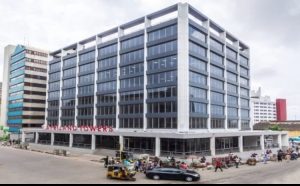
A major fire outbreak at Afriland Tower, a six-storey commercial building on Broad Street, Lagos Island, has once again raised troubling questions about Nigeria’s emergency response culture and the safety standards of high-rise buildings in the country.
The incident, which occurred on Tuesday afternoon, sparked chaos in the heart of Lagos’ financial district. EKO HOT BLOG gathered that the building housed at least five companies, including a United Bank for Africa (UBA) branch, Heirs Insurance, Avon Healthcare Ltd. (2nd floor), United Capital (3rd and 4th floors), and the Federal Inland Revenue Service (6th and 7th floors).
EDITOR’S PICKS
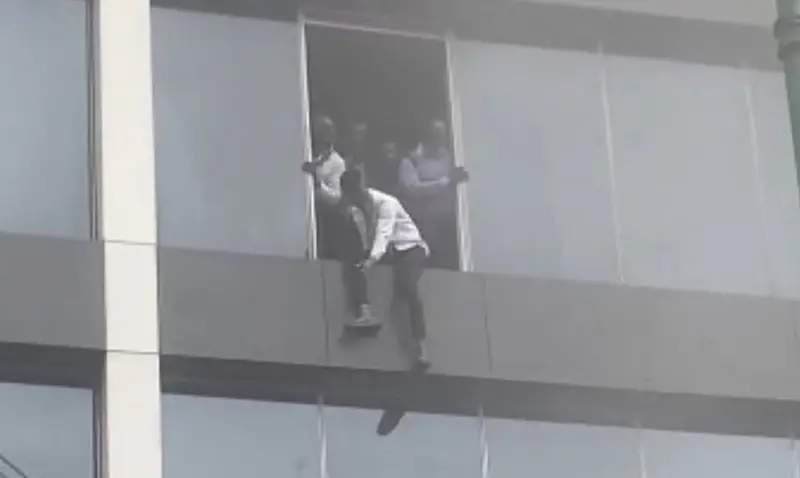
Viral footage circulating online showed bank staff scrambling for safety, some attempting to climb down through windows while others resorted to the desperate measure of jumping from upper floors. One employee who jumped without using a ladder appeared injured, though the extent of the injuries remains unclear.
Moment UBA bank staff jumps from storey building while trying to escape during the ongoing fire outbreak at UBA bank branch in Lagos Island😳🙆 https://t.co/8tIm6tvCRa pic.twitter.com/RiueHYx4dr
— CHUKS 🍥 (@ChuksEricE) September 16, 2025But on Wednesday, Heirs Holdings Group Chairperson Tony Elumelu confirmed that the company lost some of its staff members. “I am shattered by yesterday’s devastating incident at Afriland Towers, that took the lives of our dear colleagues,” Elumelu said in a circular to staff.
Afriland Properties, the manager of the Afriland Towers, is owned by Heirs Holdings Group.
In a statement on Thursday, United Capital revealed that it lost six members of its staff to the tragic fire.
Although the full death toll remains unclear, friends and relatives mourned colleagues caught in the blaze that many observers believe could have been an avoidable tragedy.
Background
According to the Lagos State Fire and Rescue Service, the alarm was raised at 1:38 p.m. Crews from Ebute Elefun and Sari Iganmu stations were dispatched to the scene. Deputy Controller General of the service, Ogabi Olajide, confirmed that the fire originated from the building’s basement inverter room before spreading across multiple floors.
“The fire originated in the inverter room located in the basement of the building while smoke has spread across multiple floors and engulfed the structure. Evacuation of occupants is in progress, while firefighting operations have been concluded dousing the earlier panic before the arrival of the first responders,” Olajide said in a statement.
Despite this, videos from the scene paint a different picture of the evacuation process. Employees could be seen using ladders provided by fire crews, but others were left with little choice but to leap dangerously from the building. The lack of visible emergency exits and absence of mechanical cranes or high-rise evacuation equipment exposed glaring gaps in preparedness for fire disasters in Lagos.
A Systemic Safety Question
The sight of workers risking their lives to escape a burning building has fueled public outrage, with many Nigerians calling for urgent reviews of safety standards in commercial high-rises across Lagos Island. The area is dotted with banks, insurance companies, and other financial institutions that conduct daily business in buildings that often date back decades.
The question that now lingers is simple but uncomfortable: how can a six-storey building in Nigeria’s commercial capital lack functional fire escapes? In most modern cities, strict building codes require high-rises to have multiple emergency exits, smoke detectors, sprinklers, and fire-resistant staircases. Yet, in Lagos, staff were filmed clinging to ladders or leaping into the unknown.
Beyond building codes, the fire service itself also comes under scrutiny. Emergency responders were quick to arrive on the scene, but their equipment appeared inadequate for the scale of the crisis. There were no elongated cranes or modern hydraulic ladders visible in the widely shared footage, tools that could have safely brought down trapped occupants from the higher floors. Instead, ordinary ladders were deployed — a dangerous improvisation for a building of that height.
This raises a broader issue about funding and equipping emergency services in Nigeria. If Lagos — the state with the largest economy and arguably the best-resourced fire service in the country — struggles with basic high-rise response tools, what hope is there for smaller cities with even less capacity?
The Case for Building Code Review
The Afriland Tower fire may now serve as a wake-up call. Regulators face mounting pressure to review and enforce stricter building codes for high-rise structures. No commercial building should be granted approval without adequate fire escapes, sprinkler systems, and clear evacuation protocols. The incident also spotlights the need for regular safety drills, something rarely seen in Nigerian workplaces.
The tragedy could also spark a conversation about retrofitting existing high-rises. Many of the buildings that dominate Lagos Island’s skyline were constructed decades ago, often without modern fire safety considerations. If left unchecked, they could pose similar or even worse risks in the event of another fire.
A Preventable Pattern
Sadly, this is not the first time Lagos has witnessed preventable loss of life in a fire emergency. In past incidents — from markets to residential high-rises — recurring themes include delayed responses, inadequate equipment, and poor safety planning.
The Afriland Tower blaze, however, is different in one respect: it unfolded in full view of the public, streamed live on social media as terrified workers dangled from windows. That imagery may now force uncomfortable conversations about whether Nigeria is truly prepared for emergencies in an increasingly urbanised and vertical society.
FURTHER READING
For the families of those injured or killed, those conversations come too late. For the rest of the country, the question remains: how many more people must risk their lives jumping from buildings before Nigeria takes its emergency response culture seriously?
Philip Ibitoye is a Special Correspondent with EKO HOT BLOG. Click here to find daily analysis and critical insight on trending issues in Lagos and other parts of Nigeria.
Click here to watch the video of the week below: