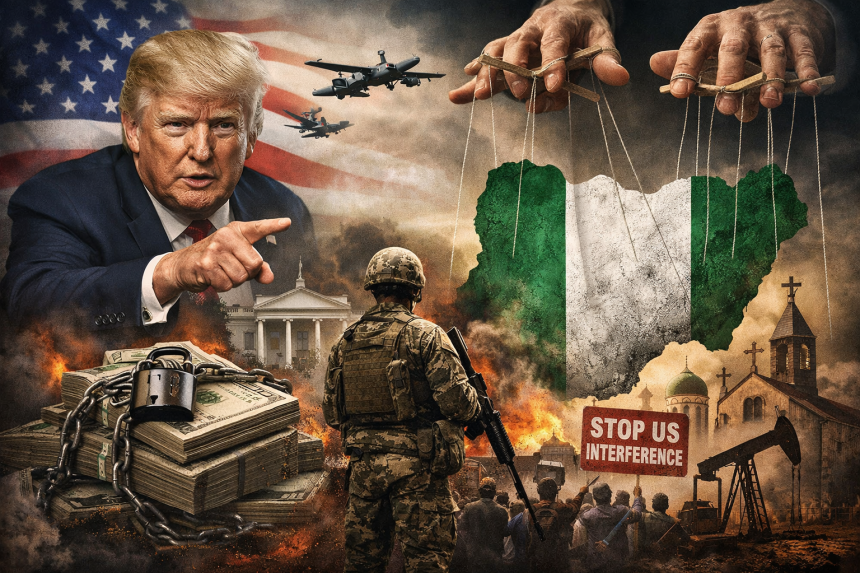
Under the guise of “America First,” the U.S. repeatedly interfered in the internal affairs of other nations, and Nigeria stands out as one of the clearest examples of how such interference can destabilize a country’s politics, security, and development.
EDITOR’S PICK
- DDG Says Streaming Pays More Than Music
- NRC Records Massive Passenger Turnout as 50 Percent Festive Fare Discount Ends
- SERAP Urges Tinubu to Probe Alleged ₦128bn Power Funds
This interference was not subtle. Public statements, social media posts, sanctions, and military deals were all used to influence decisions within Nigeria, creating pressure on leaders to align with Washington’s agenda, whether or not it served the country’s interests.
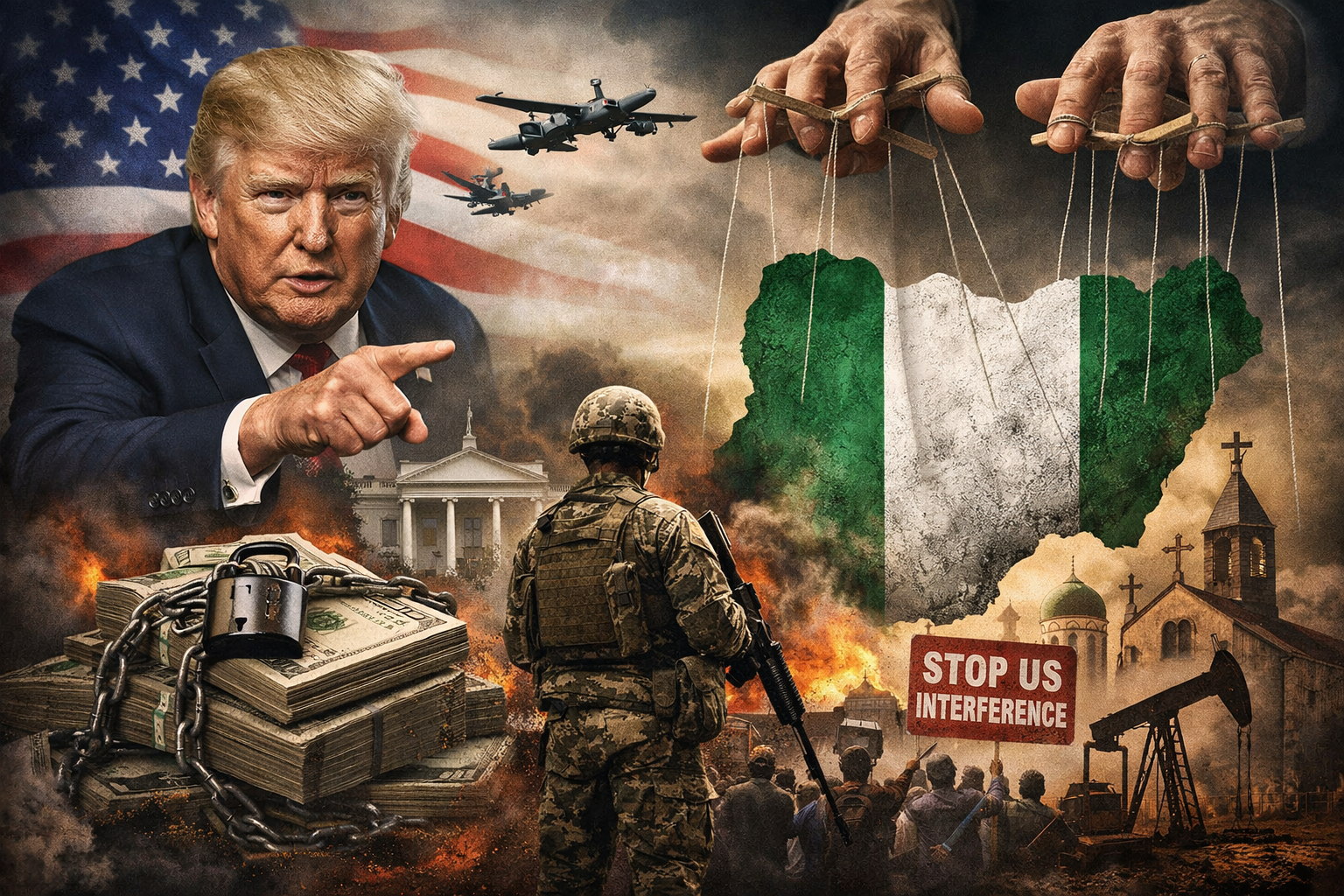
While framed as “assistance” or “guidance,” these actions often limited Nigeria’s independence, forcing the nation to prioritize foreign approval over domestic priorities.
The administration’s actions in Latin America offered a warning of what Nigeria would face. In Venezuela, the U.S. openly pushed for regime change, imposed economic sanctions, and supported opposition figures, increasing hardship for ordinary citizens while undermining the country’s sovereignty.
In Nigeria, similar tactics appeared in subtler forms: rhetoric about religious freedom, threats of sanctions, and public criticism of leaders were all deployed to influence internal political narratives, framing complex domestic issues like insecurity and governance challenges through a narrow, ideologically convenient lens.
One of the most significant examples of this interference was the approval of the sale of A-29 Super Tucano fighter jets to Nigeria. While presented as support for counterterrorism efforts, the deal increased U.S. influence over Nigeria’s military operations and decision-making.
Rather than tackling the root causes of insecurity poverty, corruption, weak governance, and social inequality the U.S. pushed militarized solutions that deepened dependency, reduced room for Nigerian-led strategies, and tied the country’s security to foreign approval.
The Trump administration’s labeling of Nigeria as a “Country of Particular Concern” politicized religion, oversimplified complex social realities, fueled tensions, and opened the door for foreign influence in domestic affairs.
Beyond policy, the administration’s constant public commentary undermined trust in Nigerian institutions. Statements made on social media or during press briefings amplified political divisions, encouraged certain factions over others, and weakened the credibility of local leaders.
These actions demonstrated that interference is not only about policy or military support—it can also be psychological, shaping public perception, influencing debates, and creating internal tension without a single bullet being fired.
While some defenders of the Trump administration argue that these actions were bold leadership, the reality is far more dangerous.
By treating Nigeria’s politics as a stage for U.S. interests, the administration blurred the line between partnership and domination, revealing how easily international influence can undermine sovereignty when it is presented as aid, guidance, or security cooperation.
The consequences are still visible today. Military capacity may have improved, but trust, stability, and self-reliance suffered. Dependence on foreign approval replaced independent strategy, and political discourse was shaped by external pressure rather than domestic needs.
Nigeria’s experience underlines a critical truth for all nations: sovereignty is not just a political label it is an active responsibility that requires vigilance against subtle forms of control.
For Africa, this period is a warning. True independence is about more than holding elections or signing treaties; it is about controlling one’s policies, protecting national resources, and making decisions based on local realities rather than foreign pressure. Military support, aid, and partnerships are only valuable if they strengthen autonomy rather than undermine it.
The lesson is clear: Africa must resist interference in all its forms, not only from overt aggression but also from subtle manipulation dressed as diplomacy, aid, or partnership.
The Trump era in Nigeria serves as a reminder that external power can act quietly, shaping societies and influencing governance without a single shot being fired.
For African leaders, activists, and citizens, the challenge is to recognize these invisible chains and resist them, ensuring that sovereignty is not sacrificed to the interests of outsiders, and that the path to development and security remains determined by the people themselves, for the people themselves.
FURTHER READING