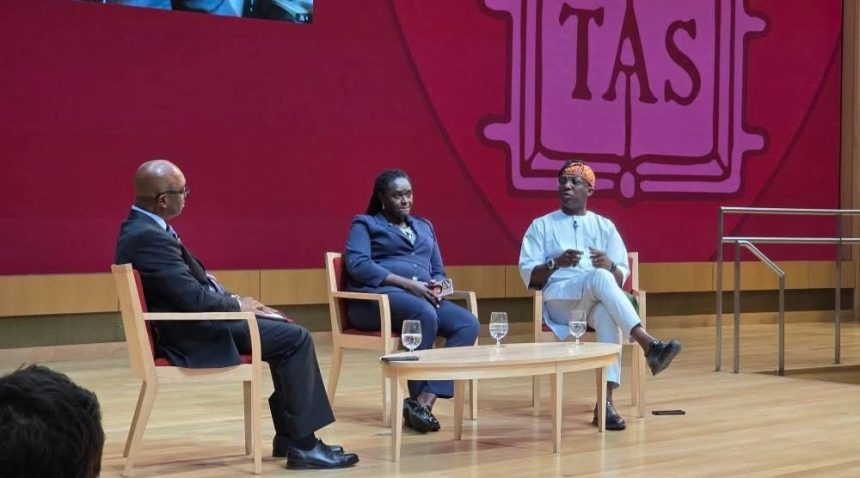
At Harvard University’s Climate Action Week over the weekend, Lagos State Commissioner for the Environment and Water Resources, Tokunbo Wahab, reaffirmed Lagos’s readiness to partner with investors in solid waste-to-energy and waste-to-wealth ventures. His message was clear: Lagos no longer sees waste as a liability, but as a resource.
With a population of over 20 million generating an estimated 13,000 metric tonnes of waste daily, Lagos faces one of the continent’s heaviest urban waste burdens. Yet, instead of leaning on short-term fixes, Wahab emphasised that Lagos has developed both a climate adaptation plan and a resilience plan, embedding waste-to-energy as a core strategy.
EDITOR’S PICKS
The commissioner revealed that Lagos has completed two pre-feasibility studies on waste-to-energy and wastewater projects. A contractual agreement already exists with a Ghanaian company to process 4,000 tonnes of daily municipal waste into compost fertilisers, recyclable plastics, and other by-products. The deal, if successfully executed, could pave the way for the decommissioning of two overstretched landfills, Olusosun and Solous — symbols of Lagos’s outdated dump culture.
“We now see waste as a resource for wealth, a resource for energy,” Wahab told the audience, adding that the state has set up enabling laws to engage partners with expertise from across West Africa.

Tackling Urban Pressures with Climate-Smart Solutions
Lagos’s waste challenge is inseparable from its climate risks. As a coastal megacity, it is exposed to rising sea levels, flash flooding, and tidal lock during heavy rainfall. The government is responding not only with drainage infrastructure and stricter enforcement against illegal dumping, but also by reframing the waste crisis into an energy opportunity.
By converting waste into energy, Lagos aims to shrink the volume of refuse heading to landfills while creating new value chains for power generation, recycling, and composting. This approach, if scaled, could transform waste management from a costly burden into a driver of sustainability and economic growth.
Building on an Earlier Commitment
This is not Lagos’s first big stride in waste-to-energy. Back in July, at the Lagos Investors Summit, the state government unveiled plans for a $400 million Waste-to-Energy plant in Epe. That project, also championed by Wahab, was billed as one of the most ambitious infrastructure investments in the state’s recent history.
The Epe facility was designed as part of a decentralised strategy, diverting waste away from overburdened urban landfills while also addressing Lagos’s chronic electricity shortages.
With 80% of landfill capacity nearing exhaustion, the Epe plant was presented as a lifeline for both the city’s waste system and its power grid.
Why Lagos Stands Out
What distinguishes Lagos from many African megacities is its willingness to anchor waste management within broader climate and energy policies. Instead of isolating waste as an environmental nuisance, Lagos is positioning it as a resource for resilience and energy security.

Partnerships — both regional and global — are at the heart of this approach. By engaging expertise from Ghana and inviting international investors, Lagos is signalling that its waste-to-energy vision is not aspirational but implementable.
However, sustaining momentum will require translating agreements into functioning projects, ensuring technology transfer, and maintaining transparency in partnerships. As landfills reach breaking point and climate shocks intensify, Lagos’s leadership on waste-to-energy will be judged not by policy statements but by how quickly it can deliver working plants like Epe and beyond.
FURTHER READING
Still, the state’s current trajectory is noteworthy. In a region where waste crises often spiral into public health emergencies, Lagos is actively reframing the narrative, showing how Africa’s largest city can lead by turning its biggest environmental headache into a renewable energy asset.
Philip Ibitoye is a Special Correspondent with EKO HOT BLOG. Click here to find daily analysis and critical insight on trending issues in Lagos and other parts of Nigeria.
Click here to watch the video of the week below: