- Lawmakers Review ₦2.4tn Education Budget as Dr. Alausa Defends 2026 Plan
- Dr Alausa said the rollover provisions in the proposal were designed to ensure that critical projects are not abandoned during budget transitions
- According to the proposal, ₦966.9 billion is allocated to universities, ₦382 billion to polytechnics and colleges of education, ₦633.3 billion to education parastatals
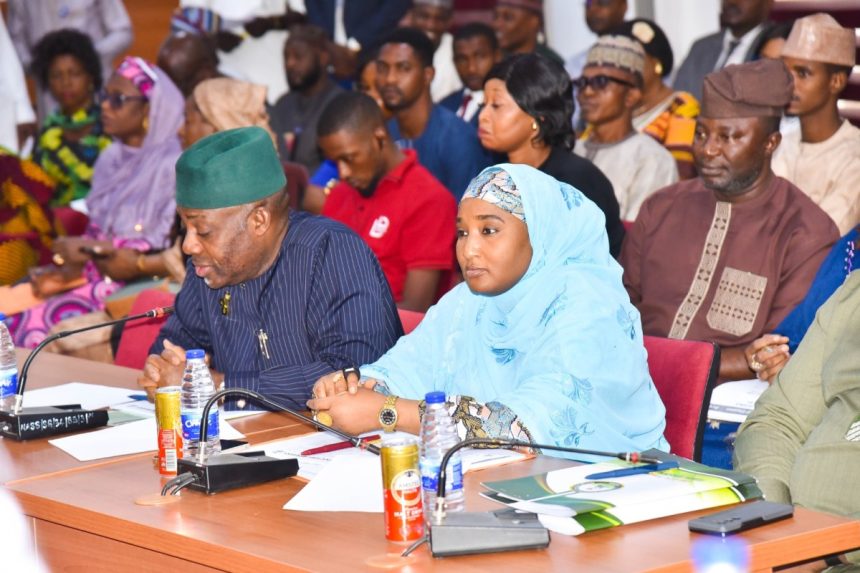
The Minister of Education, Dr Maruf Tunji Alausa, on Wednesday defended the Federal Ministry of Education’s proposed ₦2.4 trillion budget for 2026 before the Joint Committees on Education of the National Assembly, reaffirming the government’s commitment to transparency, accountability and the completion of ongoing projects across the country.
Eko Hot Blog reprots that he was accompanied by the Minister of State for Education, Professor Suwaiba Said Ahmad; the Permanent Secretary, Mr Abel O. Eniitan; and senior directors of the ministry.
EDITOR’S PICK
- Six Final-Year Nursing Students Die in Kwara Auto Crash
- Sanwo-Olu Pledges to Position Lagos as Global Investment Hub
- File 2026 Tax Returns Now, LIRS Tells Lagos Residents
During the budget defence session, which also included a review of 2025 budget performance, Dr Alausa said the rollover provisions in the proposal were designed to ensure that critical projects are not abandoned during budget transitions.
He explained that the approach reflects a commitment to continuity in education development, adding that appropriations must translate into implementation and measurable impact.
While acknowledging challenges in capital expenditure performance in 2025, the minister said progress had been recorded in personnel and overhead releases. He noted that the 2026 framework prioritises infrastructure development, improved research capacity, teacher training, expanded digital learning, and safer school environments.
Dr Alausa highlighted a shortage of more than 3,500 teachers in Federal Unity Colleges, particularly in science, mathematics and technical subjects. He assured lawmakers that recruitment, structured training and retention strategies are being implemented to address the gap and strengthen learning outcomes.
According to the proposal, ₦966.9 billion is allocated to universities, ₦382 billion to polytechnics and colleges of education, ₦633.3 billion to education parastatals, and ₦257.9 billion for the ministry’s headquarters operations. Unity Colleges are projected to receive ₦155 billion, while ₦10.3 billion is earmarked for international obligations, including commitments to UNESCO. The plan also includes expansion of Technical and Vocational Education and Training programmes aimed at equipping over five million young Nigerians with employable and entrepreneurial skills.
The minister further outlined the ministry’s six-point reform agenda, which focuses on advancing science, technology, engineering, mathematics and medical education, reducing the number of out-of-school children, promoting girl-child education, strengthening digitalisation, improving data-driven planning and enhancing community engagement. He said the 2026 to 2028 targets align with President Bola Ahmed Tinubu’s Renewed Hope Agenda and the national education roadmap.
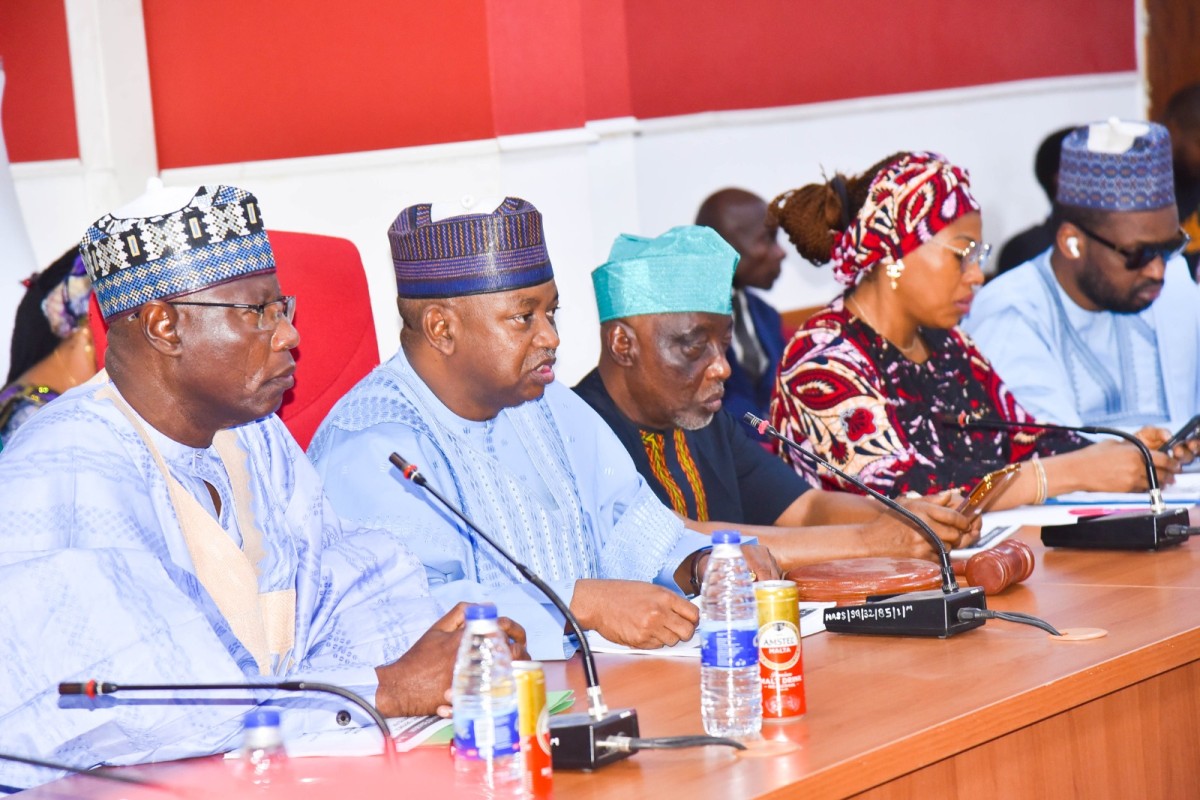
In their responses, lawmakers emphasised the need for detailed scrutiny of rollover projects to ensure funds translate into visible results. The Co-Chairman of the Joint Committee and Chairman of the Senate Committee on Education, Muntari Dandutse, said the National Assembly has a constitutional responsibility to examine budget implementation and projections to guarantee accountability in public spending.
He stressed that projects should not repeatedly appear in budget documents without clear evidence of execution.
The Chairman of the House Committee on Education, Abubakar Hassan Fulata, and the Deputy Chairman of the Senate Committee on Education, Babagida Hussain, also requested detailed nominal rolls and information on internally generated revenue from the ministry and its agencies, insisting on compliance with constitutional requirements.
In response, Dr Alausa assured the committees that all requested documentation would be submitted promptly for thorough review. He described the engagement as a collaborative effort aimed at ensuring efficient use of resources and timely completion of education projects nationwide.
The joint committees subsequently received the ministry’s submission for further legislative consideration, with additional documents to be provided as requested.
Dr Alausa reiterated the ministry’s readiness to continue working with lawmakers to ensure effective implementation of the 2026 education budget.