- Renowned filmmaker Kunle Afolayan has revealed that his business, KAP Film Village and Resort, incurs a staggering diesel expense of N11 million every four to five weeks.
- Despite integrating solar energy, the rising cost of diesel now hitting N1,500 to N1,620 per litre has made operations unsustainable.
- Afolayan is appealing for support and loans to upgrade his solar infrastructure to reduce reliance on fossil fuels amid Nigeria’s persistent energy crisis.
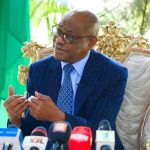
Filmmaker and entrepreneur Kunle Afolayan has voiced his distress over the astronomical cost of powering his creative hub, the KAP Film Village and Resort, revealing that his monthly diesel bill has reached a crushing N11 million.
Eko Hot Blog reports that in a candid video shared on his Instagram page, the director of Anikulapo explained that even with significant investments in solar power, the resort still relies heavily on diesel generators to sustain its vast operations.
EDITOR’S PICK
- 540 Candidates Cleared as Lagos APC Moves to Elect LGA Executives
- Court Sentences Pastor to Death for Killing UniUyo Student
- Lagos Teacher Questions Lack of Recognition for One-Day Governor Mentors
With the price of diesel jumping from under N1,000 to as high as N1,620 per litre following recent hikes by the Dangote Refinery and other distributors, Afolayan admitted the burden has become unbearable.
“I’ve been sad because I can’t cope with the N1,500 per litre of diesel,” he lamented. “In one of the businesses that we run, the KAP Village, we spend about N11m in four or five weeks on diesel. And we have solar power, but we’re still spending that much.”
The filmmaker further disclosed the precarious financial juggling required to keep the lights on, stating that his business often resorts to buying fuel on credit.
Payments are sometimes stretched over two months just to clear the debt before another batch is required.
He emphasized that the current price point is a “death sentence” for small and medium-sized enterprises in the hospitality and creative sectors.
To mitigate the crisis, Afolayan is seeking financial assistance or low-interest loans specifically to upgrade his solar infrastructure.

By expanding his renewable energy capacity, he hopes to decouple his business from the volatile fuel market and ensure the survival of the resort, which serves as a cultural landmark and a hub for African storytelling.
“If you can come to our aid, I’ll really appreciate it,” Afolayan added, directing his plea to potential investors or government agencies focused on supporting the creative economy.
His outcry mirrors the struggles of thousands of business owners across Nigeria who are currently grappling with the highest energy costs in the nation’s history.