- Naira Stability in Question
By Grateful Ogunjebe
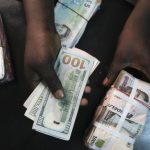
Nigeria’s currency has had a cautious but stable run in recent months, largely due to sustained intervention by the Central Bank of Nigeria (CBN).
The naira currently trades within a narrow band of ₦1,525 to ₦1,535 to the US dollar on the official market, while rates in the parallel market remain slightly weaker, hovering around ₦1,560 to ₦1,570.
EDITOR’S PICKS
- With N1.94trn Consumed in 2024, Is Electricity Subsidy Sustainable?
- Africa Holds 65% of World’s HIV Cases — WHO
- Buhari Did More for Cows Than Nigerians – Omatseye
EKO HOT BLOG reports that this relative calm in the volatile forex landscape has been achieved through aggressive defence policies by the apex bank, but the sustainability of this trajectory remains in doubt.
Eko Hot Blog reports that the CBN injected over $4.1 billion into the forex market during the first half of 2025. This represents a sharp increase from the $1.5 billion deployed during the same period in 2024. While the strategy helped stabilise the naira against the backdrop of post-float uncertainty, the heavy spending has begun to eat into Nigeria’s foreign reserves, which dropped by roughly $3.7 billion to about $37 billion by mid-year.
Analysts are now watching closely as the second half of 2025 unfolds. The big question is whether the naira can continue trading within the ₦1,500 to ₦1,600 per dollar range, or if renewed market pressure could push it toward the ₦1,700 level by year-end. While portfolio inflows into Nigeria have improved slightly, reaching about 29% of the local equity market by May, capital inflows remain fragile, and oil revenues Nigeria’s primary forex source are weakening amid global price fluctuations.
Forecasts from major financial firms like CSL Stockbrokers and Cordros Securities vary, but most agree that unless the CBN maintains its aggressive intervention strategy, the naira may face renewed depreciation. Cordros predicts a potential weakening toward ₦1,700 per dollar by December if foreign capital fails to strengthen and oil receipts stay weak. Others, like CSL, remain more optimistic, suggesting that with targeted monetary action, the CBN can keep the exchange rate within a manageable range.
But this balancing act is becoming increasingly difficult to sustain. The more the CBN intervenes, the more pressure it puts on foreign reserves. If reserves fall too low, the CBN could lose the capacity to defend the currency altogether. Some international observers, including the IMF, have cautioned Nigeria to reduce wholesale interventions and instead focus on creating long-term inflow strategies such as encouraging exports, remittances, and foreign direct investment.
Still, the CBN appears unwilling to loosen its grip, at least for now. A key Monetary Policy Committee (MPC) meeting scheduled for July 21–22 is expected to offer clarity on the apex bank’s direction in the coming months. Investors and business owners are watching closely for any hints of a policy pivot, especially given recent signals of easing inflation and mild improvements in FX liquidity.
The implications of a naira devaluation stretch far beyond the foreign exchange market. For importers, every slight movement upward increases costs, which are passed on to consumers already battling high inflation. For exporters, a weaker naira may improve competitiveness, but instability disrupts planning. The broader business environment requires a stable, predictable exchange regime, which the CBN has struggled to guarantee since floating the naira last year.
What remains clear is that the current exchange rate stability is not necessarily organic. It is being engineered by costly dollar injections that may not be sustainable without a significant increase in forex earnings. Nigeria must urgently diversify its sources of foreign exchange to reduce its dependence on oil and create a more resilient financial system.

Unless Nigeria can shift from defensive monetary policies to proactive economic reforms, the naira’s fragile peace may not last. For now, the ₦1,500 to ₦1,600 per dollar range offers a semblance of order, but behind that order lies a risky game of reserves and reaction. With the global economy still uncertain and internal fiscal pressures mounting, the months ahead could prove decisive in determining whether Nigeria’s currency can withstand the storm or slide back into volatility.
FURTHER READING
- Elon Musk, Jeff Bezos Add $7.8bn in One Day as Tech Stocks Surge
- Sanwo-Olu Celebrates APC Victory in Lagos LG Polls
- Trump’s Epstein Letter Sparks Lawsuit