- The Dangote Petroleum Refinery exported approximately 1.66 billion litres of refined petroleum products in April 2026, marking a historic shift in Nigeria’s energy landscape.
- The export volume included 513 million litres of petrol (PMS), 534 million litres of diesel (AGO), and 615 million litres of aviation fuel, averaging 55.4 million litres daily.
- The surge in exports comes as global supply routes face uncertainty due to heightened tensions between the United States and Iran, specifically affecting the strategic Strait of Hormuz.
Nigeria’s journey from a chronic fuel importer to an emerging export hub reached a fever pitch in April 2026, as new data from the Nigerian Midstream and Downstream Petroleum Regulatory Authority (NMDPRA) confirmed massive outflows from the Dangote Refinery.
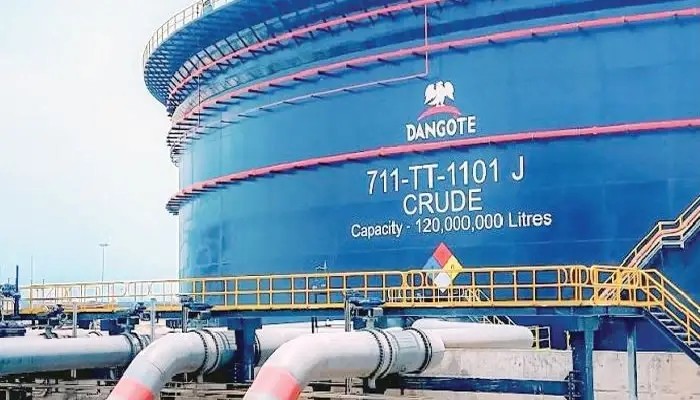
Eko Hot Blog reports that the 650,000-barrel-per-day facility in Lekki achieved nearly 100% capacity utilization throughout the month, receiving over 18 million barrels of crude oil.
EDITOR’S PICKS
- JAMB Delists 23 CBT Centres, Warns 89 After Mock UTME Review
- NASA Astronauts Return to Earth After First Human Trip to the Moon in 50 Years
- INEC Shifts Nationwide Voter Revalidation Until After 2027 General Election
This surge in production allowed the country to meet its average daily domestic petrol demand of 51.1 million litres while still exporting 17.1 million litres of petrol daily.
The refinery’s massive export of aviation fuel, reaching 20.5 million litres per day, stands in stark contrast to the 2.6 million litres supplied domestically.
This significant global presence is being bolstered by the international scramble for secure energy sources.
With traditional shipping routes in the Middle East threatened by the failure of US-Iran peace talks, alternative suppliers like the Dangote Refinery are seeing increased demand from markets in Europe, Africa, and Asia.
Despite the refinery’s high performance, domestic petrol prices have remained elevated, a trend the NMDPRA attributes to high international crude oil costs, which averaged $120.55 per barrel in April.
Industry experts note that while Nigeria has effectively become a net petrol exporter, the regulatory body continues to issue import licenses as the market stabilizes.
Nevertheless, the refinery is positioned as the central pillar of Nigeria’s energy security and a vital driver of foreign exchange earnings during a period of global geopolitical volatility.