- A total of 268 traumatized Nigerian nationals safely arrived at the Murtala Muhammed International Airport in Lagos following a swift, government-facilitated emergency evacuation flight out of South Africa.
- The returnees landed with agonizing accounts of systemic profiling, violent unprovoked street assaults, weaponized immigration permit denials, and blatant economic exclusion driven by escalating xenophobic sentiment.
- Evacuees openly indicted South African law enforcement agencies, detailing widespread corruption patterns where police officers routinely rounded up legally documented migrants for financial exploitation and physical intimidation.
The tarmac of the Murtala Muhammed International Airport in Lagos became a scene of profound emotional conflict as a government-chartered evacuation aircraft safely touched down with 268 Nigerian nationals fleeing severe unrest in South Africa.
Eko Hot Blog reports that the returnees, consisting of informal traders, mechanics, and long-term artisans, stepped back onto domestic soil not as routine travelers, but as displaced persons escaping a coordinated wave of anti-migrant hostility.
EDITOR’S PICK
- Hamzat Appoints Obanikoro as Campaign DG Ahead of 2027 Lagos Governorship Race
- Tinubu’s State Police Plan Gains Momentum as Amendment Looms
- Residents Raise Alarm After Two Bodies Found in Lagos Waterway
While an overwhelming sense of relief enveloped the arrival terminal as families reunited, the overall atmosphere remained deeply solemn, weighed down by the agonizing reality of abandoned properties, severed livelihoods, and families forcefully separated by geopolitical hostility.
Among the returnees was Rafiu Wasiu, an experienced automobile mechanic who spent years building a stable life and clientele base in South Africa before the security situation deteriorated.
Wasiu detailed a harrowing pattern of systemic brutality, noting that black South Africans in various host communities had begun treating foreign nationals like animals without any regard for human dignity.
He described how unprovoked street violence had become completely normalized, explaining that gangs would openly accost migrants on the road to demand their mobile phones and possessions at knifepoint, while local law enforcement stood by in absolute indifference.
Wasiu further exposed a severe culture of institutional corruption, revealing how police teams routinely pick up foreign nationals arbitrarily to extract massive bribes, sometimes using bizarre pretexts like accusing migrants of possessing currency featuring Nelson Mandela’s image to systematically confiscate their hard-earned cash.
The economic devastation suffered by the evacuees highlights a targeted strategy of financial exclusion designed to choke out immigrant enterprises.
Another returnee, Milly Abuh, recounted how her thriving retail outfit was abruptly invaded and sealed shut by state authorities under the guise of documentation reviews, culminating in physical assaults when she attempted to seek administrative clarity.
Even those with immaculate legal standing were not spared from the hostile purge; Lara Jacob, an evacuation beneficiary who held flawless residency permits, revealed that immigration officials flatly denied her standard renewal application, bluntly ordering her to return home and fix her own country.
This aggressive bureaucracy, coupled with constant community warnings that all foreigners would be killed if they did not vacate the territory, turned daily life into a lawless nightmare for thousands of law-abiding African migrants trying to make an honest living.
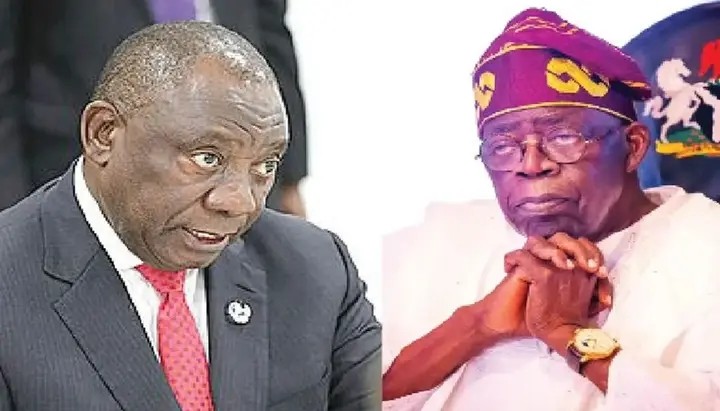
The human cost of this sudden migration crisis has left deep, bleeding fractures within the social fabric of many Nigerian homes.
For Justine Okonkwo, a clothing merchant, surviving the xenophobic purge meant making the painful decision to flee to Lagos alone, leaving his wife and two young children behind in South Africa to guard what remained of their life.
Okonkwo defended the integrity of Nigerian migrants, strongly rejecting the common xenophobic narrative that foreigners were stealing local jobs, pointing out that almost all migrants operated within independent, self-funded informal sectors rather than competing for civil service placement.
As the federal government faces mounting pressure from legislative leaders like Senator Adams Oshiomhole to implement strict diplomatic and economic retaliatory measures against South African business conglomerates operating within Nigeria, the returnees are left with the daunting task of starting from scratch, carrying the heavy psychological scars of an economic empire built over decades and dismantled in a matter of days.