- The International Monetary Fund revealed that the Federal Government omitted public expenditure worth approximately 2% of Nigeria’s GDP, amounting to about ₦8.83 trillion, from recent official budgets.
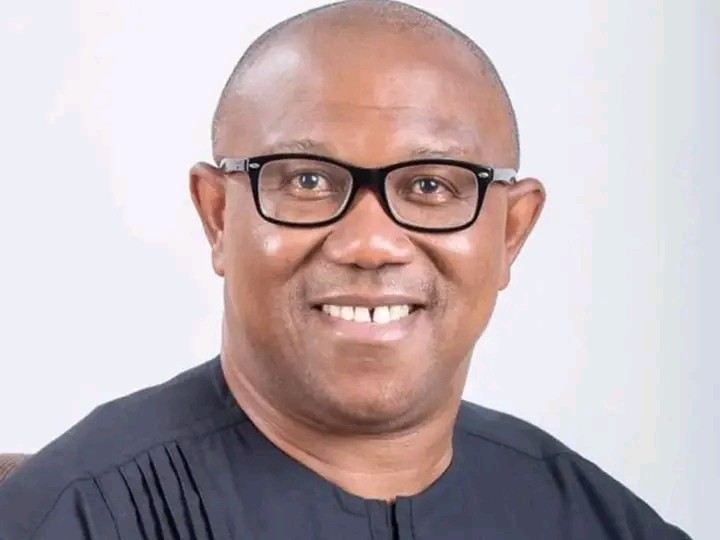
- National Democratic Party presidential candidate, Peter Obi, characterized the massive off-budget spending as evidence of grand corruption, noting it completely bypassed legislative oversight and administrative scrutiny.
- The IMF explained that the unrecorded outlays were tied to large-scale infrastructure projects executed outside the formal budget framework, which understates the country’s true fiscal deficit and borrowing needs.
The presidential candidate of the National Democratic Party, Peter Obi, has leveled severe accusations of entrenched corruption against President Bola Tinubu’s administration.
Eko Hot Blog reports that this outcry comes on the heels of startling new disclosures by the International Monetary Fund regarding the management of Nigeria’s public finances.
EDITOR’S PICK
- Hamzat Appoints Obanikoro as Campaign DG Ahead of 2027 Lagos Governorship Race
- Tinubu’s State Police Plan Gains Momentum as Amendment Looms
- Residents Raise Alarm After Two Bodies Found in Lagos Waterway
Taking to his official handle on the social media platform X, the former governor of Anambra State raised the alarm over what he characterized as a monumental fiscal breach, pointing out that approximately ₦8.83 trillion in government spending carried out during the 2025 fiscal year was completely missing from the national budget framework.
Obi described the massive off-budget spending as definitive proof of grand corruption running rampant within the current government.
He emphasized that because these multi-trillion naira outlays were never captured in the official national budget, they completely bypassed essential legislative oversight and administrative scrutiny.
In his statement, Obi noted that leaving such an enormous sum unaccounted for under standard institutional checks is deeply unsettling and poses a massive threat to the economic health of the federation.
To put the magnitude of the unrecorded funds into perspective, the opposition leader provided a detailed breakdown comparing the figures against vital social sectors.
He argued that the ₦8.83 trillion chunk represents roughly 2% of Nigeria’s entire Gross Domestic Product and accounts for upwards of 35% of the country’s capital budget for 2025.
Furthermore, Obi pointed out that this single unbudgeted sum comfortably surpasses the combined federal allocations designated for the nation’s critical human infrastructure, specifically the ₦3.52 trillion set aside for education and the ₦2.38 trillion allocated for healthcare.
He strongly insisted that if these resources had been routed through transparent channels and utilized properly, they possessed the potential to fundamentally revolutionize public health systems and educational standards across Nigeria.
According to Obi, this development is not a standalone discrepancy but rather an established pattern of financial mismanagement that has become synonymous with the Tinubu-led executive.
Citing a continuous stream of revelations highlighting institutional corruption and what he termed a lack of empathy for the welfare and security of everyday citizens, the politician renewed his previous demands for the president to step down from his position.
Obi asserted that resignation remains the only reasonable path forward for the administration, while simultaneously calling on the Nigerian populace to actively demand heightened accountability from their leaders.
These strong political reactions directly follow an official briefing by the IMF Resident Representative in Nigeria, Christian Ebeke, who addressed business executives in Lagos regarding the country’s fiscal position.
Ebeke explicitly confirmed that Nigeria failed to record public expenditures amounting to roughly two percent of its GDP in its recent budgetary documentation.
The IMF chief explained that by excluding these massive expenses, the federal government inadvertently masked its true financing requirements, which ultimately made the nation’s fiscal deficit look significantly smaller on paper than it actually was in reality.
The international financial institution tied the unrecorded ₦8.83 trillion directly to capital spending on large-scale infrastructure projects that were executed completely outside the formal bounds of the federal budget.
Ebeke warned that this widespread practice of running parallel, off-budget expenditures severely complicates the necessary coordination between fiscal planners and monetary policy authorities like the Central Bank of Nigeria.
Furthermore, the global fund highlighted that such systemic omissions weaken administrative oversight, reduce procurement transparency, and cloud objective assessments of the nation’s total debt accumulation.
However, the IMF did note that the federal government has begun initiating corrective measures, which include amending existing budget laws to formally capture these hidden infrastructure outlays moving forward.