- Their reintegration has sparked widespread debate, with many Nigerians raising concerns about transparency
- He also stressed the need to ensure that communities do not face renewed threats after the return of such individuals
- Osigwe called for strict monitoring measures, including supervision similar to parole
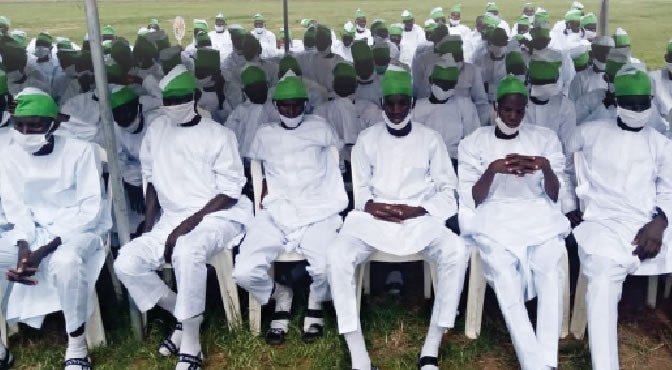
Public anger is mounting over the graduation and planned reintegration of 744 former insurgents under the Federal Government’s deradicalisation initiative, Operation Safe Corridor.
Eko Hot Blog reports that the individuals, mostly from conflict affected regions, completed the programme on Thursday. A large number came from Borno State, with others drawn from Adamawa State, Yobe State, Kano State and other parts of the country.
EDITOR’S PICK
- Benue Mortician Arrested for Using Corpse Part as Walking Stick
- Baba Yusuf: Bandits May Reach National Assembly
- PDP Asks INEC To Withdraw Recognition Of Anyanwu As National Secretary
Their reintegration has sparked widespread debate, with many Nigerians raising concerns about transparency, accountability, and the potential impact on communities that suffered from insurgent violence.
President of the Nigerian Bar Association, Afam Osigwe, said while rehabilitation is not a bad idea in itself, the process raises serious questions about oversight and fairness to victims.
He warned that returning former fighters to communities without addressing the pain of victims could create the impression that offenders are being rewarded while those affected are ignored.
He also stressed the need to ensure that communities do not face renewed threats after the return of such individuals.
Osigwe called for strict monitoring measures, including supervision similar to parole and support systems to help reintegrated persons rebuild their lives without reverting to violence.
Also reacting, Isa Sanusi of Amnesty International acknowledged that reintegration aligns with international standards but criticised the lack of openness in Nigeria’s approach.
He urged the government to provide clear information about those involved, including their roles in past activities.
In a similar vein, Omenazu Jackson of the International Society for Social Justice and Human Rights argued that failing to hold offenders accountable could undermine justice and embolden others. He questioned what happens to victims and families affected by the violence.
Security analyst Kabir Adamu noted that rehabilitation is an important part of counterterrorism efforts but said the programme needs independent evaluation to measure its effectiveness. He also raised concerns about the dominance of military authorities in the process.
However, the programme’s coordinator, Yusuf Ali, defended the initiative, explaining that many participants were victims who had been forced into insurgency and later surrendered.
He said they underwent psychological, social, and religious rehabilitation before being cleared for reintegration, adding that international law protects individuals who lay down their arms.
Similarly, presidential aide Temitope Ajayi maintained that the government is not rehabilitating hardened terrorists but rather individuals who were abducted or coerced into joining armed groups.
Despite these assurances, the programme continues to generate intense debate, with many calling for a more transparent and balanced approach that considers both national security and justice for victims.
FURTHER READING