- Taiwan’s foreign ministry issued a firm statement on Saturday, May 16, 2026, declaring the island a sovereign and independent democratic nation that is not subordinate to the People’s Republic of China.
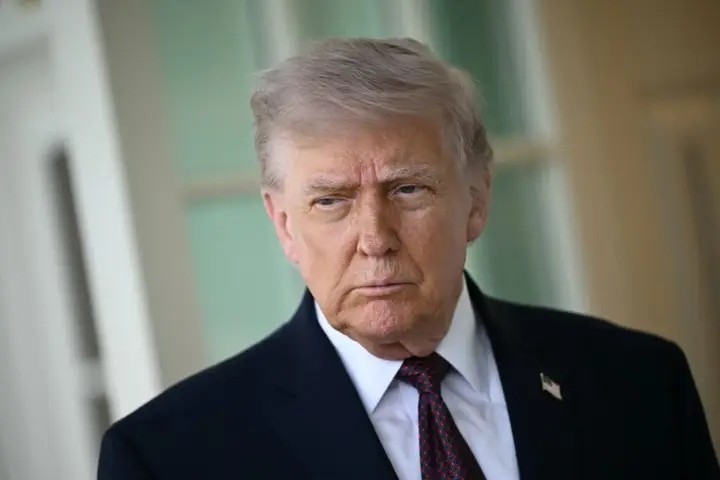
- The diplomatic response came just hours after United States President Donald Trump issued a public warning advising the democratic island against making a formal declaration of independence.
- Despite Trump’s direct warning, Taipei’s statement highlighted that the United States has consistently reaffirmed its fundamental cross-strait policies since the administration took office.
Taiwan’s Ministry of Foreign Affairs on Saturday firmly pushed back against external political pressure, asserting the island’s long-standing status as an independent nation.
Eko Hot Blog reports that the official response followed a stark warning from US President Donald Trump, who cautioned Taipei against taking overt steps toward a formal declaration of independence.
EDITOR’S PICK
- Fresh Details Emerge on Death of Odomola Monarch, Oba Adebowale Adeshina
- Sanwo-Olu Applauds LASU’s Academic Excellence After JAMB Ranking
- NRC Moves 176,820 Tonnes Of Cargo Through Lagos Ports In Q1
In a strongly worded press release, Taiwanese officials emphasized that the democratic island operates with full sovereignty, maintaining separate governance, legal frameworks, and democratic institutions completely independent of the mainland Chinese administration in Beijing.
The sudden friction highlights the delicate diplomatic balancing act that has defined Washington-Taipei relations under the current US administration.
While President Trump’s recent rhetoric has introduced fresh uncertainty into cross-strait dynamics, Taiwan’s foreign ministry noted that official communication channels remain open, pointing out that Washington has repeatedly assured Taipei that core elements of the bilateral relationship and regional security agreements remain fundamentally unchanged.
The statement appeared designed to project internal stability and resolve without unnecessarily escalating tensions with either Washington or Beijing.
The geopolitical situation remains highly sensitive as regional observers monitor how the US administration will respond to Taipei’s public defiance.
For decades, Washington has maintained a policy of strategic ambiguity regarding Taiwan, offering political and defensive support while officially recognizing Beijing under the “One China” framework.
This latest back-and-forth underscores growing anxieties across the Indo-Pacific region regarding potential shifts in American foreign policy and the threat of increased military or economic posturing in the Taiwan Strait.