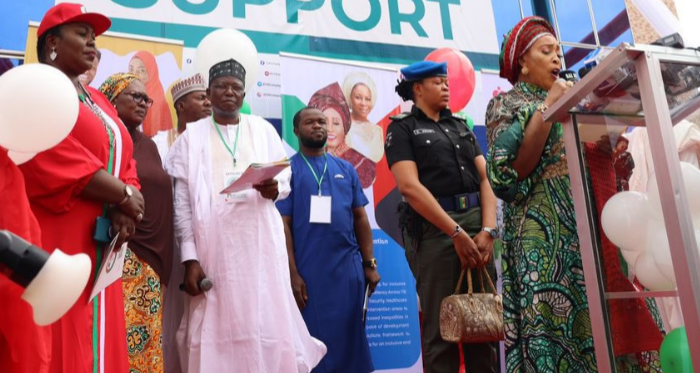
President Bola Tinubu’s new directive ordering the immediate withdrawal of police officers attached to VIPs may be the latest entry in a long-running ritual — one that has survived administrations, police reforms, and repeated promises of redeploying officers to core policing duties.
For more than 15 years, since at least 2009, Nigeria has seen successive Inspectors-General of Police (IGPs) issue nearly identical orders, only for the directives to fade quietly as political pressure, institutional resistance, and elite influence erode implementation. In fact, some police officers have been seen carrying bags for their principals while some have been assaulted for not running errands.
This is not acceptable. We have commenced necessary action on this. We will fish her out and get across to the principal. The AIG Special Protection Unit has been contacted to assist us get the woman police. Gradually, we will sanitise the system. https://t.co/cRwqsM52Zk
— Prince Olumuyiwa Adejobi (@Princemoye1) October 6, 2022
EDITOR’S PICKS
Tinubu’s announcement on Sunday came amid several high-profile kidnap incidents in the last week. This time, the presidency argues that the goal is simple: return officers to the streets, especially underserved communities, and rely on the Nigeria Security and Civil Defence Corps (NSCDC) for VIP protection going forward.
But history looms large. Nigeria has heard this promise before many times.
The long list of IGPs who tried and failed to withdraw VIP orderlies
EKO HOT BLOG reviewed policing directives over the past two decades and they reveal a striking pattern: nearly every IGP has announced a withdrawal of officers from VIPs, often with tough language and tight deadlines. Yet the outcomes have been nearly identical — toothless and fruitless.
2009 — Ogbonnaya Onovo
Announced a seven-day ultimatum for all officers deployed to unauthorized VIP duties to return to their bases, citing the official list of those legally entitled to police protection.
2010 — Hafiz Ringim
Issued and reissued a withdrawal order with threats of arrest and disciplinary action for defaulting officers.
2012 — Mohammed Abubakar (Acting IGP)
Cancelled existing approvals for police escorts to private individuals and companies, highlighting misuse and manpower shortages.
2016 — Solomon Arase
Directed officers attached to individuals, notably politicians, to be withdrawn and redeployed, warning that the country was “grossly under-policed.”
2018 — Ibrahim Idris
Declared immediate withdrawal of officers attached to politicians, business figures, and corporate bodies, saying a list of entitled office holders would be submitted to the presidency.
2020 — Mohammed Adamu
Issued a nationwide wireless signal withdrawing personnel from VIPs during the #EndSARS period, exempting only a small group of top officials.
2023 & 2025 — Kayode Egbetokun
Twice announced a phased withdrawal of Police Mobile Force (PMF/MOPOL) personnel from VIP security duties, describing the practice as a misuse of tactical units meant for high-risk operations. The latest one came in April 2025 and the president issuing a new directive on Sunday suggests that Egbetokun’s orders have proved abortive and ineffective on two separate occasions.
Despite the strong language, the directives rarely moved beyond the initial headlines. Officers remained embedded with political office holders, wealthy citizens, religious leaders, and even private companies. In many cases, they returned to VIP service within weeks.
Why Tinubu’s order may be different and why it still may fail
Tinubu’s directive is significant for one key reason: it is presidential, not merely administrative. Unlike past IG-level withdrawal orders, this one emerged from a high-level security meeting attended by the inspector-general of police, the service chiefs, and the director-general of the DSS. It also introduces a structural shift by transferring VIP protection to the NSCDC rather than the police.
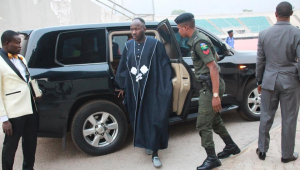
This addresses a longstanding weakness. Earlier withdrawals often collapsed because VIPs insisted that no other agency could legally or effectively provide the level of protection they demanded. In the absence of a viable alternative, the police quietly reinstated the officers, returning the system to business as usual.
Even so, Tinubu’s approach enters uncertain terrain. A president’s order carries far more authority than an IGP’s, but the same political class that routinely pressured past police chiefs still holds influence. If powerful figures resist the withdrawal, the presidency will face a tough test: whether it is willing to enforce the directive even when the resistance comes from within its own circle.
Tinubu has also paired the withdrawal with approval for 30,000 new police recruits, the first major expansion of the force in years. This could provide the manpower cushion needed to sustain street-level policing without reverting to VIP deployments. But if logistics falter or internal resistance strengthens, the temptation to quietly return officers to elite protection may reappear.
There is also the deeper structural challenge of policing culture.

For decades, officers have viewed VIP protection as a more comfortable and lucrative posting, with some insiders describing it as part of a “parallel economy” within the security system. Replacing police orderlies with NSCDC personnel will test whether the government can dismantle this entrenched culture and build a new model of security assignment that prioritises public safety over private convenience.
FURTHER READING
Whether these reforms hold will determine if Tinubu’s order becomes the first meaningful break from a 15-year cycle of abandoned directives, or simply another entry in Nigeria’s longstanding ritual of toothless withdrawals.
Philip Ibitoye is a Special Correspondent with EKO HOT BLOG. Click here to find daily analysis and critical insight on trending issues in Lagos and other parts of Nigeria.
Click here to watch the video of the week below: