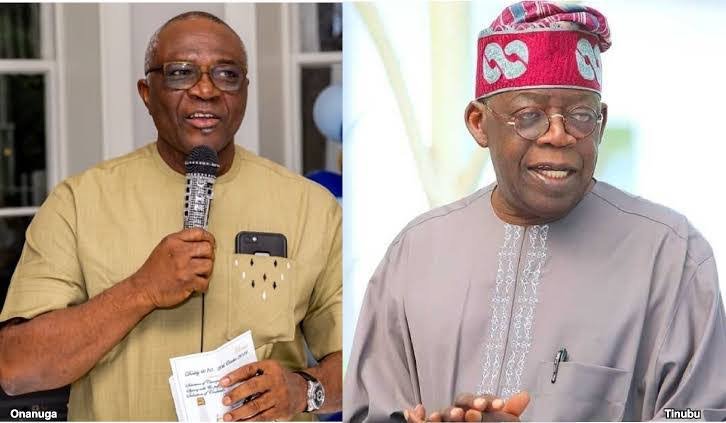
- Onanuga emphasized the need for patience in assessing the administration’s achievements
- …Addresses issue of borrowing
- …Clarified economic principle behind currency devaluation
Bayo Onanuga, the Special Adviser on Media and Information Strategy to President Bola Tinubu, has expressed confidence in the forthcoming reduction of living costs for Nigerians as a result of the administration’s economic reforms.
Eko Hot Blog reports that in an interview with newsmen in Lagos on Sunday, Onanuga asserted that President Tinubu’s policies would soon yield positive outcomes, impacting various sectors and communities across the nation.
EDITOR’S PICK
- Suspended Senator Natasha Set to Appear in Court Tuesday
- APC Slams Dalung Over Cabal Allegations, Defends Tinubu’s Government
- JUSUN Insists On Indefinite Strike Despite Meeting DSS, Supreme Court Withdrawal
According to Onanuga, President Tinubu has not only introduced progressive reforms but has also confronted challenges that previous administrations failed to address.
He emphasized the need for patience in assessing the administration’s achievements, pointing out that a comprehensive evaluation of policy impact typically requires a longer timeframe, spanning 10 to 12 years, as noted by policy experts.
“The President’s years in office began with clear policy directions and implementation.
“A lot of reforms have taken place across sectors. The President has laid down many fundamentals that would ensure growth,” he stated.
Acknowledging the gradual positive impact of the President’s actions over the past two years, he emphasized the significant shift in the economic paradigm that has addressed numerous pre-existing challenges.
Onanuga, while referring to the situation before the subsidy removal, said, “There was no fuel. Many stations were saying no fuel, no fuel.
“What was happening at that time was that the NNPC had reached the bottom point. It had no money to import fuel, it claimed that it was owing suppliers about six billion dollars and the government was owing it about four trillion dollars. So, it could not import any more.”

Addressing concerns surrounding borrowing, Onanuga emphasized that it is a widespread practice globally, highlighting that even countries like the United States engage in borrowing to support their economies.
“Nigeria has abundant resources that we are harnessing, but not as much readily available money as people might think,” he explained.
Onanuga emphasized that borrowed funds were allocated effectively for their intended purposes, as evidenced by large-scale projects such as coastal roads, which require external financing due to their substantial benefits.
Concerning currency devaluation, he clarified that it is a fundamental economic principle that is not unique to Nigeria, pointing to examples where countries like the United Kingdom and the United States have also employed devaluation strategies.
“Even UK and the US at some point devalued. These are economic principles that are universal and cannot be changed because it is Nigeria,” he asserted.
Onanuga highlighted that the government had taken bold steps by initiating infrastructure projects that were not initially part of the budget, demonstrating their commitment to development.
He also pointed to a noticeable increase in production and disposable income in Nigeria, citing companies like Nestle and Nigerian Breweries as examples.
These companies had previously faced challenges but were now sourcing materials locally and reporting profits.
“This economy has opened up opportunities in many forms for Nigerians. Those who can really exploit it. And they are making money,” he emphasised, giving examples of individuals making profits from exporting agricultural products like cocoa and even Zobo.
According to him, many companies are now investing and producing in Nigeria, and these positive shifts will soon become evident and tangible for all Nigerians.
Onanuga stressed the importance of public understanding of the economic context, saying, “We don’t do our people any good when we keep on pushing stories of gloom and doom without allowing them to see the truth, without allowing them to see the context, and without allowing them to know that there’s actually light at the end of the tunnel.”