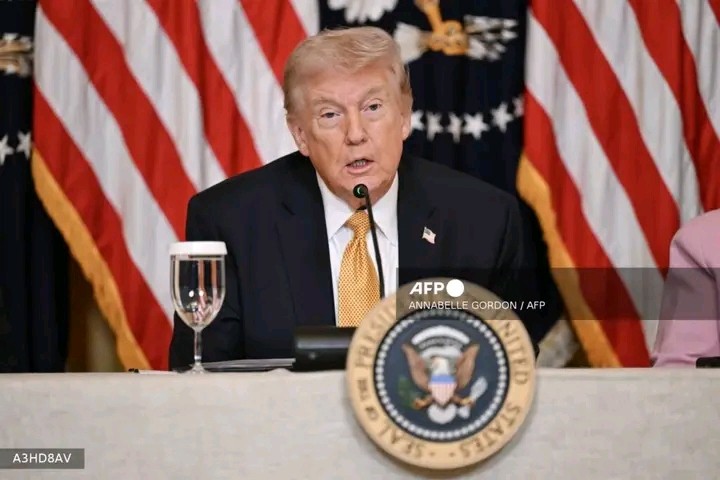
- Following the first face-to-face talks between senior Israeli and Lebanese officials in over 30 years, President Donald Trump has announced that leaders from both nations will speak today, Thursday, April 16, 2026.
- The U.S. administration is pushing for a peace agreement to end a conflict that has claimed over 2,000 lives and displaced one million people in Lebanon since hostilities escalated on March 2.
- Israeli Prime Minister Benjamin Netanyahu emphasized that any sustainable peace must be achieved through strength, citing the dismantling of Hezbollah as a core objective.
U.S. President Donald Trump has revealed that the leaders of Israel and Lebanon are set to hold discussions today.
Eko Hot Blog reports that this follows a meeting in Washington earlier this week, the first direct negotiations between senior officials of the two neighboring rivals since 1993.
Writing on his Truth Social platform, Trump stated he is “trying to get a little breathing room” between the two nations.
While the U.S. remains a key mediator, senior administration officials have clarified that Washington is not demanding an “immediate ceasefire” but is instead focused on building the necessary trust and political momentum for a “durable peace.”
Lebanon was drawn into the broader regional war on March 2 after Hezbollah launched attacks on Israel.
Since then, the humanitarian toll has been devastating, with more than 2,000 reported deaths in Lebanon and massive displacement across the country.
Despite international pressure, Israeli ground forces have continued operations in southern Lebanon, aiming to neutralize Hezbollah’s infrastructure.
A senior U.S. official, speaking on the condition of anonymity, stressed that these peace talks are strictly bilateral between Israel and Lebanon and are not linked to ongoing negotiations between Washington and Tehran.
Prime Minister Netanyahu has remained firm on Israel’s conditions for peace. Speaking on Wednesday, he outlined two primary goals: the complete dismantling of Hezbollah and a peace treaty backed by military strength.
The U.S. administration hopes that these direct lines of communication will create the “space” needed for a permanent understanding, though officials admit that both sides have a significant journey ahead to build the required political trust.
As the world watches today’s scheduled talks, the potential for a de-escalation offers a glimmer of hope in a region that has seen unprecedented violence over the past two months.