- Trump described the initial members as a mix of popular and controversial leaders
- the board’s immediate priority was ensuring that any Gaza peace agreement becomes lasting
- The launch also comes amid Trump’s long-standing frustration
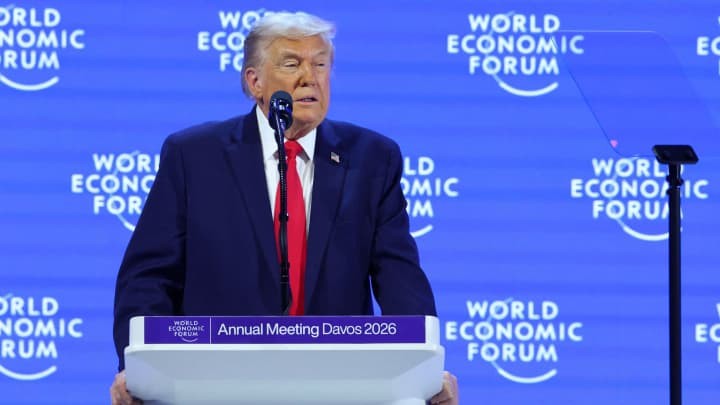
US President Donald Trump on Thursday formally launched a new global body he calls the “Board of Peace” at the World Economic Forum in Davos, unveiling an initiative that immediately stirred debate over its purpose, structure and membership.
Eko Hot Blog reports thatThe ceremony, attended by leaders and senior officials from 19 countries, saw Trump preside as chairman while signatories endorsed the board’s founding charter.
EDITOR’S PICK
- Akande at 87: Adewole Hails Elder Statesman
- Lagos Assembly Approves ₦4.44 Trillion Budget for 2026
- NANS Mobilises Nationwide Protest Over Tax Reform Law
The organization carries a controversial requirement: permanent members are expected to commit a $1 billion fee, a condition critics say risks turning global peace efforts into an elite, pay-to-enter club.
Trump described the initial members as a mix of popular and controversial leaders, insisting that the diversity reflected real-life politics.
Although the body was initially conceived to oversee post-war peace arrangements in Gaza, its charter outlines a broader mandate to intervene in global conflicts, prompting concerns it could evolve into a rival to the United Nations.
The US president dismissed those fears, stressing that the Board of Peace would operate alongside the UN rather than replace it. However, skepticism deepened after Trump confirmed he had invited Russian President Vladimir Putin to join. While Trump said Putin had agreed in principle, the Kremlin maintained the Russian leader was still reviewing the offer.
Several close US allies kept their distance from the launch. The United Kingdom and France declined to participate, with British officials openly questioning the initiative.
In contrast, leaders aligned with Trump, including Hungary’s Viktor Orban and Argentina’s Javier Milei, appeared prominently at the signing. Other participating countries included Saudi Arabia, Qatar, Turkey, the United Arab Emirates, Pakistan, Jordan, Morocco and Kazakhstan.
Israeli Prime Minister Benjamin Netanyahu, who has indicated his intention to join despite facing an International Criminal Court arrest warrant over the Gaza war, was absent from the event.
US Secretary of State Marco Rubio said the board’s immediate priority was ensuring that any Gaza peace agreement becomes lasting, while Trump warned that Hamas must disarm under the next phase of the ceasefire or face severe consequences.
The launch also comes amid Trump’s long-standing frustration over failing to secure a Nobel Peace Prize, despite his repeated claims of brokering multiple international peace deals.
Attention now shifts to Ukraine, as Trump is scheduled to meet President Volodymyr Zelensky in Davos to discuss a possible ceasefire with Russia. Trump’s special envoy, Steve Witkoff, said talks with Moscow had made significant progress and were now focused on resolving a single outstanding issue, though he declined to provide details.
Meanwhile, European leaders remain cautious after Trump announced he had reached a tentative framework with NATO Secretary-General Mark Rutte, a move that led him to suspend planned tariffs against European allies.
While Trump offered few specifics, sources familiar with the talks suggest the agreement could involve renegotiating long-standing defence arrangements tied to Greenland.
As reactions continue to pour in, the Board of Peace has already become one of the most talked-about and divisive outcomes of this year’s Davos summit.
FURTHER READING