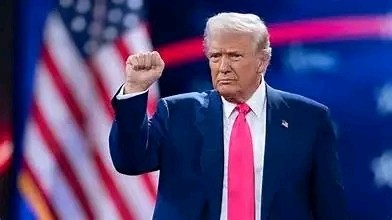
- US President Donald Trump has issued a severe military warning, threatening the total destruction of Iran if the Islamic Republic attempts to orchestrate or execute an assassination plot against him.
- Despite agreeing to backdoor diplomatic negotiations mediated by Qatar, Trump declared that the temporary ceasefire between Washington and Tehran is completely dead following an exchange of heavy military strikes this week.
- The United States has given Tehran a strict ultimatum to halt hostilities against commercial vessels navigating the vital oil transit waterway, as the US Treasury Department revokes temporary sanctions waivers on Iranian crude oil exports.
Geopolitical tensions in the Middle East have escalated to a critical new flashpoint following a series of highly aggressive declarations by United States President Donald Trump.
Eko Hot Blog reports that in a series of unfiltered social media statements, the American president warned that the United States military is prepared to completely obliterate the Islamic Republic of Iran if the state attempts or succeeds in executing an assassination plot against him or any sitting American leader.
EDITOR’S PICK
- Hamzat Appoints Obanikoro as Campaign DG Ahead of 2027 Lagos Governorship Race
- Tinubu’s State Police Plan Gains Momentum as Amendment Looms
- Residents Raise Alarm After Two Bodies Found in Lagos Waterway
Writing on his digital media platform, Truth Social, the president claimed that over one thousand tactical missiles are currently primed, aimed, and ready for deployment against key targets across Iran.
He further asserted that standing operational orders have been explicitly conveyed to the US armed forces, granting a one-year authorization window to dismantle and level any region within Iranian territory should Tehran act on what Washington describes as global assassination threats.
The escalating war of words marks a disastrous collapse in bilateral relations, coming just weeks after both global powers had signed a preliminary memorandum of understanding aimed at transitioning a fragile truce into a permanent regional peace.
While Trump indicated an openness to continue exploratory diplomatic talks via neutral intermediaries, he explicitly told his followers that the existing ceasefire is entirely over, dismissing ongoing diplomatic engagements at a recent NATO summit as an absolute waste of time.
In a swift diplomatic counter-response, Iranian Foreign Minister Abbas Araghchi strongly rejected the American narrative, maintaining that Tehran has fully respected the terms of the signed memorandum.
Araghchi instead accused the United States of actively violating the agreement by imposing fresh economic restrictions and deploying additional military forces to the Persian Gulf.
Under the original framework, Iran had committed to freezing the expansion of its domestic nuclear program in direct exchange for the suspension of punitive US Treasury sanctions and the stabilization of regional troop levels.
The physical epicenter of the military standoff remains concentrated within the strategic Strait of Hormuz, a crucial maritime chokepoint through which a significant portion of the world’s daily petroleum supply transits.
Following a series of heavy US-Israeli strikes on regional urban centers in late February, Iranian forces had effectively restricted commercial shipping access through the waterway, asserting a sovereign right to police the territorial waters and levy transit fees on passing international vessels.
International maritime law, however, dictates that neither Iran nor Oman can legally block or toll global commercial passage through the strait.
Following a series of retaliatory strikes by Iran against American military installations in the Gulf earlier this week, the conflict has taken a harsh economic turn.
The US Treasury Department formally revoked a temporary sanctions waiver that had previously permitted Iran to market and deliver its crude oil products through late August.
As Qatari and Pakistani leaders scramble to launch emergency mediation calls between Iranian President Masoud Pezeshkian and Western allies to safeguard the remnants of regional stability, Iranian chief negotiator Mohammad Bagher Ghalibaf struck a deeply defiant tone, warning that while Tehran wishes to avoid an all-out war, the country will never accept a resolution that demands its geopolitical surrender.