- The Ugandan Ministry of Health has officially confirmed three additional cases of the highly lethal Ebola Virus Disease (EVD), pushing the country’s cumulative infection count to five since the cross-border emergency was first detected on May 15, 2026.
- The newly documented patient profile highlights an immediate threat to the frontline workforce, identifying the casualties as a local Ugandan commercial driver, a domestic healthcare practitioner, and an undocumented female traveler from the neighboring Democratic Republic of Congo (DRC).
- Following a formal declaration by the World Health Organization (WHO) elevating the regional risk index to its highest tier, authorities in Kampala have executed an absolute four-week suspension on all public passenger transit systems, border ferries, and open-air markets along the Congolese border.
Uganda said on Saturday it had confirmed three new cases of Ebola, bringing to five the total since the virus outbreak was discovered in the East African country on May 15.
Formally announced via an emergency administrative update on Saturday, May 23, 2026, Eko Hot Blog reports that the data emerged from active surveillance centers managed directly by the Ministry of Health.
EDITOR’S PICK
- Fresh Details Emerge on Death of Odomola Monarch, Oba Adebowale Adeshina
- Sanwo-Olu Applauds LASU’s Academic Excellence After JAMB Ranking
- NRC Moves 176,820 Tonnes Of Cargo Through Lagos Ports In Q1
Public health officers named the infected individuals as a Ugandan logistics driver, a domestic clinical healthcare provider, and an undocumented woman who recently arrived from the northeastern Ituri province of the Democratic Republic of Congo, which currently functions as the epicenter of the deadly viral wave.
The localized escalation matches a critical alert from the World Health Organization (WHO), which officially raised the biological threat level for the DRC to its highest tier following a rapid geographical expansion of the rare Bundibugyo strain into North and South Kivu.
Because this specific viral strain currently possesses no approved preventative vaccines or therapeutic treatments, medical teams are forced to rely entirely on strict physical isolation, thorough contact tracing, and rapid epidemiological ring-fencing.
The state health ministry stated on X that emergency intervention squads have successfully scaled up clinical monitoring and public awareness campaigns across vulnerable border communities to prevent mass internal contamination.
The sudden discovery of a positive healthcare worker and an international transit driver has supercharged regional security anxieties, forcing the national task force to execute severe border closures.
On Thursday, the Ugandan government moved swiftly to suspend all public buses, flights, and river ferries operating along the immediate DRC border lines after confirming that prior border-crossing cases resulted in a rapid community fatality in Kampala.
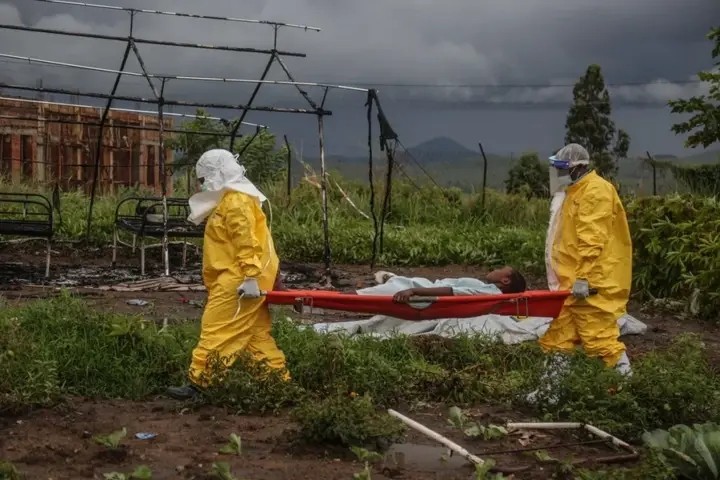
Under the updated emergency guidelines, only heavy cargo trucks conveying essential food items and medical supplies will be permitted passage through highly monitored entry points over the next four weeks, while all high-traffic weekly markets in adjacent districts have been shut down by law enforcement.
The cross-border spread continues to complicate international humanitarian logistics, as emergency responders work to manage a rising count of suspected cases amid ongoing regional instability.
With more than 176 deaths logged in the DRC and active transmission tracking directly toward urban hubs, international embassies have started implementing specialized screening protocols for returning travelers.
The Ugandan Ministry of Health has placed over 500 potential contacts under strict 21-day quarantine cycles, warning that the failure of transit operators to respect transit bans could trigger a wider, uncontainable outbreak inside the country’s densely populated commercial sectors.