- US Secretary of State Marco Rubio has announced that the United States will completely block entry to anyone infected with the dangerous Ebola virus currently spreading across Central Africa.
- Deviating from previous outbreak protocols, the Trump administration is setting up a state-of-the-art medical and isolation facility in Kenya to treat infected American citizens rather than bringing them home.
- All US citizens returning from the Democratic Republic of Congo (DRC), Uganda, or South Sudan must route through three designated hubs for rigorous screening, while permanent residents from those areas face a temporary 30-day travel ban.
The United States will not allow anyone afflicted with the highly dangerous Ebola virus spreading in central Africa to enter the country, Secretary of State Marco Rubio said on Wednesday.
Speaking during an emergency White House cabinet meeting convened by President Donald Trump on May 27, 2026, Eko Hot Blog reports that Rubio emphasized that the State Department and partner agencies are deploying massive resources to contain the spreading crisis.
EDITOR’S PICK
- Fresh Details Emerge on Death of Odomola Monarch, Oba Adebowale Adeshina
- Sanwo-Olu Applauds LASU’s Academic Excellence After JAMB Ranking
- NRC Moves 176,820 Tonnes Of Cargo Through Lagos Ports In Q1
The current outbreak, centered in the Democratic Republic of Congo (DRC), has fueled major international concern as health officials scramble to curb a fast-growing, rare variant of the Ebola Virus Disease.
In a notable shift from historical outbreak management, the Trump administration is working to open an offshore medical facility in Kenya to manage infected American citizens.
A senior administration official, speaking on the condition of anonymity, confirmed that this state-of-the-art center is designed to provide immediate, high-quality care and quarantine for Americans evacuated from the DRC without the logistical risks of a lengthy transatlantic flight back to US soil.
While the facility is currently awaiting formal regulatory approval from Kenyan authorities, each case will be evaluated for forward transport as appropriate. Meanwhile, some infected Westerners have already sought aid elsewhere, including an American medical missionary who was recently admitted to an isolation unit in Berlin, Germany, alongside his family.
To shield the American public from external transmission, the US government has enforced strict border and aviation control directives.
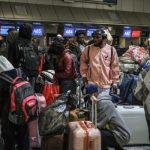
Under the newly implemented guidelines, any US citizen who has visited the DRC, Uganda, or South Sudan within the past 21 days will be permitted to land only at specific designated international airports in Washington, Atlanta, and Houston, where advanced medical screening teams have been stationed.
Furthermore, a mandatory, temporary 30-day entry ban has been slapped on US permanent residents who have traveled through or stayed in the affected Central African nations within that same three-week window.

The absolute rigidity of the American response comes amid warning signs from global health monitors. The World Health Organization (WHO) has already logged more than 1,000 suspected Ebola infections, including 223 fatalities, during the current wave.
However, international health experts warn that due to severe logistical blockades and fragmented reporting channels in remote conflict zones, the official figures likely fall short of the true number of cases.
Rubio reassured the public that federal authorities have surged assistance across critical border points, expressing strong confidence that the preventative measures currently in place will successfully keep the lethal pathogen from establishing a footprint on US soil.