From an early age, African boys are raised to understand that a man’s worth is closely tied to his ability to produce children. Fatherhood is celebrated as achievement, and sons in particular are treated as living extensions of a man’s existence.
EDITOR’S PICK
- FG Orders Six-Week Partial Closure of Lagos-Ibadan Expressway for Bridge Repairs
- “Let’s Do It in Public,” Clintons Tell US Congress Over Epstein Investigation
- Lagos Country Club Reflects Lagos Spirit of Endurance – Sanwo-Olu
They carry his name, his bloodline, and his memory into the future. Within this belief system, a man is never living only for himself. He is living for his ancestors and for generations yet unborn. Vasectomy, in this context, is interpreted not as a medical choice but as a cultural violation.
Conversations about vasectomy are often wrapped in silence or humour rather than honesty. Among peers, a man who considers it risks ridicule. His masculinity is questioned, his sexual strength doubted, and his authority diminished. In societies where respect is earned and constantly defended, few men are willing to risk such social punishment, regardless of what medical science says.
Fear also plays a powerful role, sustained by myths that refuse to fade. Many men believe vasectomy will weaken their sexual performance, reduce desire, or stop ejaculation entirely. These beliefs are medically false, yet they persist because they align with deep cultural anxiety. In the popular imagination, fertility and sexual power are inseparable. Any threat to one is assumed to be a threat to the other.
Religion adds another layer of resistance. In deeply religious communities, reproductive decisions are often framed as spiritual matters rather than personal ones. Vasectomy is sometimes portrayed as interfering with divine will or questioning God’s authority over life. Even where religious texts do not clearly forbid it, the interpretation offered by local religious leaders carries enormous weight. A man who undergoes vasectomy may be viewed as disobedient or lacking faith, labels few are willing to carry.
The permanence of the procedure also clashes with African social realities. In societies where remarriage is common and polygamy is culturally accepted, the ability to father children is seen as a form of security. Men worry about what happens if they lose a spouse, remarry, or experience the death of their children. Vasectomy feels final in a world where flexibility in family structure is the norm.
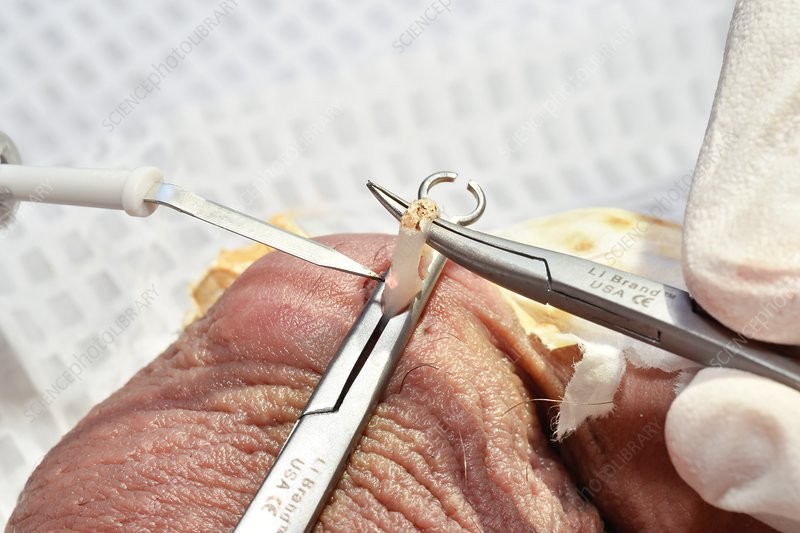
There is also the long-standing belief that family planning is the responsibility of women. Across Nigeria and much of Africa, contraception has been designed, promoted, and discussed largely around women’s bodies. Men are encouraged to approve these choices but rarely to participate in them. Vasectomy challenges this imbalance by asking men to carry part of the physical responsibility themselves, a shift many are unprepared to embrace.
Mistrust of healthcare systems further complicates acceptance. Some men view vasectomy through the lens of historical exploitation and suspicion of foreign-driven health initiatives. Narratives that frame it as a population control strategy aimed at Africans find support in communities where healthcare delivery has often been inconsistent and poorly communicated. In the absence of clear education and trusted voices, suspicion thrives.
Even men who overcome cultural and psychological resistance often face practical barriers. Vasectomy services remain limited, trained providers are few, and male-focused counselling is rare. In many rural areas, access is virtually nonexistent. The absence of visible role models—respected African men openly discussing their decision—keeps the subject hidden and misunderstood.
The cost of this rejection is quietly carried by families and women. Unplanned pregnancies increase economic strain. Women endure repeated childbirth and the side effects of contraceptives. Maternal health risks remain high, while vasectomy, one of the safest and least invasive methods of family planning, remains largely unused.
At its core, resistance to vasectomy in Nigeria and Africa is not a medical issue. It is a question of identity. It is about how manhood has been defined, protected, and enforced for generations. Until masculinity is separated from the idea of endless fertility, vasectomy will continue to be viewed as cultural betrayal rather than responsible choice.
The African man does not reject vasectomy because he lacks information. He rejects it because culture has taught him that to stop producing life is to stop being a man. That belief, more than any medical barrier, continues to shape the decision.
FURTHER READING
- Tinubu Orders Safe Transit Routes to Clear Niger-Bound Cargo
- Police Nab 3 Suspects in N10m Nude Photo Extortion Plot
- Court Jails Truck Driver for Life Over Death of FRSC Officer
Click here to watch the video of the week
https://youtu.be/552knBEVttI