- United States equities experienced a downward shift early Tuesday, with the Dow Jones Industrial Average dropping 0.8 percent to 49,289.53 as prolonged geopolitical tensions dampened investor enthusiasm.
- The sell-off was accelerated by a sharp increase in government borrowing costs, pushing the 30-year US Treasury yield to its highest level in nearly 19 years and forcing investors to recalibrate their inflation expectations.
- The tech-rich Nasdaq Composite Index shed 0.3 percent to land at 26,024.82, driven by fractional losses in semiconductor equities as traders took profits ahead of Nvidia’s upcoming quarterly earnings report.
Wall Street investors faced renewed pressure during early Tuesday trading as the financial markets shifted their focus back to systemic inflation risks.
Eko Hot Blog reports that financial analysts noted that the prolonged military conflict in the Middle East has successfully kept global crude oil prices at elevated heights, complicating central bank strategies to manage core consumer costs.
EDITOR’S PICK
- Fresh Details Emerge on Death of Odomola Monarch, Oba Adebowale Adeshina
- Sanwo-Olu Applauds LASU’s Academic Excellence After JAMB Ranking
- NRC Moves 176,820 Tonnes Of Cargo Through Lagos Ports In Q1
Market strategists pointed out that while equity portfolios had previously ignored the steady rise in government bond yields, the scale of the fixed-income sell-off has officially become too significant for corporate equity desks to overlook, though trading desks stopped short of describing the pullback as a panic.
The primary driver behind the cautious market sentiment remains the volatile geopolitical standoff between Washington and Tehran.
Despite a public announcement from President Donald Trump stating that he had temporarily suspended further offensive military operations against Iran in hopes of brokering a diplomatic deal, trading indices failed to secure a meaningful rebound.
Market optimism was severely checked after the Iranian military issued a counter-warning, declaring it would actively open new operational fronts against the United States if American forces resumed tactical strikes in the region.
In the technology sector, the minor retraction across major semiconductor firms was largely categorized by institutional investors as routine profit-taking.
With artificial intelligence infrastructure driving historic market gains over the past fiscal quarters, money managers chose to lock in capital returns directly ahead of Nvidia’s high-stakes Q1 earnings release scheduled for Wednesday.
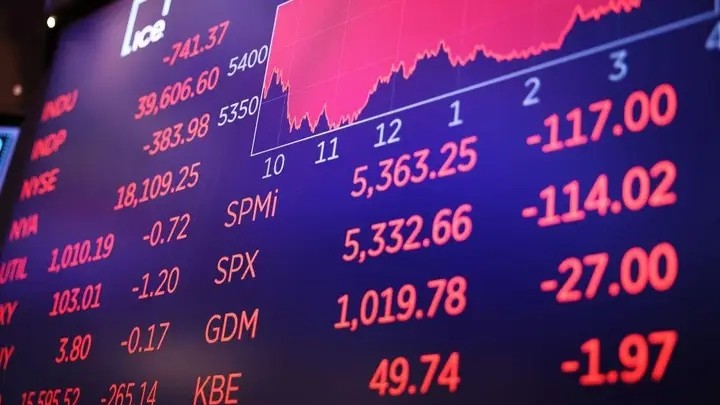
The broad-based S&P 500 mirrored this defensive positioning, dropping 0.4 percent to close early trading at 7,372.49 as asset managers moved funds into safer liquid positions to hedge against near-term macro volatility.
The broader economic fallout from the energy shock continues to impact international finance, leaving European equity indices to finish their trading day with mixed, flat results.
Investment directors emphasized that while global markets are expressing temporary relief that direct military actions have not immediately escalated into a broader regional war, current crude pricing sits at levels that continue to strain logistics and manufacturing supply chains.
As long-term treasury yields remain locked near generational highs, analysts expect corporate profit margins to remain under pressure, making sustainable market growth difficult without a clear resolution to the energy crisis.