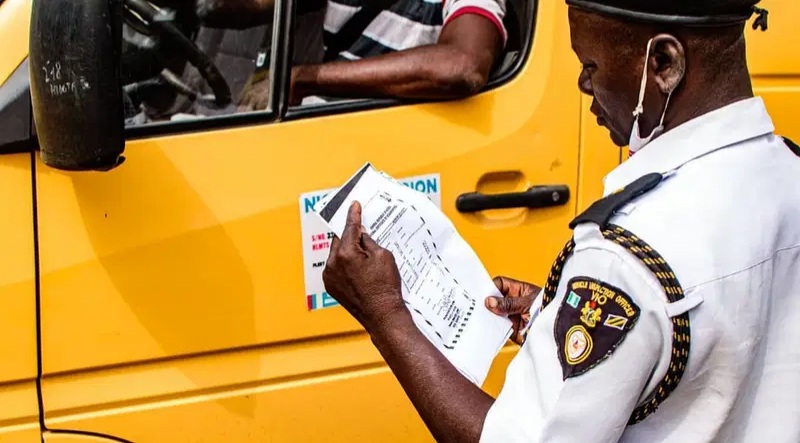
The Court of Appeal in Abuja on Thursday upheld a landmark judgment restricting the Directorate of Road Traffic Services (DRTS), better known as the Vehicle Inspection Office (VIO), from impounding vehicles or imposing fines on motorists.
The appellate court’s decision, which also awarded ₦1 million in costs to rights lawyer Abubakar Marshal, did not only affirm an earlier Federal High Court ruling, it also reignited debate about the legality of VIO’s powers and its place in Nigeria’s road traffic system.
EDITOR’S PICKS
No law grants VIO Federal Enforcement powers
At the core of the judgment lies a decisive legal finding: there is no federal law empowering VIO or the DRTS to stop, seize, or fine motorists in Nigeria.
The appeal court agreed with the reasoning of Justice Nkeonye Evelyn Maha of the Federal High Court, who had ruled on October 2, 2024, that the agency “is not empowered by any law or statute to stop, impound, confiscate the vehicles of motorists and or impose fine on motorists.”
The case, filed by Mr. Marshal of Falana & Falana Chambers, challenged what he described as years of unlawful enforcement practices by VIO officials in the Federal Capital Territory.
His argument rested on a simple point of law: only agencies established by statute can exercise powers that restrict citizens’ rights. The Federal Road Safety Corps (FRSC), established under the FRSC (Establishment) Act, 2007, remains the only body legally authorized by federal legislation to regulate and enforce road safety nationwide. That Act explicitly empowers FRSC officers to stop vehicles, arrest and prosecute offenders, and impound vehicles where necessary.
In contrast, the court found that the VIO/DRTS could not cite any valid and existing federal statute giving it similar powers. References to the colonial-era Road Traffic Act, under which vehicle inspection offices once operated, were dismissed as outdated and legally insufficient. The court ruled that without a current law conferring such authority, the agency’s enforcement activities amounted to unlawful interference with citizens’ rights to movement, property, and due process.
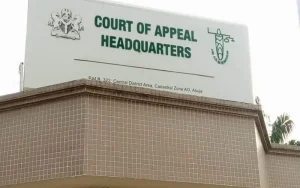
The Abuja context: Absence of an enabling FCT law
While some states have enacted laws establishing vehicle inspection services such as the Lagos State Transport Sector Reform Law of 2018 the Federal Capital Territory has no such local statute. The DRTS in Abuja therefore operates without a defined legal framework, relying on administrative directives rather than legislation.
Justice Maha’s original ruling described the agency’s conduct as “wrongful, oppressive, and unlawful,” and issued a perpetual injunction restraining VIO officers and their agents from stopping or impounding vehicles or collecting fines. The appellate court, in upholding this position, stressed that administrative practices cannot override statutory requirements. In the absence of an FCT law granting DRTS enforcement powers, the court affirmed that the agency’s actions were null and void.
This means that within the FCT, VIO officers have no legal authority to stop motorists, demand documents, or confiscate vehicles. The only agency with recognised federal powers to carry out such duties is the FRSC, whose jurisdiction covers the entire country and all federal roads.
What this means for motorists nationwide
The implications of the ruling extend far beyond Abuja. By affirming that no federal law gives VIO enforcement powers, the Court of Appeal has effectively clarified that VIO officers across the country cannot rely on federal authority to stop vehicles, confiscate them, or impose fines.
This means that in every state of the federation, VIO units can only exercise such powers if a state law expressly grants them. Where no such state legislation exists—or where the law is vague—VIO enforcement could now be open to legal challenge, with the Abuja judgment serving as a persuasive precedent.
For motorists, the ruling provides a clearer understanding of their rights and restricts arbitrary enforcement practices that have persisted for years. For states, it highlights the need to examine their traffic laws and ensure that any powers granted to VIO agencies are expressly defined in legislation.
FURTHER READING
Most significantly, the judgment reinforces a foundational legal principle: only the FRSC has federal statutory authority to enforce road traffic regulations in Nigeria, and no VIO office, whether in Abuja or any state, can lawfully assume powers that the law reserves for the FRSC unless a valid state law says otherwise.
Philip Ibitoye is a Special Correspondent with EKO HOT BLOG. Click here to find daily analysis and critical insight on trending issues in Lagos and other parts of Nigeria.
Click here to watch the video of the week below: