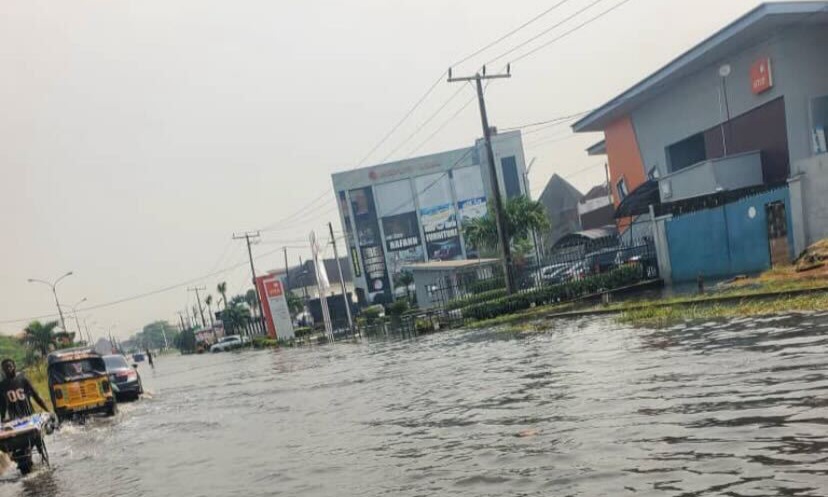
For yet another rainy season, parts of Lagos have been overwhelmed by flash floods. This week’s downpours left Itafaji, Jankarra Market, Mile 2, Ago Palace Way, Apple Junction, Lekki Horizone Estate, and more submerged, forcing residents to wade through stagnant water and disrupting businesses, schools, and traffic.
The scenes have become familiar. Each year, the arrival of heavy rains is accompanied by complaints of blocked roads, flooded homes, and stagnant pools that linger long after the skies clear. For Lagosians, the central question is simple: why does the city’s flood crisis persist?
EDITOR’S PICKS
Lekki Horizon Estate.
📍 Meadow Hall Way Lekki. pic.twitter.com/rMirjkFp0y
— Omega X D 𝕏🤴🏽 (@OmegaXDreams) September 23, 2025
Lagos Is Naturally Prone to Flooding
The Lagos State Government insists the problem is partly inevitable. In a statement on Wednesday, Commissioner for the Environment and Water Resources, Tokunbo Wahab, explained:
“As a coastal city, Lagos is naturally vulnerable to flooding, especially during periods of heavy rainfall combined with tidal lock. Despite this, the State Government has continued to invest in drainage infrastructure, regular desilting, and enforcement of environmental laws to minimize flooding incidents and protect lives and property.”
Wahab pointed to technical challenges in specific areas. At Kusenla, for example, the Commissioner said surveys revealed that “the downstream is about 1.2 meters higher than the invert of the existing drainage,” a flaw that requires a pumping station currently under construction.
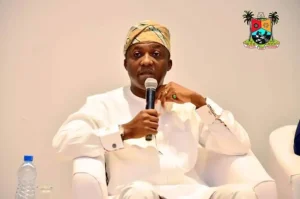
He also blamed some of the flooding around House on the Rock church on what he called “infractions we highlighted earlier—illegal construction on flood plains and dumping of refuse in drains. These kinds of activities worsen flooding and must stop.”
Residents Blame Poor Drainage and Weak Enforcement
While residents acknowledge that reckless building and poor waste disposal contribute to flooding, many argue that the bigger issue is government failure to build and enforce proper drainage systems.
In Itafaji, stagnant water has taken over streets, submerging a bakery, a church, and shops linking the area to Jankarra Market. Residents complain that the flooding persisted even before this week’s rainfall. “The last rainfall was only on Wednesday, but water had been stagnant before then,” one resident said, insisting that proper drainage could have prevented it.
This frustration is not new. Communities across Lagos have repeatedly accused authorities of turning a blind eye to inadequate infrastructure while shifting blame to residents. To them, the government’s narrative downplays its responsibility to provide effective solutions.
A Shared Problem, but Uneven Responses
Wahab urged residents to cooperate with government efforts by keeping the environment clean and avoiding illegal reclamations without permits. He promised that “illegal structures and obstructions are promptly removed,” noting that several of the videos shared during the flood showed infractions that would now be targeted for demolition.
At the same time, he sought to reassure residents that “the flooding was a flash flood in some parts of the State and has since receded this morning.”
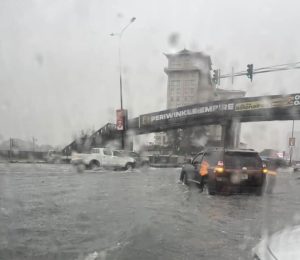
Yet the broader issue remains: enforcement is inconsistent, and urban planning often plays catch-up with Lagos’s rapid population growth. For residents, the reality is that even if illegal buildings are removed, without a well-designed drainage network, the problem will remain cyclical.
Someone’s car inside Lekki 1. pic.twitter.com/5n6vpRcASR
— Hauwa 🌟🌬 (@Hauwa_L) September 23, 2025
Lessons from Elsewhere
To be fair, Lagos is not alone. Even developed countries with advanced infrastructure, like the United States, struggle with urban flooding. Cities such as Houston and New Orleans face recurring floods despite billions of dollars spent on drainage and levee systems. Wahab’s point—that Lagos’s coastal geography makes it naturally vulnerable—is valid.
But what separates cities that cope better with flooding is the consistency of enforcement, investment in modern engineering solutions, and long-term urban planning. Lagos, residents argue, has lagged in all three areas.
Why the Flood Crisis Persists
The persistence of Lagos flooding reflects both natural and man-made factors. Geography and climate expose the city to floods, but weak drainage patterns, poor planning enforcement, and government failure to deliver effective long-term infrastructure make the crisis worse.
FURTHER READING
Until Lagos matches investment in technical fixes with strict regulation of urban growth and community trust in its enforcement, residents fear that each rainy season will bring the same cycle of flash floods, damaged livelihoods, and official promises.
Philip Ibitoye is a Special Correspondent with EKO HOT BLOG. Click here to find daily analysis and critical insight on trending issues in Lagos and other parts of Nigeria.
Click here to watch the video of the week below: