- Ukrainian President Volodymyr Zelensky has announced that the strategic oil pipeline damaged by Russian strikes will be partially functional by the end of April 2026.
- Zelensky expressed a direct willingness to meet with Hungary’s Prime Minister-elect, Peter Magyar, signaling a potential thaw in relations between Kyiv and Budapest.
- The restoration of the pipeline is critical for the energy security of Hungary and Slovakia, which rely on the transit of oil through Ukrainian territory.
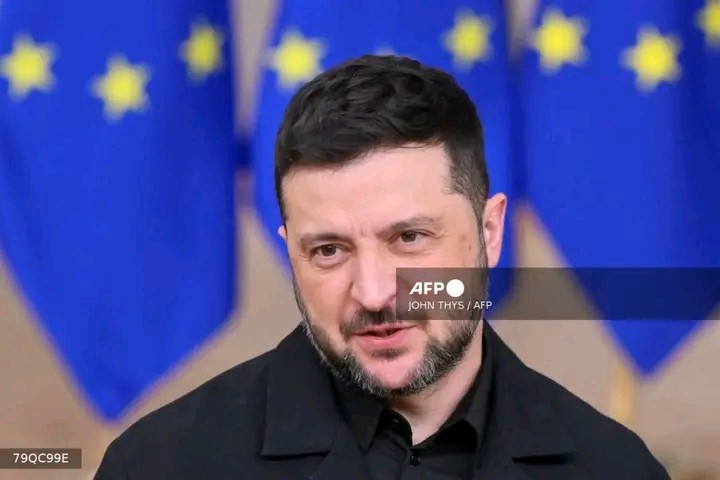
Ukrainian President Volodymyr Zelensky confirmed on Tuesday that repairs are underway to restore a vital pipeline carrying oil through Ukraine to Central Europe.
Eko Hot Blog reports that the infrastructure, which had been a target of Moscow’s aerial strikes, is expected to resume operations by the end of April.
EDITOR’S PICKS
- JAMB Delists 23 CBT Centres, Warns 89 After Mock UTME Review
- NASA Astronauts Return to Earth After First Human Trip to the Moon in 50 Years
- INEC Shifts Nationwide Voter Revalidation Until After 2027 General Election
While the President noted the repairs would not be “complete,” he assured reporters in Berlin that the capacity would be sufficient to restore functionality for neighboring Hungary and Slovakia.
The announcement comes at a pivotal moment in European politics. For years, the status of this pipeline was a point of friction between Zelensky and the outgoing Hungarian leadership under Viktor Orbán.
While Zelensky has consistently pushed for a total EU embargo on Russian energy to dry up Moscow’s war chest, Orbán had frequently criticized the Ukrainian leader, using the energy crisis as a focal point during his election campaigns.
Beyond the technical updates, Zelensky’s statement carried significant diplomatic weight. He explicitly stated his readiness to engage with Peter Magyar, the pro-EU conservative who recently secured a landslide victory in Hungary.
This move suggests Kyiv is looking to move past the antagonistic relationship that defined the Orbán era and establish a more pragmatic partnership with the new administration in Budapest.
The Prime Minister-elect, who has promised a “new era” for Hungary, now faces the complex task of balancing his country’s energy needs with his pro-European stance.
Zelensky’s commitment to repairing the pipeline, despite his general opposition to Russian oil transit is seen by many analysts as a “goodwill gesture” to facilitate smoother cooperation with the incoming Hungarian government.
The restoration of the transit route is essential for Slovakia and Hungary, both of which have limited alternatives for oil supply.
As the end of April approaches, regional energy markets will be watching closely to see if the technical repairs meet the promised timeline.
For Zelensky, the move balances the immediate humanitarian and strategic needs of his European neighbors with the broader goal of maintaining a united front against Russian aggression.