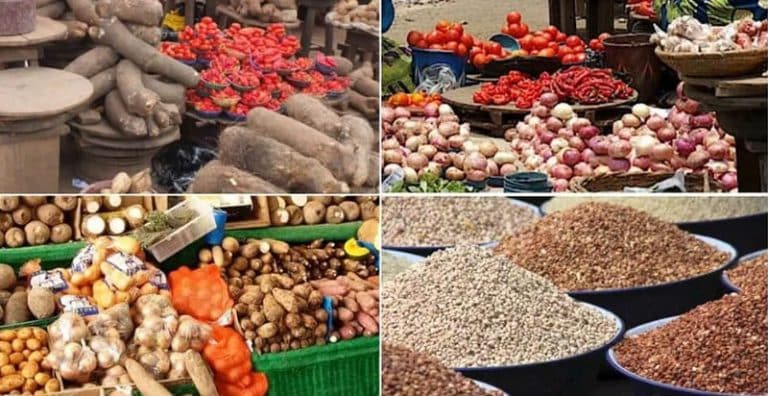
Nigeria’s headline inflation rate eased to 18.02 percent in September 2025, down from 20.12 percent in August, marking the sixth consecutive monthly decline and the lowest rate recorded in three years, according to the latest figures from the National Bureau of Statistics (NBS) on Wednesday.
In September 2025, the Headline inflation rate eased to 18.02% relative to the August 2025 inflation rate of 20.12%.
MoM headline inflation rate in September 2025 was 0.72%.
Food Inflation rate was -1.57% MoM.
Read the September 2025 CPI Report here: https://t.co/so6qTYLs0a pic.twitter.com/lOE4dF8t41
— NBS Nigeria (@NBS_Nigeria) October 15, 2025
The moderation could be an early sign that the country’s stubborn inflationary cycle, driven for years by high food prices, currency depreciation, and energy costs, may be entering a phase of sustained cooling.
EDITOR’S PICKS
A Break from Record-High Inflation
EKO HOT BLOG gathered that the month-on-month (MoM) headline inflation rate stood at 0.72 percent in September, reflecting a slower pace of price increases across key sectors of the economy compared to the previous month.
“This means that in September, the rate of increase in the average price level was lower than that of August,” the NBS explained.
The last time Nigeria’s inflation rate hovered around the 18-percent region was in June 2022, according to Central Bank of Nigeria (CBN) records. The steady decline since April 2025 represents the longest stretch of easing in nearly half a decade.
Urban and Rural Price Dynamics
Inflationary pressures also moderated across both urban and rural areas.
Urban inflation stood at 17.50 percent in September 2025—significantly lower than the 35.13 percent recorded in the same month last year. On a month-on-month basis, however, urban inflation inched slightly higher to 0.74 percent from 0.49 percent in August.
Rural inflation declined to 18.26 percent year-on-year, down from 30.49 percent in September 2024, while month-on-month figures also fell to 0.67 percent, signaling improved price stability in rural communities.
Food Prices Ease After Base-Year Adjustment
The food inflation rate—a critical measure for most Nigerian households—stood at 16.87 percent in September, representing a sharp decline from 37.77 percent recorded a year earlier.
NBS attributed the drop largely to a base-year adjustment, but also noted falling prices of staples such as maize, garri, beans, millet, potatoes, onions, eggs, tomatoes, and fresh pepper.
Month-on-month food inflation recorded a negative rate (-1.57%), suggesting that average food prices actually fell compared to August.
Core Inflation and Monetary Impact
Core inflation, which excludes volatile food and energy components, also declined to 19.53 percent year-on-year, compared to 27.43 percent in September 2024. The month-on-month core inflation rate edged slightly lower to 1.42 percent from 1.43 percent in August.
Analysts link these improvements to the CBN’s tighter monetary stance, currency gains, and easing cost pressures.
Monetary Policy and Exchange Rate Stability
At its September meeting, the Monetary Policy Committee (MPC) of the CBN reduced the Monetary Policy Rate (MPR) to 27 percent, the first rate cut in five years, following a consistent slowdown in inflation.
CBN Governor Olayemi Cardoso described the trend as evidence that policy tightening, exchange rate stability, and increased capital inflows were “helping to broadly anchor inflation expectations.”
He added that improved petrol price stability, after Dangote Refinery reduced its ex-depot price to ₦820/litre in September, and a rise in crude oil production also supported disinflation.
Naira Strength and Market Confidence
The naira strengthened in both official and parallel markets, averaging ₦1,498.38/$ in September compared to ₦1,535.25/$ in August. This appreciation, alongside reduced liquidity in the system, has helped curb imported inflation.
According to Lukman Otunuga, Senior Research Analyst at Forex Time (FXTM), the easing inflationary pressure reflects “a combination of softer food prices and a strengthening naira.”
Equities Trader Jessica Ifada of Rostrum Investment & Securities Ltd had also projected a slowdown in the inflation rate for September, estimating a range between 20.50 and 21.30 percent, a forecast that the latest NBS data has now surpassed.
What It Means for Nigerians
For households and businesses, the latest figures point to gradual relief after more than two years of steep price hikes. Falling food and transport costs could translate into improved purchasing power for consumers, though analysts caution that inflation remains elevated by global standards.
Economists say the coming months will test whether the downward trend is structural or merely transitory.
FURTHER READING
Sustained declines, they argue, will depend on exchange rate stability, energy supply consistency, and domestic food production capacity—factors that continue to shape Nigeria’s economic outlook.
Philip Ibitoye is a Special Correspondent with EKO HOT BLOG. Click here to find daily analysis and critical insight on trending issues in Lagos and other parts of Nigeria.
Click here to watch the video of the week below: