
- NYSC After Graduation, A Bridge To The Future Or Another Struggle?
Serving the country is a mandatory task, it is one of the highest patriotic responsibilities expected of every Nigerian graduate. For a student who has just obtained a degree, it also comes at a time when many are uncertain about what the next step should be.
Before this point, life has always followed a clear path. You move from primary school to secondary school, then to the university. But after graduation, everything suddenly changes.
EDITOR’S PICKS
- Sanwo-Olu Unveils Climate Defence Fund to Drive Green Investments
- Competence, Not Ethnicity, Guides Appointments in Lagos – Sanwo-Olu
- List of Public Facilities Named After Tinubu Since 2023
You now have a degree, but what comes next? Should you start looking for a job immediately? Learn a vocational skill? Chase that business idea or passion you have always had? Which of these is really the right option?
For many graduates, the National Youth Service Corps (NYSC) becomes that bridge between student life and adulthood.
For one year, there is at least the assurance of a stable monthly allowance, a place of primary assignment, real work experience and the opportunity to learn a skill through the Skills Acquisition and Entrepreneurship Development (SAED) programme.
For an average student who had little or no source of income throughout university, the service year often feels like a soft landing, giving them time to think, earn something and prepare for the future without immediately facing the full pressure of unemployment.
But like every other good thing in life, the NYSC experience comes with its own realities.
One of the biggest challenges is deployment. Most corps members are posted far away from home, a policy designed to encourage national unity by exposing young graduates to different cultures, traditions and lifestyles.
While the idea is noble, it also leaves many corps members feeling vulnerable. There is the fear of travelling long distances to unfamiliar places, concerns about insecurity and the uncertainty of starting life in a completely new environment.
For many, the struggle begins immediately after arriving at their place of deployment. Finding accommodation is not always easy, some places of primary assignment provide housing, but in many cases the conditions fall below what most people would consider comfortable. Others are left to search for accommodation on their own while trying to adjust to a new state, new people and an unfamiliar way of life.
The financial reality also cannot be ignored, with Nigeria’s current economic situation, many corps members find it difficult to survive solely on their monthly allowance. Feeding, transportation, accommodation and other daily expenses consume a significant part of their income. Those hoping to save money often discover that doing so requires serious sacrifice.
In many ways, moving to a new state for service feels like starting life all over again.
There is also the issue of relevance, although the NYSC is expected to prepare graduates for the labour market, many corps members are posted to roles that have little or no connection with what they studied.
A large number are assigned to teach in primary and secondary schools, regardless of whether they studied engineering, law, pharmacy or other specialised courses. While teaching is an honourable profession, it is not necessarily the practical exposure many graduates hoped would prepare them for careers in their chosen fields.
By the end of the service year, some leave with valuable life lessons but little professional experience related to their qualifications.
Yet, the story is not entirely one of challenges.
For many Nigerians, the NYSC uniform has opened doors that might never have opened otherwise. Lifelong friendships have been built during the service year.
Some corps members have secured permanent employment through their places of primary assignment.
Others have met business partners, mentors and opportunities that completely changed the direction of their lives. In some cases, a single connection made during service became the foundation of a successful career.
Perhaps that is why the NYSC should not be viewed as a guaranteed way out, but rather as an opportunity.
The scheme itself encourages corps members to acquire practical skills alongside their primary assignments. However, it would be even better if students begin developing those skills while still in school. That way, the service year becomes a period to expand their experience, test new ideas, build networks and apply what they already know, rather than depending entirely on the government allowance.
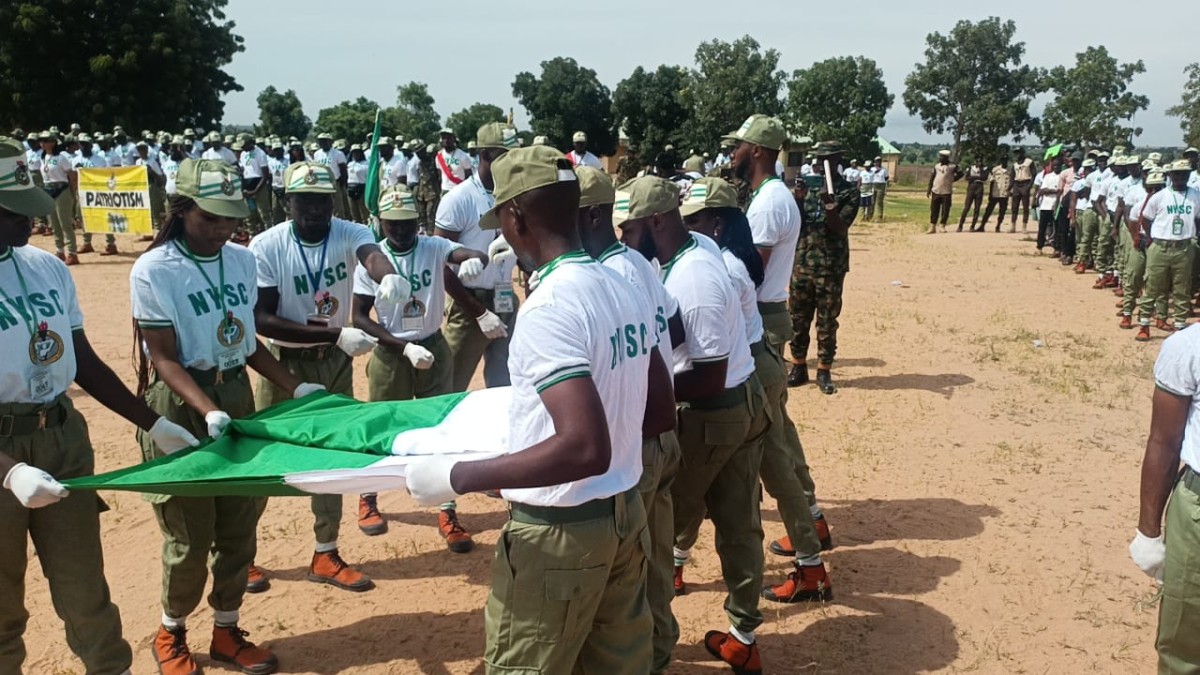
The NYSC experience is neither completely good nor entirely bad. For some, it becomes the beginning of something remarkable. For others, it is simply another phase of life’s journey filled with lessons, resilience and unexpected experiences. In the end, what a corps member takes away from that one year often depends as much on personal preparation and mindset as on where they are posted.