For a team that nearly fell apart before even kicking a ball, Thursday night’s triumph in Rabat, Morocco felt like an act of defiance. The Super Eagles of Nigeria, besieged by administrative chaos and financial neglect, brushed aside the controversy that clouded their preparations to crush Gabon 4–1 and book a place in the final of the African playoffs for the 2026 FIFA World Cup.
Just days earlier, it was uncertainty, not optimism, that filled the team’s Moroccan camp. The players and officials had boycotted training over unpaid bonuses — a now-familiar disgrace that once again exposed the Nigeria Football Federation’s chronic mismanagement. It took frantic late-night negotiations to calm tempers and restore focus, with promises reportedly made to settle outstanding entitlements. By Wednesday, the players returned to the pitch for their final training session. By Thursday night, they had returned to their best football.
EDITOR’S PICKS
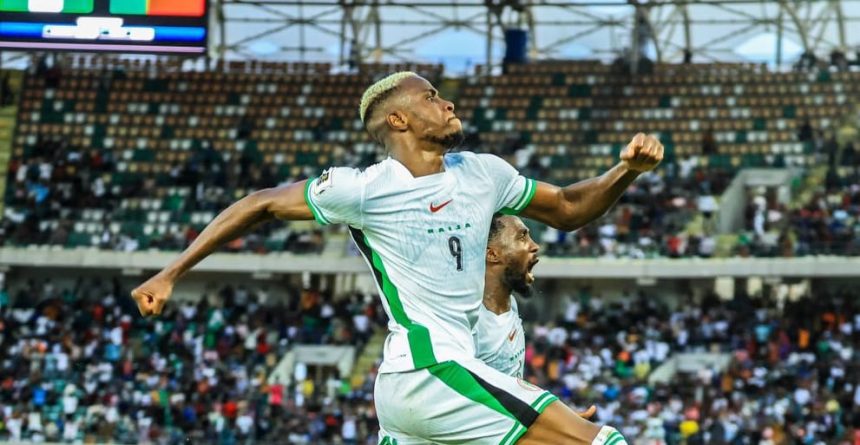
Victor Osimhen led the charge, scoring twice to lift Nigeria past the Panthers of Gabon in a match that began nervously but ended in dominance. Akor Adams opened the scoring in the 78th minute, only for Mario Lemina to equalize late and force extra time.
Yet the Super Eagles found another gear when it mattered most: Chidera Ejuke netted his first goal for Nigeria, and Osimhen’s brace — his 30th and 31st goals in national colours — sealed a commanding victory. His performance not only edged Nigeria closer to a seventh World Cup appearance but also brought him within six goals of Rashidi Yekini’s all-time record.
This win, however, cannot erase the shame of what preceded it as EKO HOT BLOG reported on Tuesday. That players representing Africa’s most populous nation must resort to protest over unpaid wages — funds that the Federal Government had already allocated to the NFF — is both scandalous and avoidable. The problem has never been one of resources, but of responsibility. For years, the NFF has lurched from one administrative crisis to another, treating national duty as an afterthought while neglecting the welfare of those who give their all on the field.
The federation’s repeated failures have become a stain on Nigeria’s football heritage. One need only recall when John Obi Mikel once paid players’ travel bills out of his own pocket to avert embarrassment. That a new generation — one led by global stars like Osimhen and Ndidi — must still fight the same battles for basic entitlements is an indictment of the system’s refusal to reform.
And yet, the players’ response in Rabat spoke volumes. They channelled frustration into focus, proving once again that Nigerian footballers possess a pride and professionalism their administrators do not. Their display against Gabon was not just about tactics or talent; it was about defying dysfunction. In the face of poor management, they played for the badge, for each other, and for millions of Nigerians watching with hope.
The stakes only grow higher now. On Sunday, the Super Eagles will face either Cameroon or DR Congo in the final playoff — a one-match battle for a place in the intercontinental playoff, and ultimately, a ticket to the 2026 World Cup. The margin for error remains zero. The team’s spirit, however, appears unbroken.
Still, Nigeria cannot keep surviving on resilience alone. If the NFF continues to lurch from crisis to crisis, one day the players’ spirit may not be enough to save them. Football, like any national institution, thrives on structure, integrity, and trust — all of which the NFF has squandered. The federal government and relevant oversight bodies must now demand transparency, enforce reforms, and end the cycle of neglect that has plagued Nigerian football for decades.
FURTHER READING
For now, Nigeria breathes again — rescued not by administrators, but by the players’ passion and professionalism. The Super Eagles have soared above chaos, but unless the NFF learns from this latest near-disaster, it is only a matter of time before the same storm returns.
Philip Ibitoye is a Special Correspondent with EKO HOT BLOG. Click here to find daily analysis and critical insight on trending issues in Lagos and other parts of Nigeria.
Click here to watch the video of the week below: