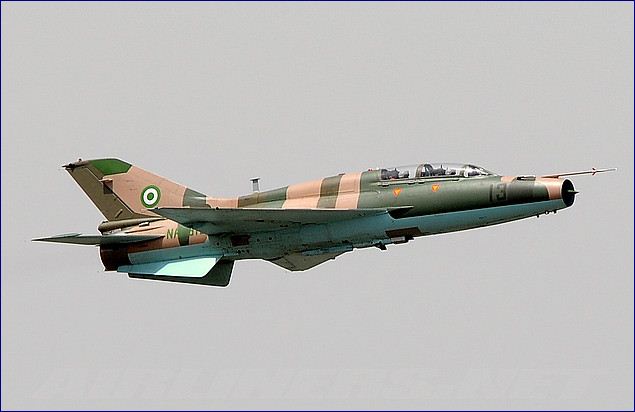
Nigeria’s rapid decision to answer Benin’s request for military assistance and deploy air and ground assets to repel Sunday’s coup attempt was, on balance, a strategically sound use of its armed forces, and President Bola Tinubu’s own words underline why.
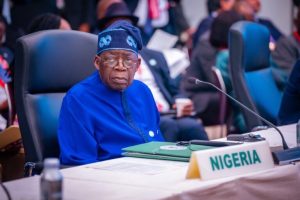
In a statement issued by the President’s spokesperson, Bayo Onanuga, after loyal Beninese forces, assisted by Nigerian units, flushed out the plotters, he said the Nigerian Armed Forces “stood gallantly as a defender and protector of constitutional order in the Republic of Benin on the invitation of the government.”
EDITOR’S PICKS
Tinubu added that they “have helped stabilise a neighbouring country and have made us proud of their commitment to sustaining our democratic values and ideals since 1999.” Those remarks frame the intervention not as adventurism but as a defence of a vulnerable democracy on Nigeria’s doorstep.
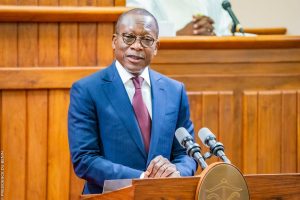
Benin formally requested air support and later ground forces through diplomatic channels, while Nigeria acted under the ECOWAS Protocol on Democracy and Good Governance.
Tinubu highlighted precisely this point, stressing that Nigeria acted “within the ambit” of that protocol. That legal and regional justification matters: it shields Nigeria from accusations of unilateral interference and confers political legitimacy rarely available in cross-border military operations. At a time when half of Nigeria’s neighbourhood has swung to military rule and ECOWAS itself looks increasingly diminished, demonstrating that regional norms still carry operational consequence strengthens Nigeria’s diplomatic position and reinforces democratic expectations.
Equally significant are the direct security implications. A successful junta next door would have produced, at minimum, an uncertain command structure in Cotonou, a weakened security apparatus, and new permissive spaces for armed groups, weapons traffickers and mercenary networks — all well-documented risks in Mali, Burkina Faso and Niger after their coups.
With a porous border already difficult to secure against banditry and smuggling, Nigeria had strong reasons to prevent yet another unstable military regime from emerging on its flank. Nigeria has learned from years of insurgency in the north and banditry in border regions that institutional collapse in a neighbour rarely stops at the frontier.
There is also an unmistakable economic logic. Benin remains critical to regional commerce: transit corridors, informal cross-border markets, and port-linked trade feed directly into Nigerian supply chains. A successful coup risked immediate trade disruption, capital flight and border closures that would have been felt first by Nigerian border communities and then by manufacturers and importers nationwide. By helping restore constitutional authority swiftly, Nigeria reduced those risks at much lower cost than dealing with prolonged instability.
Perhaps most importantly, the intervention arrests a dangerous regional pattern. Mali, Burkina Faso, Guinea, Niger — and recently a military takeover in Guinea-Bissau — have created a coup corridor stretching across West Africa. Each successful takeover weakens the credibility of democratic norms and emboldens military factions elsewhere. Nigeria, as the region’s demographic and economic anchor, cannot afford to watch its immediate neighbour slide into military rule one country at a time. Tinubu’s statement — “Nigeria stands firmly with the government and people of the Republic of Benin” — signalled a decisive break from passivity and a willingness to act when constitutional order is endangered close to home.
None of this removes the need for caution. Interventions carry reputational, operational and political risks — from mission creep to local sensitivities in Benin itself.
FURTHER READING
Nevertheless, judged on strategic, economic and security grounds, helping foil the Benin coup was a prudent use of Nigeria’s military power. The alternative — a junta entrenched in Cotonou, trading in the political economy of insecurity and emboldening military factions across the region — would have created far greater long-term costs for Nigeria.
Philip Ibitoye is a Special Correspondent with EKO HOT BLOG. Click here to find daily analysis and critical insight on trending issues in Lagos and other parts of Nigeria.
Click here to watch the video of the week below: