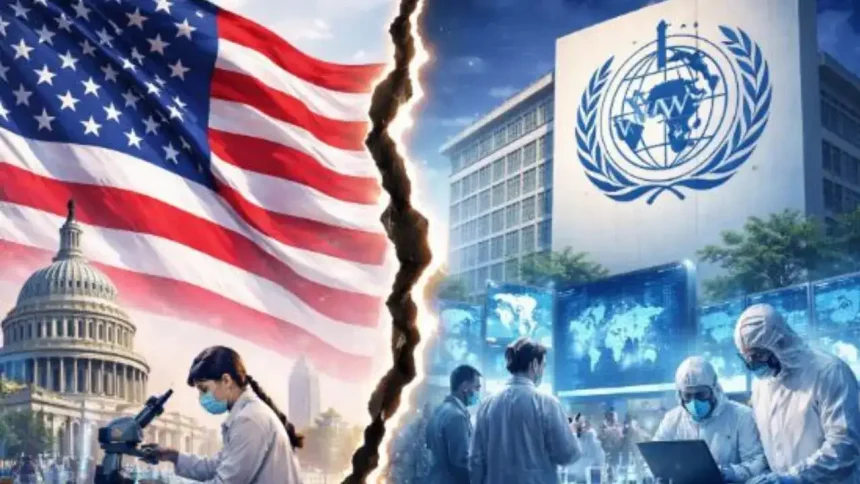
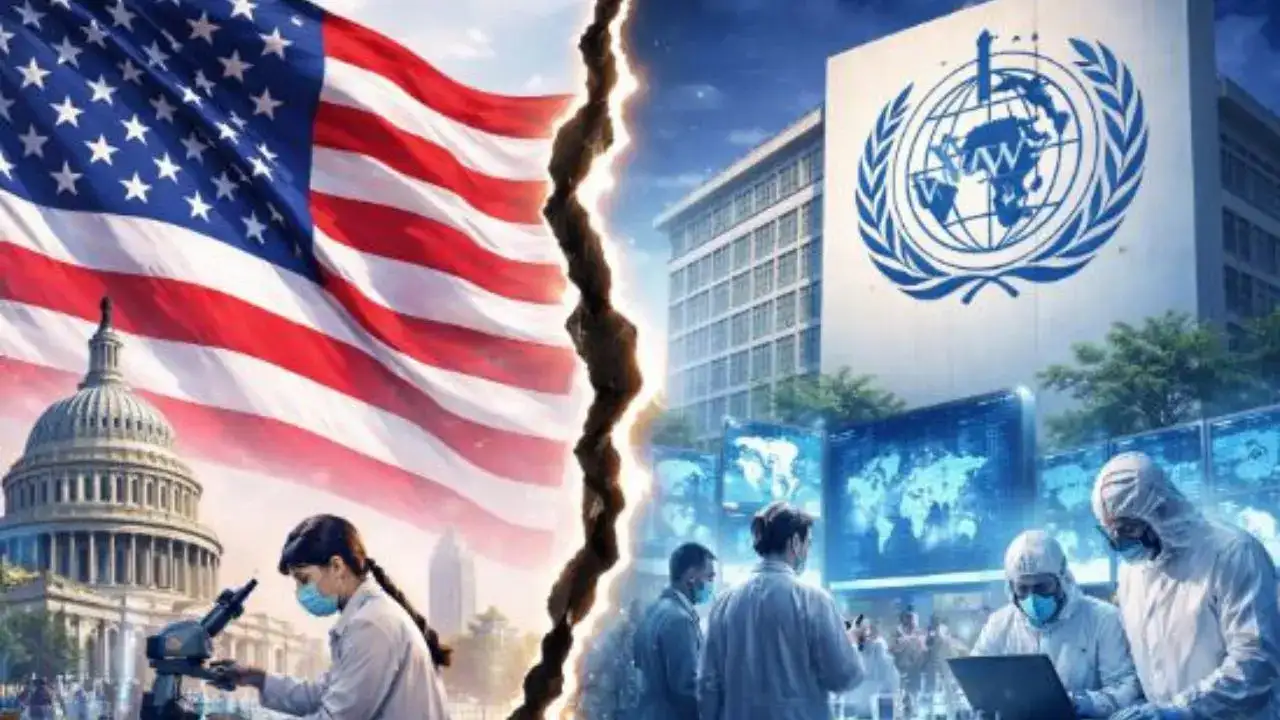
The withdrawal, which took effect on January 22, 2026, follows long-running disagreements between Washington and the WHO over governance, funding obligations, and the handling of global health emergencies. The decision has triggered widespread debate among health experts, policymakers, and international partners.
For decades, the United States has been the WHO’s largest financial contributor, providing both mandatory and voluntary funding. Health analysts warn that the country’s exit could weaken global disease monitoring systems and reduce coordinated responses to health emergencies, with consequences that extend far beyond U.S. borders.
EDITOR’S PICK
- ADC Requests INEC Postpone FCT Area Council Elections
- Tope Alabi Welcomes Grandchild
- CBN to Introduce New Policy to Regulate Debit Card Issuance, ATM Operations
LEGAL STATUS OF THE WITHDRAWAL
Although the WHO constitution does not explicitly outline a withdrawal process, U.S. lawmakers included a provision at the time of joining that allows the country to leave, provided it gives a year’s notice and settles all outstanding financial obligations.
While the notice requirement was reportedly met, questions remain over unpaid dues, including contributions from the final year of the previous administration. WHO legal officials say the issue will be reviewed by the organization’s executive board, with further discussions expected at the World Health Assembly later in the year.
According to WHO officials, decisions regarding the terms of withdrawal rest with member states, not with the organization’s administrative staff.
CONTINUED ENGAGEMENT DESPITE EXIT
Despite the withdrawal, the WHO has indicated openness to continued collaboration with American researchers and institutions. The organization’s leadership has also signaled willingness to accept the United States back should it reconsider its position.
Public health experts predict that informal cooperation will likely continue, particularly among scientists and medical researchers. However, they warn that individual-level engagement lacks the authority, coordination, and influence that come with official government participation.
One area of concern is vaccine development, particularly the annual influenza vaccine, which relies heavily on global data sharing coordinated by the WHO. Experts say reduced access to early data and internal deliberations could place U.S. health agencies at a disadvantage.
IMPACT ON HEALTH SECURITY
The withdrawal may also affect U.S. access to key global disease surveillance systems used to track emerging threats such as new influenza strains or novel respiratory infections. While much of the data remains publicly available, experts note that reduced insight into how the information is gathered and analyzed could delay early warning signals.
Health specialists emphasize that early detection is critical in preventing outbreaks from escalating into global crises. Delayed responses, they warn, could lead to higher infection rates, increased deaths, and greater economic disruption.
GLOBAL AND GEOPOLITICAL CONSEQUENCES
Beyond health concerns, the U.S. exit carries significant geopolitical implications. With the absence of American influence, other nations may gain greater leverage in shaping global health priorities and policy direction within the WHO.
Experts note that countries such as China, India, Saudi Arabia, and Russia are increasingly stepping into leadership and funding roles, potentially altering the balance of power in global health governance.
The WHO has already begun adjusting its budget to account for reduced U.S. funding, with officials acknowledging that financial constraints could limit support for low- and middle-income countries that depend heavily on the organization for technical expertise and policy guidance.
BROADER RISKS AND LONG-TERM EFFECTS
Public health analysts warn that weakening global health systems could have cascading effects, including increased disease spread, economic instability, and political unrest in vulnerable regions. Such instability, they say, ultimately affects global security, migration patterns, and international trade.
Experts also caution that the health of developed nations is closely tied to the stability of developing economies. Reduced investment in global health cooperation could undermine markets that advanced economies rely on, limiting growth and increasing long-term risks.
WHO officials have described the U.S. withdrawal as a setback for collective global safety, stressing that health threats do not respect borders and require unified responses.
As debates continue, health experts warn that the true consequences of the decision may not be immediate but could unfold gradually, making them harder to reverse once fully realized.
FURTHER READING