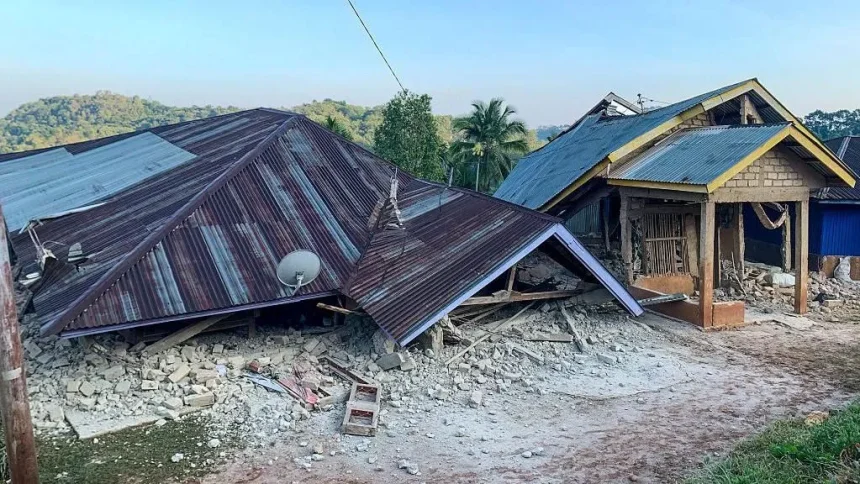
- A 7.7-magnitude earthquake struck Indonesia’s Flores Island
- At least 38 people were killed in the disaster
- Rescue teams are assessing the damage across affected areas
At least 38 people have died after a powerful 7.7-magnitude earthquake struck Indonesia’s Flores Island early Saturday, according to the country’s disaster management authorities.
Eko Hot Blog gathered the National Disaster Management Agency, BNPB, said several others sustained injuries as emergency teams began searching affected areas and assessing the extent of the destruction.
EDITOR’S PICK
- How Lagos Achieved 57.4% Exclusive Breastfeeding Rate
- Shaibu Lists Nigeria’s Biggest Security Challenges
- Vote, Protect Your Mandate, Governor Adeleke Urges Residents Ahead of August 15 Polls.
The earthquake occurred shortly before 5am local time at a depth of about 15 kilometres, according to Indonesia’s Meteorology, Climatology and Geophysical Agency. The shallow depth increased the potential for severe damage near the surface.
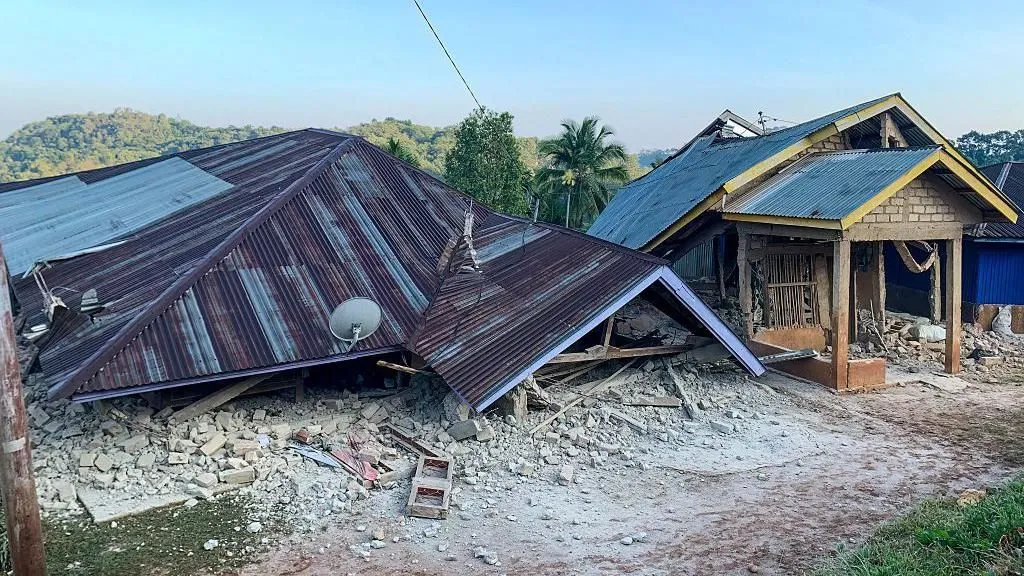
The tremor was followed by numerous aftershocks, including one measuring 6.1 in magnitude, causing further concern among residents and emergency responders.
Footage from the port in Maumere showed parts of a terminal building collapsing as passengers waited to board an inter-island ferry. The collapse of a gangway also reportedly sent some people into the sea.
East Nusa Tenggara Governor Emanuel Melkiades Laka Lena said some victims were killed while sleeping after buildings and debris collapsed on them.
Residents in communities close to the coast described widespread panic as the ground shook violently. Many people reportedly left their homes and moved towards higher ground after authorities issued a tsunami warning.
The tsunami alert was lifted about three hours after the earthquake after officials detected no significant rise in sea levels. BNPB said about 2,000 people evacuated or moved to safer areas voluntarily.
The disaster agency reported fatalities in several provinces, including Sikka, Manggarai and East Manggarai. Several people were also seriously or lightly injured.
Residents remained outdoors in some communities because continued aftershocks made them afraid to return to damaged buildings.
A university lecturer in Ruteng described the earthquake as the strongest tremor she had experienced, saying residents were forced to cook and stay outside because of fears of additional shaking.
Initial assessments indicated that at least 54 homes had suffered severe damage. Five healthcare facilities, three religious buildings, six government structures, a school and a warehouse were also reportedly affected.
Manggarai was identified by BNPB as one of the hardest-hit areas.
Authorities have urged residents to remain calm, avoid coastal locations and keep away from buildings that may have been weakened by the earthquake.
Indonesia frequently experiences earthquakes and volcanic eruptions because it sits at the junction of three major tectonic plates.
FURTHER READING