- 4,000 UBEC Classrooms, 16,000 Teachers Boost Basic Education in Kano – Garba
- The UBEC boss described the appointment letters presented to the new teachers as symbols of renewed hope for classrooms, communities and the future of children across the state
- Lauds the leadership of the Minister of Education, Dr. Maruf Tunji Alausa, and the Minister of State for Education, Professor Suwaiba Sa’id Ahmad, for driving reforms aimed at improving learning outcomes nationwide
The Universal Basic Education Commission (UBEC) says its delivery of nearly 4,000 classrooms and the recruitment of more than 16,000 teachers by the Kano State Government are significantly strengthening basic education and expanding access to quality learning across the state.
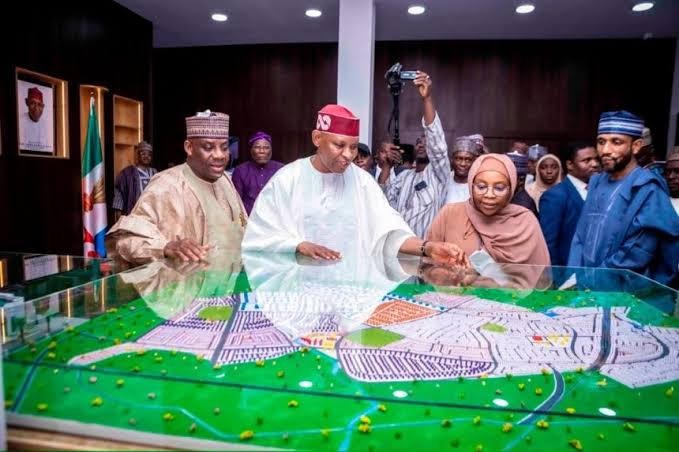
Eko Hot Blog reports that the UBEC Executive Secretary, Aisha Garba, stated this during a series of education engagements in Kano State alongside the Minister of Education, Dr. Maruf Tunji Alausa, the Minister of State for Education, Professor Suwaiba Sa’id Ahmad, and Governor Abba Kabir Yusuf.
EDITOR’S PICK
- What Iya Teaches Africa About Single Motherhood
- SAN Oyinkansola Badejo-Okusanya Emerges New NBA President
- Tenant Docked for Alleged Structural Changes to Rented Flat in Lagos
The delegation inspected UBEC supported classroom projects and witnessed the presentation of appointment letters to newly recruited teachers.
Garba said the classrooms, delivered under President Bola Ahmed Tinubu’s Renewed Hope Agenda, are providing safer and more conducive learning environments for pupils while creating greater opportunities for children to enrol, remain in school and succeed.
She stressed that expanding access to quality education requires not only improved infrastructure but also qualified and motivated teachers capable of delivering meaningful learning outcomes.
According to Garba, the Kano State Government has recruited more than 16,000 teachers under the current administration, including the latest batch of newly employed teachers, describing the exercise as one of the country’s most significant investments in education.
She said the recruitment would help bridge the teacher shortage, particularly in underserved communities, and improve access to quality teaching for thousands of children.
“The directive of President Bola Ahmed Tinubu is clear. No child should be left behind. Every Nigerian child deserves access to quality education. Even where classrooms exist, without teachers, children cannot learn. That is why investments in teachers are investments in the future of our nation,” Garba said.
The UBEC boss described the appointment letters presented to the new teachers as symbols of renewed hope for classrooms, communities and the future of children across the state.
She noted that the recruitment comes at a time when UNESCO estimates that more than 44 million teachers are needed globally, adding that Kano’s sustained investment in teacher recruitment places the state among governments addressing one of the education sector’s greatest challenges.
Garba commended Governor Yusuf for prioritising education and reaffirmed UBEC’s commitment to partnering with state governments to expand access to inclusive and quality basic education.
She also praised the leadership of the Minister of Education, Dr. Maruf Tunji Alausa, and the Minister of State for Education, Professor Suwaiba Sa’id Ahmad, for driving reforms aimed at improving learning outcomes nationwide.
Earlier, Chairman of the Kano State Universal Basic Education Board (SUBEB), Malam Yusuf Kabir, said the recruitment followed a transparent and merit based process to ensure that only qualified and competent teachers were employed into the state’s basic and secondary schools.
Kabir said the exercise was guided by the Kano State Teacher Policy, which introduced aptitude tests and other assessment procedures to improve teacher quality.
He stressed that newly recruited teachers would be strategically deployed, supervised, mentored and continuously evaluated to improve teaching quality and learning outcomes.
He also called on communities, development partners, corporate organisations and traditional institutions to complement government’s investment in education, noting that sustainable improvements in the sector require collective responsibility.
UBEC reaffirmed its commitment to sustaining partnerships with state governments across the federation through investments in school infrastructure, teacher development and learner centred interventions aimed at improving access to quality basic education.