- Trump has turned against Zelensky, echoing Russia’s narrative.
- His comments raise fears of reduced U.S. support for Ukraine.
- European leaders are concerned about the shift in U.S. policy.
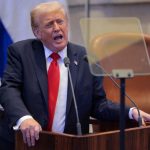
In a startling shift, former U.S. President Donald Trump has not only turned against Ukrainian President Volodymyr Zelensky, but has also increasingly aligned himself with Russia’s narrative regarding the war in Ukraine.
Eko Hot Blog reports that Trump’s latest remarks, labeling Zelensky a “dictator” and claiming that Ukraine started the war, have deepened concerns in Kyiv and among its European allies about the future of U.S. support for Ukraine.
EDITOR’S PICK
- Nedu Forced Me to Make Controversial Podcast Remarks – Ugochukwu Nwokolo
- Nigeria to Introduce Rubella Vaccine for the First Time – Health Expert
- Osun Govt Begins Free Eye Tests, Glasses, Surgeries for 345,000 Pupils
Tensions between Trump and Zelensky escalated after Trump’s controversial decision to initiate talks with Moscow while excluding Ukraine. The situation worsened when Trump began publicly echoing talking points favored by the Kremlin, such as suggesting that Ukraine had provoked the war and questioning Zelensky’s popularity.
These remarks raised alarms in Ukraine, with analysts warning that Trump’s rhetoric appeared to set the stage for a potential shift in U.S. foreign policy that would prioritize relations with Russia over continued support for Ukraine.

Max Bergmann, director of the Europe, Russia, and Eurasia program at the Center for Strategic and International Studies, stated that Trump’s comments indicated he was “creating a predicate for the United States to simply wash its hands of supporting Ukraine.” Bergmann added that Trump’s affinity for Russian President Vladimir Putin and his “strongman” leadership style could explain his alignment with Moscow’s viewpoint.
Trump’s relationship with Zelensky has been tense since 2019 when he was impeached over his handling of U.S. aid to Ukraine, which included pressuring Zelensky to investigate Joe Biden’s family.

Trump’s “America First” policy, which prioritized domestic interests over foreign intervention, led him to oppose significant U.S. aid to Ukraine. His pledge during the 2024 election campaign to end the war before taking office further stoked fears that he might pressure Kyiv into an unfavorable peace deal.
The rift came to a head after Trump’s announcement of a call with Russian President Vladimir Putin, followed by a call with Zelensky that seemed to do little to ease tensions.
Trump’s remarks on Tuesday, where he described Zelensky as a “comedian” and a “dictator without elections,” were met with strong rebukes, including from some Republicans. However, the White House quickly defended Trump’s position, signaling that this stance may become official U.S. policy.
FURTHER READING
- FUNAAB Mourns Professor Killed by Hit-and-Run Driver Suspected to Be Yahoo Boy
- “Stop Wishing Me Dead” – Dele Odule Fires Back at Rumormongers
As European leaders scramble to respond, concerns are mounting that Trump’s rhetoric could signal a dramatic shift in U.S. foreign policy, one that could leave Ukraine vulnerable.
While some analysts warn that Trump’s unpredictability is part of his negotiating strategy, others fear his approach could “kill the patient”,ending Ukraine’s hope for continued U.S. support.
Click HERE for Our Video OF the Week