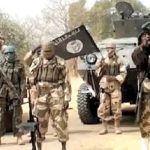
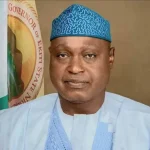
The seeds of Nigeria’s 1983 military coup were sown not only in political discontent and allegations of corruption, but also on the battlefield, on the waters of Lake Chad.
What began as a border conflict with Chad quickly exposed the fragility of civilian authority under President Shehu Shagari and set the stage for his eventual overthrow by Major-General Muhammadu Buhari.
EDITOR’S PICKS
On April 18, 1983, during the Chadian–Libyan conflict, Chadian troops invaded and occupied 19 islands on Lake Chad, a region already fraught with territorial disputes between Nigeria and Chad.
President Shagari responded by deploying troops from the 3rd Armoured Division in Jos, led by then GOC Buhari. The Chadian-Nigerian border was sealed, and Nigerian forces recaptured the islands.
However, due to alleged pressure from smugglers, the President ordered Buhari to reopen the border.
But Buhari blatantly disregarded the order to reopen the Chad border which he had closed in order to cut off food and fuel supplies to Chad. Disregarding another presidential order not to cross the border, his troops pursued the Chadians 50 kilometers into their territory.
This blatant defiance of presidential command marked a turning point. That act of military insubordination, left unpunished, led to military’s confidence in the competence of Shagari as the Commander-in-Chief starting to wane.
Shagari, who once praised the military for unifying Nigeria, had been warned early. Before his swearing-in in 1979, General Olusegun Obasanjo had relayed intelligence through FEDECO chairman Chief Michael Ani about a possible coup. Yet the President, perhaps reassured by his northern roots and military allies, believed those closest to him would not turn against him. He was wrong.

His downfall was orchestrated by senior northern officers, many of whom he had promoted and trusted. The coup was announced by one unknown Brigadier—Sani Abacha. Brigadier Ibrahim Bako, tasked with arresting Shagari, died in a firefight at the Presidential Villa. Vice President Alex Ekwueme was imprisoned while Shagari was placed under house arrest for 30 months.
In a review on Shagari’s biography, ‘Beckoned to Serve’, Guardian Newspaper Editor, Chukwuma Nwokoh, wrote that one lesson to be drawn from the biography is that no serving military person can be believed to be loyal to a government as the military is the most treacherous institution ever created by man.

Interestingly, there were hints that Buhari was a coup plotter but he denied the allegation twice and even threatened to resign.
FURTHER READING
Shagari was later cleared of any wrongdoing and lived peacefully in his hometown, Shagari, Sokoto State, until his death on December 28, 2018, in a hospital in Abuja. He was 93.
Philip Ibitoye is a Special Correspondent with EKO HOT BLOG. Click here to find daily analysis and critical insight on trending issues in Lagos and other parts of Nigeria.
Click here to watch the video of the week below: