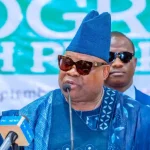
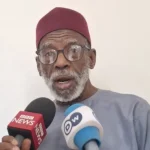
- Garba Shehu says Buhari’s foreign medical trips weren’t a rejection of Nigeria’s healthcare.
- He insists Buhari had a Nigerian doctor and used the State House Clinic.
- Trips abroad were “personal preference,” not disrespect to local medical practice.
Garba Shehu, media aide to the late former President Muhammadu Buhari, has clarified that Buhari’s regular medical trips abroad should not be seen as a rejection of Nigeria’s healthcare system.
Eko Hot Blog gathered that his comments follow recent remarks by another former presidential spokesman, Femi Adesina, who claimed that Buhari might not have survived had he depended solely on Nigerian hospitals. Adesina cited the lack of advanced medical expertise locally as a major concern during Buhari’s presidency.
Editor’s Pick
- Columbia Pays $200m Fine Amid Antisemitism Probe, Ends DEI Policies
- LASUBEB Chairman, Dr. Hakeem Shittu Babatunde, Honoured with Prestigious Award by ECAN
- Canal+ Acquires MultiChoice For $3 Billion, Takes Over DStv, GOtv
However, speaking on Inside Sources, a programme aired by Channels Television, Shehu pushed back against that narrative, saying Buhari remained under the supervision of Nigerian doctors throughout his tenure.
“I think it is wrong to assume that he fenced himself off from the Nigerian medical system,” Shehu said. He added that Buhari had a Nigerian personal physician and made use of the State House Clinic led by experienced local consultants.
According to Shehu, the former president’s medical team, made up of Nigerian professionals, was always available to attend to his health needs in the country.

He acknowledged that Buhari maintained a routine of travelling abroad for treatment, but insisted that it was a matter of personal attachment rather than mistrust of Nigerian hospitals.
“As for his attachment to his past practice abroad for his medicals, he had an attachment to that. It was not that he was disrespectful of Nigeria’s medical practice or that he didn’t believe in it,” Shehu explained.
He went on to highlight the global success of Nigerian-trained doctors as proof of the competence of the country’s medical professionals. “For most people who also travel abroad and need to see doctors, I have experienced this in America, you go into a doctor’s office and it turns out to be a Nigerian surgeon,” he added.
Buhari, who had battled a prolonged illness throughout his presidency, passed away on July 13, 2025, at a London clinic. He was buried two days later in his hometown of Daura, Katsina State.
His death has reignited debates over his administration’s healthcare policies, particularly his failure to strengthen Nigeria’s own medical infrastructure while relying on foreign clinics for personal treatment.
Shehu’s defence of the late president comes at a time when many Nigerians are still questioning the legacy of Buhari’s eight-year rule especially in the area of health sector reform, which critics say was left underfunded and underdeveloped.
As tributes continue to pour in for the former president, the discussion around his medical decisions reflects a broader concern about the state of Nigeria’s healthcare and the confidence its leaders place in it.