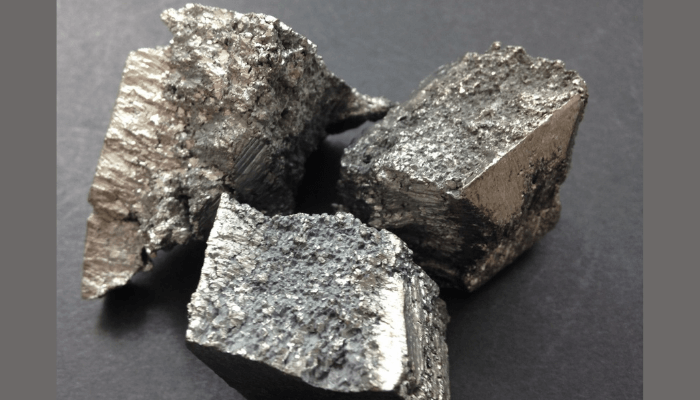
Nigeria may be standing at the threshold of an extraordinary opportunity. As global outrage mounts over China’s tightened export restrictions on rare earth elements (REEs), the world is urgently searching for alternative suppliers of these critical materials and Nigeria, rich in rare earth-bearing minerals such as monazite and xenotime, could be well placed to step in.
The country, long known for oil, has for years sought to redefine itself as a critical minerals hub, with the solid minerals sector’s contribution to GDP rising from less than 0.5 percent a decade ago to 4.65 percent in 2025, according to the Minister of Solid Minerals, Dele Alake, who spoke at the 10th Nigeria Mining Week, themed ‘Nigeria Mining: From Progress to Global Relevance’ on Friday in Abuja.
EDITOR’S PICKS
Recent government reforms, large-scale investments like the $400 million Hasetins rare earth processing plant in Nasarawa State, and a clear policy shift toward local beneficiation are positioning Nigeria to capture global attention. The timing could not be more fortuitous: China, which processes over 90 percent of the world’s rare earths, is using export controls as a geopolitical lever—causing anxiety in markets dependent on the metals that power electric vehicles, wind turbines, smartphones, and advanced defense technologies.
EKO HOT BLOG explores the question of whether Nigeria can translate its geological potential into strategic global relevance while the world scrambles to diversify away from China’s dominance.
China’s Grip and the Global Fallout
China’s Thursday announcement extending export controls to more rare earths and even to foreign producers using Chinese equipment or material has rattled supply chains. The new rules require licenses for a broader range of REE exports and signal that China intends to scrutinize shipments related to defense and high-end semiconductors. The move effectively tightens China’s global grip on the rare earth supply chain and exposes the vulnerabilities of manufacturers in the U.S., Europe, and Japan.
The geopolitical backlash was swift. U.S. President Donald Trump accused China of “becoming very hostile” and threatening to “hold the world captive,” announcing plans to impose a 100 percent tariff on Chinese imports and apply new export controls on critical software. Similar concerns are being raised in other countries, where governments are redoubling efforts to secure alternative sources.
This realignment reflects a deeper structural problem: the concentration of critical mineral production. The Democratic Republic of Congo provides over 70 percent of the world’s cobalt, while China dominates rare earth refining. Any disruption—whether from trade disputes, sanctions, or monopolistic control—can send shockwaves through the global economy. This instability creates a unique opening for countries like Nigeria to assert themselves as reliable, democratic suppliers in the critical minerals value chain.
Nigeria’s Rare Earth Promise
Nigeria’s geology holds some of Africa’s most promising rare earth reserves. Monazite, the primary REE-bearing mineral, is found across Plateau, Benue, Nasarawa, Cross River, Kaduna, and Kebbi states. The U.S. Geological Survey estimates roughly six million tonnes of monazite ore in just four of these states. While extraction has been mostly artisanal, production reached around 13,000 metric tons of rare earth oxides in 2024—an 80 percent increase from the previous year—propelling Nigeria into the top five producers globally.

Under the Renewed Hope Agenda, the federal government says it is intent on moving beyond raw exports. The Hasetins plant in Nasarawa is expected to add 12,000 tonnes of annual processing capacity and create over 10,000 jobs.
New policies mandate that at least 30 percent of all mined ores must undergo local processing before export, rising to 35 percent by 2030. Alake describes these changes as the beginning of Nigeria’s transformation into a “globally recognized mining investment destination.”
Beyond economic gains, this transition aligns with Nigeria’s climate commitments under the Paris Agreement. As the world phases out fossil fuels, critical minerals like rare earths are indispensable for renewable energy systems and electric vehicles. By developing this sector, Nigeria could simultaneously advance its decarbonization goals, create green jobs, and diversify away from oil dependency.
Turning Promise into Power
Still, Nigeria’s opportunity is not guaranteed. The country must confront persistent structural weaknesses, including poor infrastructure, limited geological data, weak regulatory enforcement, and informal mining that often escapes taxation and environmental oversight. Without strong governance and transparent partnerships, Nigeria risks repeating the familiar “resource curse” cycle, where mineral wealth fuels inequality and corruption instead of development.
Sustainability will be crucial. Global buyers increasingly demand ethically sourced materials, free from child labour and environmental degradation. Nigeria must therefore strengthen its mining governance, enforce labour rights, and ensure that local communities benefit directly from mineral development. International collaboration, through partnerships with the U.S., the EU, and multilateral agencies, can help build capacity, technology transfer, and transparent certification systems.
FURTHER READING
If Nigeria can balance its economic ambitions with responsible mining practices, it could emerge as a key player in the reshaped global rare earth supply chain. As China tightens its grip and the world pushes back, Nigeria stands at the crossroads of history as a potential supplier to power the clean energy future, if it can move decisively from geological promise to industrial reality.
Philip Ibitoye is a Special Correspondent with EKO HOT BLOG. Click here to find daily analysis and critical insight on trending issues in Lagos and other parts of Nigeria.
Click here to watch the video of the week below: