Last Tuesday, the Office of the Secretary to the Government of the Federation announced that President Bola Tinubu had directed all political appointees under his administration who intend to contest elective offices in the forthcoming 2027 general election to resign their appointments on or before March 31, 2026.
The appointees bound by this directive include the Chief of Staff, principal officers at the Presidential Villa, ministers, special advisers, and heads of departments and agencies.
EDITOR’S PICKS
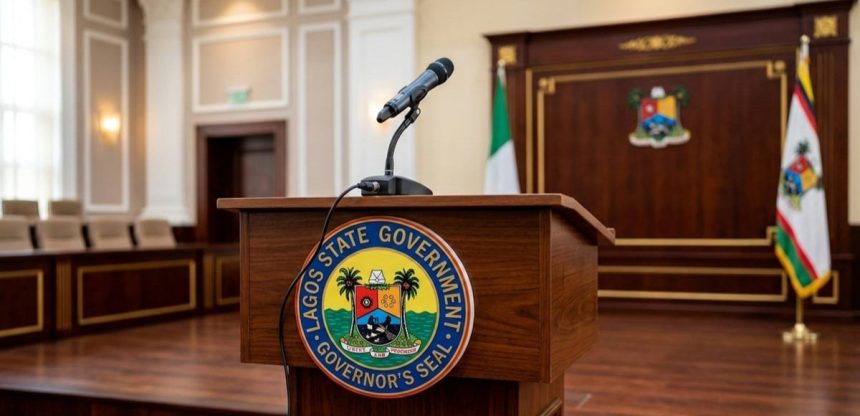
This directive and its deadline mean that Nigerians will soon begin to get a clearer picture of those in the president’s administration who aspire to elective offices in their respective states. Similarly, Lagosians will, by March 31, know those positioning to replace the incumbent, Babajide Sanwo-Olu, from May 29, 2027, to lead the state.
Some political appointees in President Tinubu’s cabinet have already been linked to the job. EKO HOT BLOG has compiled the list of names to watch for their possible resignation by March 31 to run for the open Lagos governorship seat:
Femi Gbajabiamila
Before becoming President Tinubu’s Chief of Staff in June 2023, Femi Gbajabiamila had spent two decades building one of the most consequential legislative careers in Nigeria’s Fourth Republic.
Born on June 25, 1962, in Lagos, he attended Igbobi College, Yaba, before earning a law degree from the University of Lagos in 1983. He was called to the Nigerian Bar in 1984 and later obtained a Juris Doctor degree, graduating magna cum laude, from the John Marshall Law School in Atlanta, Georgia.
Gbajabiamila was first elected to the House of Representatives in 2003, representing Surulere I Constituency of Lagos State. He was re-elected for six consecutive terms, rising through the ranks from Minority Leader to Majority Leader before being elected Speaker of the 9th House of Representatives in 2019 with 283 votes.
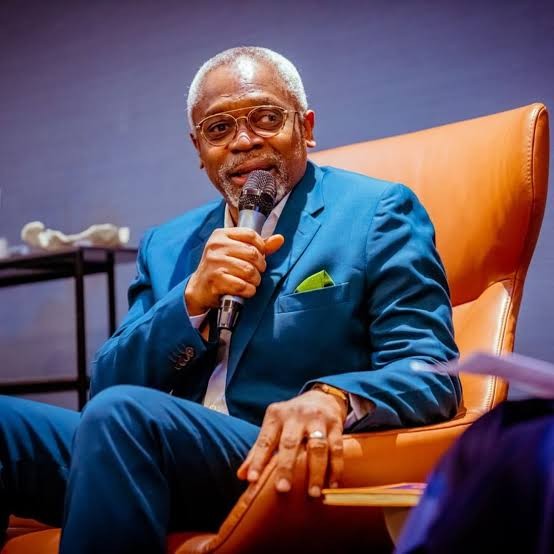
As Speaker, he was a central figure in the passage of several landmark bills, including the Petroleum Industry Act. His legislative legacy includes an earlier moment in 2006 when, as chairman of the “2007 Movement,” he was widely credited with helping to end President Olusegun Obasanjo’s third-term agenda.
His transition from the most powerful legislative office in Nigeria to Chief of Staff — the president’s most trusted administrative lieutenant — underscored his position at the very heart of the Tinubu political establishment.
His proximity to the president, combined with his deep roots in Lagos politics, has made him one of the most speculated names for the governorship.
Tunji Alausa
Few trajectories in this administration have been as striking as that of Dr Tunji Alausa, the Minister of Education.
A nephrologist who built a distinguished medical career in the United States, Alausa was born on April 18, 1965, and trained at the University of Lagos College of Medicine, graduating with an MBBS in 1993.
He proceeded to the United States, completing a residency at Cook County Hospital, Chicago, between 1997 and 2002, where he rose to the position of Chief Medical Resident. He later trained in nephrology at the Medical College of Wisconsin and, by 2004, had founded the Kidney Care Centre, a specialist clinic that expanded across multiple American states.
Alausa’s return to Nigerian public life came through policy rather than politics. He served on President Tinubu’s Presidential Policy Advisory Council on Health before his appointment as Minister of State for Health and Social Welfare on August 21, 2023.
Just over a year later, on October 23, 2024, he was elevated to the full position of Minister of Education, replacing Professor Tahir Mamman. The promotion placed him at the head of one of the most consequential — and contentious — ministries in the country, where he has pursued several reforms, including the reversal of the 18-year age restriction on university admissions.
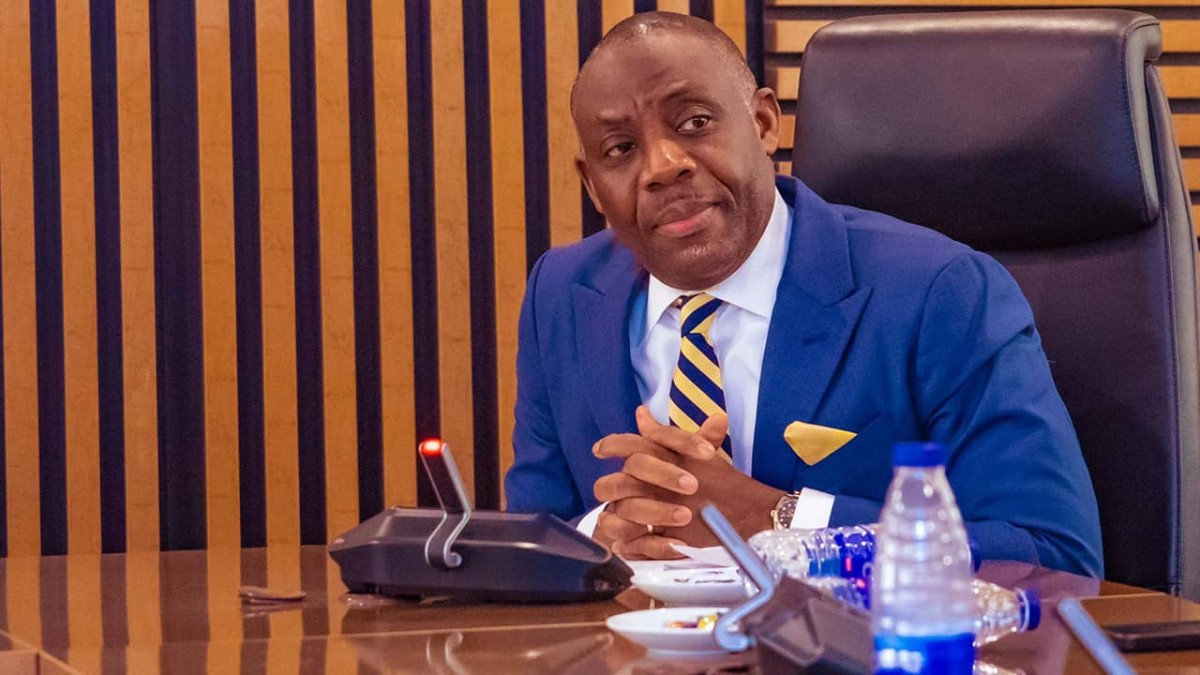
An active member of Eko Club International, a prominent association of Lagos indigenes in the diaspora, and Epe Club, the premier club of Epe Division, Alausa is from Epe, in the Lagos East senatorial district, the zone many party insiders believe should produce the next governor.
However, he recently shut down speculation that he may soon leave the Ministry of Education for a governorship bid. “We’re still hard at work here at the FME; don’t believe the rumours,” he wrote on X on March 4 in reaction to the reports.
We’re still hard at work here at the FME, don’t believe the rumours 😌 https://t.co/sYY4ifOaq6
— Dr. Tunji Alausa (@DrTunjiAlausa) March 4, 2026
Hakeem Muri-Okunola
Hakeem Muri-Okunola’s story is, in many ways, the story of Lagos State governance itself. Born on January 7, 1972, he is the son of the late Justice Muritala Okunola, a Lagos jurist whose friendship with Tinubu predates the latter’s political career.
After studying law at Lagos State University and earning a master’s degree in International Business Law from Queen Mary & Westfield College, University of London, Muri-Okunola joined the Lagos State civil service in 2001.
His rise was swift and deeply intertwined with Tinubu’s orbit. Between 2003 and 2005, he served as Personal Assistant to then-Governor Tinubu, who subsequently appointed him Executive Secretary of the Land Use and Allocation Committee. He became a Permanent Secretary in 2011 and was deployed to the Lands Bureau, where he helped redesign Lagos land administration systems, contributing to the state’s improved rankings on the World Bank’s Ease of Doing Business Index.
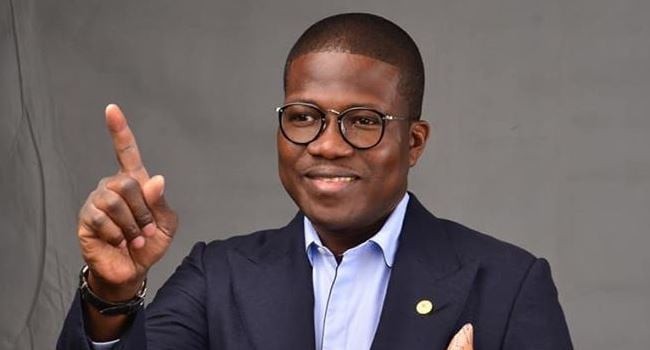
On December 28, 2018, he was appointed the 21st Head of Service of Lagos State — at 46, the youngest person to hold the office. In September 2023, President Tinubu appointed him Principal Secretary at the Presidential Villa, an office that places him at the daily operational centre of the presidency.
His appointment was widely read as Tinubu keeping close a man he has groomed for over two decades. In political circles, the initials “HMO” have taken on a life of their own as shorthand for a certain kind of ambition quietly building in plain sight. Some groups within the All Progressives Congress (APC) are already backing him before any official confirmation or declaration.
Other Names in the Frame
Beyond those tied to the March 31 deadline, several other prominent figures have been linked to the race.
Deputy Governor Obafemi Hamzat, who holds a doctorate in System Process Engineering from Cranfield University, England, has served in Lagos governance since 2005: first as Commissioner for Science and Technology under Tinubu, then as Commissioner for Works under Fashola, and since 2019 as Deputy Governor alongside Sanwo-Olu.
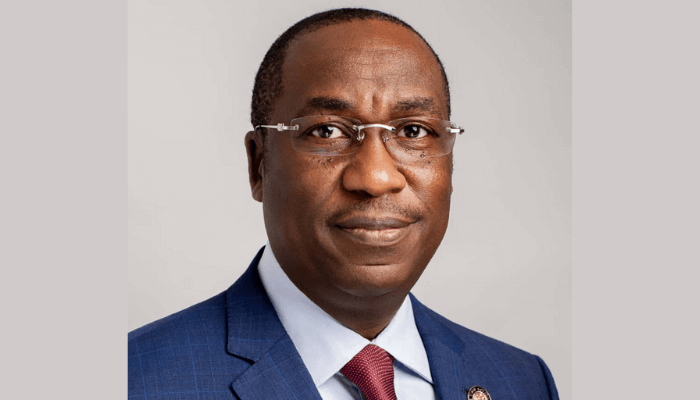
His institutional depth and royal lineage from Iga Egbe, Lagos Island, give him formidable standing in the race.
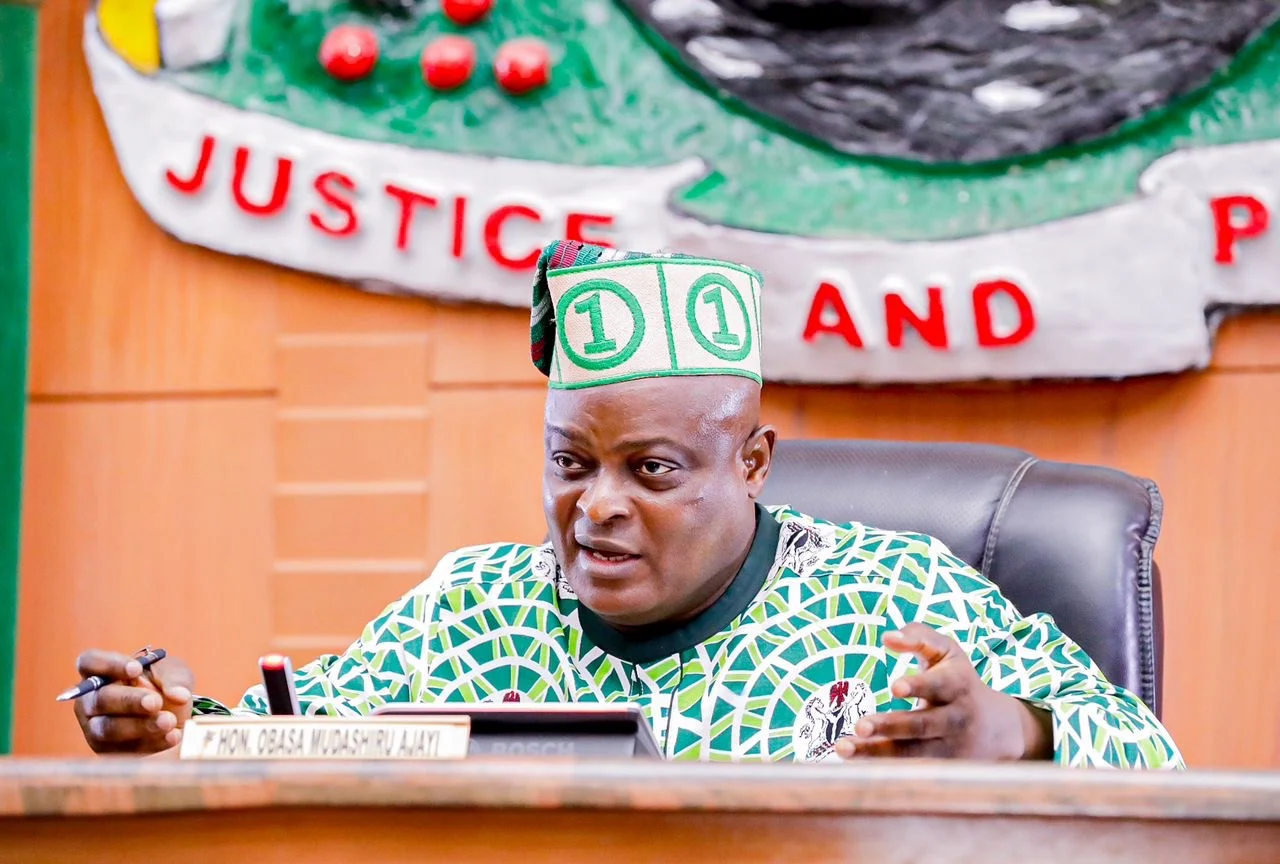
Mudashiru Obasa, Speaker of the Lagos State House of Assembly, brings assembly leadership and extensive grassroots networks to the conversation. His name has been a consistent presence in whisper networks around the governorship.
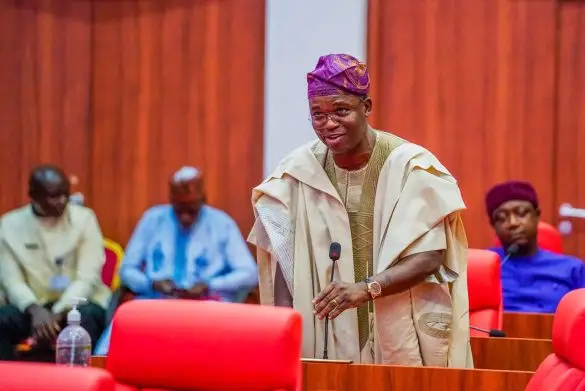
Senator Adetokunbo Abiru, representing Lagos East, is an Ikorodu indigene who spent nearly three decades in banking, including stints at GTBank, First Bank, and as pioneer MD of Polaris Bank, before entering politics in 2020.
He also served as Commissioner for Finance under Fashola. His Senate base and Lagos East identity place him in strong contention.
Former Governor Akinwunmi Ambode, who governed Lagos between 2015 and 2019, was born in Epe and built a 27-year career in the Lagos State civil service before his election.
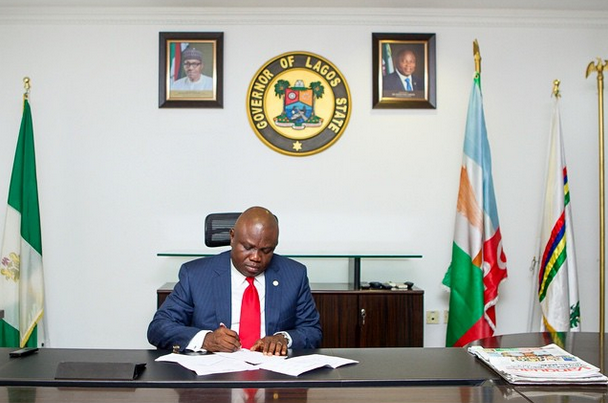
After a turbulent exit from office, he has been visibly reintegrating into APC structures, including the October 2025 stakeholders’ forum where he joined party leaders in endorsing President Tinubu for a second term.
Notably, all of the above remains speculative. No one has publicly declared an intention to contest the Lagos governorship.
What is certain, however, is that whoever emerges as the candidate will do so on the APC platform and, given the party’s unbroken hold on Lagos since 1999, its candidate goes into any election as the strong favourite.
That electoral history means the more decisive contest will likely take place not on election day, but in the weeks and months of consultations, endorsements, and deliberations of the Governor’s Advisory Council (GAC) that precede it. The winner may be among the names already circulating. The winner may also be someone the media has not yet thought to ask about.
FURTHER READING
The picture will begin to clarify by March 31 and the days that follow when Lagosians will see who steps away from the president’s table to chase the most coveted seat in Lagos.
Philip Ibitoye is a Special Correspondent with EKO HOT BLOG. Click here to find daily analysis and critical insight on trending issues in Lagos and other parts of Nigeria.
Click to watch the video of the week below: