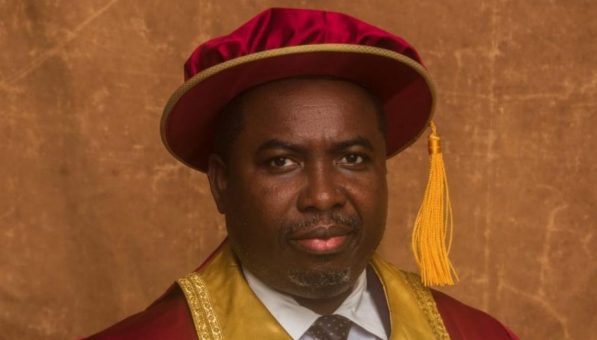
When Joash Amupitan appeared before the Senate for confirmation as Chairman of the Independent National Electoral Commission (INEC) on Thursday, he made a promise that resonated with Nigerians still grappling with the credibility questions surrounding the 2023 general elections.
“I have to audit the system, if I’m given the opportunity, to see what is actually wrong and whether we have what it takes as it is now,” Amupitan said, referring to the INEC Results Viewing (IReV) portal.
EDITOR’S PICKS
“Because it is not just the INEC responsibility, but also the other agencies like NCC, NIMC and the service providers that will have to work together to ensure that we give Nigerians the technology that everybody will be happy about.”
His remarks underscored the centrality of technology to Nigeria’s electoral transparency and the urgent need to fix what went wrong.
A Promise to Audit and Restore Confidence
Amupitan’s pledge to audit the IReV portal is a first major signal of reform under his leadership. The IReV and the Bimodal Voter Accreditation System (BVAS) were designed to strengthen electoral integrity by allowing real-time transmission and public viewing of results from polling units. However, the 2023 elections were marred by glitches and delayed uploads that undermined confidence in INEC’s transparency claims.
Amupitan acknowledged that “what happened in 2023 was subsumed as a glitch,” adding that INEC had not adequately communicated the legal role of IReV to the public. The Supreme Court later clarified that IReV was not an electronic collation tool but a transparency safeguard — a distinction that INEC failed to explain before the polls.
His proposed audit aims to identify technical bottlenecks and ensure the system can handle the demands of future elections. By doing so, Amupitan hopes to rebuild the public trust lost to those lapses.
Calls for Full Integration of BVAS and IReV
Stakeholders across the political and civic landscape have echoed Amupitan’s emphasis on technology as a cornerstone of electoral transparency.
Zamfara State Governor Dauda Lawal, speaking at a seminar on electoral reforms in Abuja, urged INEC to ensure the “complete and real-time integration” of the BVAS and IReV systems.
“During the last election, there appeared to be a disconnect between BVAS and IReV. Going forward, both should be fully synchronised in real time,” Lawal said. He explained that accreditation and voting data uploaded via BVAS should automatically reflect on IReV to prevent manipulation and enhance transparency.

Lawal’s position aligns with a growing consensus that technology should not only assist in elections but be seamlessly integrated to produce verifiable, real-time outcomes. He also called for greater investment in digital infrastructure and stronger legal accountability to support the system.
Legal Backing and Accountability
The Nigerian Bar Association (NBA) has gone a step further by calling for legislative reform to give full legal force to both BVAS and IReV.
In its July 2025 submission to the House of Representatives Committee on Electoral Matters, the NBA’s Electoral Reform Committee, led by Dr. Monday Ubani, SAN, proposed amendments to Sections 47 and 60 of the Electoral Act 2022.
The Association argued that BVAS use should not be merely procedural but a mandatory legal requirement, with its data recognized as the binding record of voter accreditation. The NBA also wants explicit legal recognition of electronic transmission of results to the IReV portal, warning that failure to do so “continues to expose elections to post-poll manipulation and loss of public trust.”
It further recommended that any INEC official who fails to transmit results electronically should face criminal sanctions, a move intended to close gaps that allow human interference in the process.
A Test of Political Will
Between Amupitan’s audit pledge, Lawal’s call for real-time integration, and the NBA’s demand for stronger legal frameworks, a clear message emerges: technology remains central to restoring faith in Nigeria’s elections.

Yet, the success of these reforms will depend on more than hardware and software. It will require political will, institutional integrity, and collaboration between INEC, lawmakers, civil society, and network providers.
FURTHER READING
If Amupitan can deliver on his promise — to make IReV and BVAS not just functional but reliable and trusted — he could help turn the tide of public skepticism and move Nigeria closer to the ideal of transparent, credible, and truly democratic elections.
Philip Ibitoye is a Special Correspondent with EKO HOT BLOG. Click here to find daily analysis and critical insight on trending issues in Lagos and other parts of Nigeria.
Click here to watch the video of the week below: