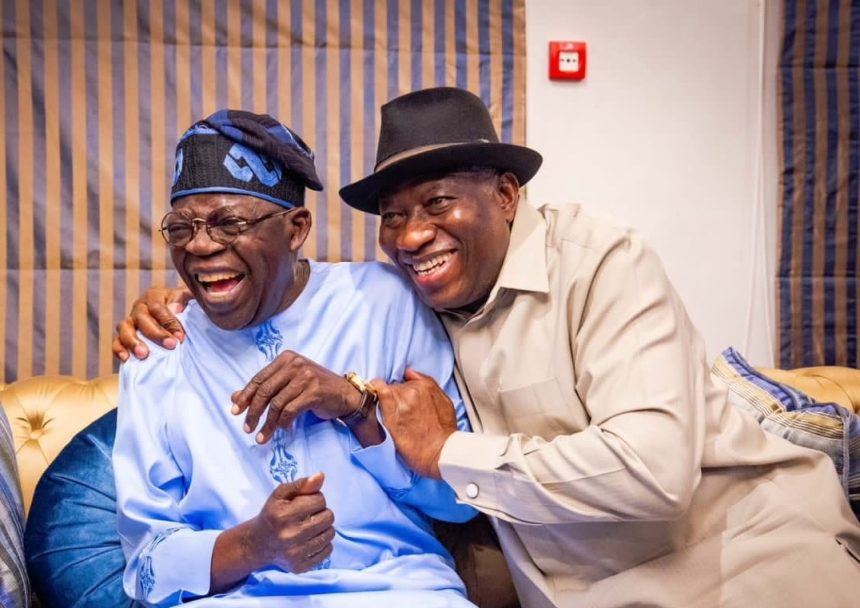
Speculation about a Jonathan comeback has stirred fresh debates about his legacy. While many still regard him as a peaceful and humble statesman, others remember a presidency marred by indecision, insecurity, and internal disorganisation. Even if Jonathan decides to contest, the Nigeria of today is not the same one that ushered him into power in 2011.
EDITOR’S PICK
- Tinubu Approves Tenure Extension for Surveyor-General to 2026
- ‘If Tinubu Fails, His Successor Will Struggle’ – Shehu Sani
- Princess Surah Animashaun Empowers Epe Pupils with Thousands of Notebooks
Tinubu, on the other hand, has proven to be one of Nigeria’s most strategic political minds. His grasp of grassroots politics, combined with his ability to build alliances across party lines, has consolidated his influence nationwide. The All Progressives Congress remains firmly under his control, and his political structure stretches across the federation.
Recent defections from the Peoples Democratic Party to the APC have further shifted the balance of power. Several PDP governors and state legislators have crossed over to the ruling party, seeking alignment with the federal government and greater access to national development initiatives. These defections have significantly weakened the PDP’s regional hold and deepened its internal divisions.
Beyond politics, Tinubu’s administration has pursued key economic reforms that are beginning to reshape Nigeria’s long term outlook. The removal of fuel subsidies, though initially controversial, has redirected funds toward infrastructure, transportation, and social intervention programmes. His policies to unify the foreign exchange market have also stabilised investor confidence, while new fiscal measures aim to improve revenue generation and reduce waste in public spending.
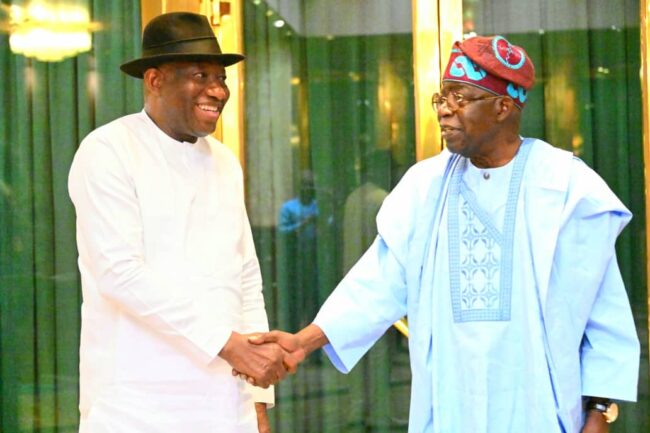
Under his leadership, the federal government has expanded partnerships with both local and international investors to boost sectors such as agriculture, technology, and renewable energy. The focus on domestic production and manufacturing has started to attract industries previously deterred by policy instability.
Meanwhile, the PDP continues to struggle with internal wrangling and a lack of clear direction. Even if Jonathan were to return, he would face the daunting task of rebuilding a fragmented party and restoring public confidence in its capacity to govern. The electorate has become more discerning, and goodwill alone may not be enough to secure victory.
Tinubu’s political consolidation and economic pragmatism have created a perception of steady control and progress. His outreach to traditional rulers, business leaders, and governors reflects a deliberate strategy to strengthen alliances and stabilise governance.
Jonathan’s base remains largely confined to the South South and parts of the South East, regions that alone cannot deliver the presidency. Tinubu, in contrast, enjoys wide support from the South West, growing acceptance in the North, and an increasingly cooperative Middle Belt.
The political reality is clear: Tinubu holds the advantage. His policies are reshaping Nigeria’s economy and reinforcing his image as a reformer capable of long term transformation. For Jonathan, the path to Aso Rock looks uncertain. The luck that once defined his rise may no longer be enough in an era ruled by structure, strategy, and results.