- FG Unveils New Agricultural Reforms to End Hunger, Boost Food Production
- President Tinubu’s directive to modernise agricultural production remains central to the reforms – Kyari
- Abdullahi emphasised that the drive toward food self-sufficiency will be anchored on climate-smart and inclusive reforms
The Federal Government has unveiled a series of agricultural reforms aimed at ending hunger, increasing food production, and reducing post-harvest losses, estimated at over $10 billion annually.
Eko Hot Blog reports that the initiative forms part of President Bola Tinubu’s Renewed Hope Agenda for food security and national prosperity.
EDITOR’S PICK
- Senate To Enact Stiffer Penalties For Artificial Fruit Ripening With Chemicals
- Augustine University Holds 2025/2026 Students’ Orientation Programme
- Akinloye Reaffirms Grassroots Development Commitment as Eredo LCDA Hosts 2026 Budget Forum
Announcing the reforms through a joint statement, the Minister of Agriculture and Food Security, Senator Abubakar Kyari, and the Minister of State, Senator Sabi Abdullahi, said agriculture remains the backbone of Nigeria’s economy and a key driver of national renewal.
“Agriculture is the largest employer of labour in Nigeria and contributes more than a quarter of our Gross Domestic Product. Beyond these figures lies a deeper truth: agriculture is the measure of our nation’s resilience and the foundation of our collective renewal,” Kyari said.
The government’s reforms are designed to end hunger, ensure food sufficiency, and drastically reduce post-harvest losses that drain the nation’s agricultural value chain. Kyari explained that a connected post-harvest system will cut losses valued at over $10 billion annually while improving food quality, stabilising prices, and raising farmers’ incomes nationwide.
“As we deepen mechanisation, expand irrigation, and strengthen our storage systems, we are laying the foundation to end hunger and make food abundance a reality for every Nigerian household,” he added.
President Tinubu’s directive to modernise agricultural production remains central to the reforms. “Our farmers must transition from hoes and cutlasses to tractors and harvesters. Food sufficiency is the first currency of national stability,” Kyari said.
Key policies and programmes already in progress include the National Agricultural Growth Scheme Agro-Pocket, the Renewed Hope Agricultural Mechanisation Programme, and the Nigeria Postharvest Systems Transformation Programme.
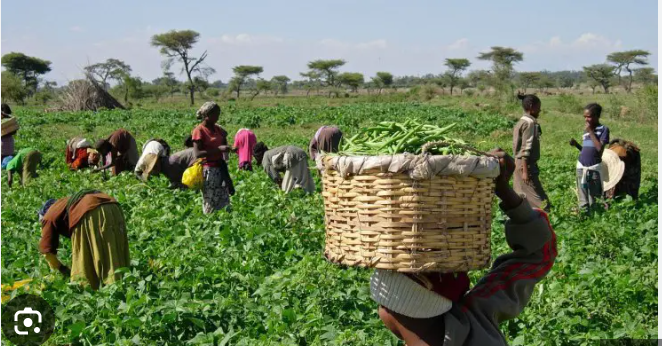
Kyari highlighted a milestone achieved in October with the introduction of rainfed wheat cultivation in Kuru, Plateau State, an innovation by the Lake Chad Research Institute that allows wheat farming beyond irrigated zones. Rainfed varieties are now viable across the highlands of Plateau, Taraba, and Cross River states, marking a step toward year-round wheat production and self-sufficiency.
On post-harvest management, the NiPHaST programme aims to reduce food losses, improve quality, and stabilise prices. The programme integrates farmers, cooperatives, and strategic reserves nationwide. Operations at National Strategic Grain Reserve Silos in Zamfara, Katsina, Nasarawa, Adamawa, Niger, Osun, Edo, and Kwara states are also being enhanced to support emergency interventions and price stability.
In terms of financing, President Tinubu has approved the recapitalisation of the Bank of Agriculture with N1.5 trillion and a N250 billion financing window for smallholder farmers. The Renewed Hope National Agricultural Mechanisation Programme, launched in partnership with Heifer Nigeria, provides affordable access to mechanisation services nationwide.
Kyari confirmed the National Agricultural Development Fund is now fully operational to expand agribusiness financing. Investments in rural infrastructure, including feeder roads, mini-dams, solar-powered boreholes, and market access facilities, are also underway to strengthen rural livelihoods.
Minister Abdullahi emphasised that the drive toward food self-sufficiency will be anchored on climate-smart and inclusive reforms, optimising production of major crops such as maize, wheat, sorghum, millet, soybean, cassava, yam, and cowpeas.
He noted the government is prioritising climate-resilient crops, integrated soil-crop management, and disease and pest control, alongside initiatives like the Dry Season Initiative for 500,000 hectares of year-round farming, the Every Home a Garden Initiative, and the Nigerian Farmers’ Soil Health Scheme.
“These reforms aim to reduce import dependence, strengthen market confidence, and revive agribusiness to position Nigeria as a leading food supplier in West Africa,” Abdullahi said.
For decades, agriculture has remained vital to the Nigerian economy, employing millions and sustaining rural communities. Yet challenges such as low mechanisation, poor infrastructure, and post-harvest losses have limited the sector’s potential. The government’s new reforms aim to address these gaps and chart a path toward food sufficiency and national prosperity.