Standard and Poor’s (S&P) has revised Nigeria’s credit outlook from stable to positive, signalling what the global rating agency describes as early but measurable improvements in the country’s economic and policy environment.
The upgrade, announced on November 14, comes with an affirmation of Nigeria’s long- and short-term sovereign credit ratings at B-/B, alongside national scale ratings of ngBBB+/ngA-2.
EDITOR’S PICKS
In its statement, S&P said the positive outlook “reflects improving external, economic, fiscal, and monetary results,” noting that recent reforms have begun to place key indicators “onto a more positive trajectory.” The agency referenced steps taken by authorities to improve growth prospects and macroeconomic resilience, even as structural weaknesses persist.
“Despite low GDP per capita, a weak, albeit improving, fiscal revenue base, high debt servicing costs as a percentage of revenues, and challenges in compiling national statistics, we think authorities are taking steps to improve the economy’s growth prospects, and macroeconomic resilience,” S&P said.
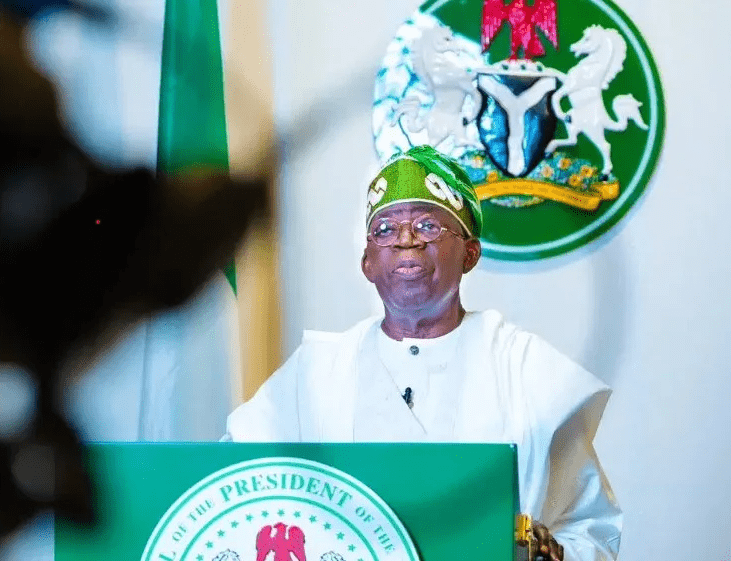
The agency linked its revised outlook to what it described as “broad-based structural indicators… beginning to improve” following reforms initiated in mid-2023 under President Bola Tinubu’s administration. It cited policies ranging from exchange rate liberalisation and fiscal consolidation to higher oil production and the operationalisation of the Dangote Refinery.
According to S&P, expected growth of 3.7 percent between 2025 and 2028, declining inflation, improved tax administration by 2026, stronger reserves, and rising oil output should bolster both fiscal and external positions. However, the agency cautioned that risks remain, including volatile portfolio flows due to large foreign holdings of domestic debt, geopolitical uncertainties, and the possibility of reduced reform momentum.
Reacting to the development, Wale Edun, minister of finance and coordinating minister of the economy, said the upgrade shows that Nigeria’s “difficult but necessary reforms” are beginning to gain traction.
“I am delighted to receive the news that S&P Global Ratings has revised Nigeria’s outlook to Positive from Stable while affirming our ‘B-/B’ rating,” Edun said. “This development is yet another clear signal that the difficult but necessary reforms we are undertaking are gaining traction and earning strong recognition from respected global institutions.”
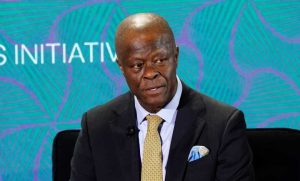
Edun added that with Moody’s and Fitch having also issued improved assessments in 2025, “all three of the world’s major ratings agencies now acknowledge the significant progress we are making.” He said the alignment reflects renewed confidence in Nigeria’s fiscal, monetary, and structural reforms, and in “the renewed strength and stability of our economy.”
The minister highlighted S&P’s observation that the reform programme is producing tangible results in growth, external buffers, and monetary policy direction. He emphasised that while challenges remain, government intends to “stay the course” in implementing coordinated policies that restore stability, attract investment, and create opportunities.
In a separate reaction, Central Bank of Nigeria (CBN) governor Olayemi Cardoso described the outlook revision as an affirmation of recent efforts to stabilise the economy, noting that the bank has become “a beacon of hope” amid ongoing reforms.
For Nigeria, the positive outlook does not amount to a rating upgrade yet, but it signals that one could follow within 12 months if economic and fiscal gains continue to exceed expectations. Conversely, S&P warned that the outlook could revert to stable if the reform programme falters, if debt servicing pressures rise, or if domestic markets become less willing to absorb government borrowing.
But if Nigeria maintains the current reform momentum, the immediate economic implications could include stronger capital inflows, a steadier exchange rate, and improved fiscal space. Over time, lower sovereign risk could also reduce the cost of borrowing for the private sector, stimulating investment and job creation.
Yet the outlook remains conditional. The reforms S&P praises, especially FX liberalisation and fiscal tightening, also carry short-term pain. For businesses and households, the full economic benefit will only materialise if government follows through with reforms that raise revenue, broaden the tax base, expand productive capacity, and tackle inflation at its structural roots.
FURTHER READING
S&P’s upgrade, then, is not a verdict on Nigeria’s economic performance but a vote of confidence in its potential — one that hinges on whether the country can sustain discipline long enough for the reforms to deliver durable, broad-based growth.
Philip Ibitoye is a Special Correspondent with EKO HOT BLOG. Click here to find daily analysis and critical insight on trending issues in Lagos and other parts of Nigeria.
Click here to watch the video of the week below: