- Strict Entry Requirements Creating a Dangerous Rise in Out-of-School Teens – Alausa
- Mbah cautioned that excluding Mathematics from admission requirements may discourage students from taking the subject seriously
- Over two million candidates sit for the Unified Tertiary Matriculation Examination each year
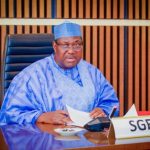
The Minister of Education, Dr Olatunji Alausa, has expressed concern over what he described as rigid admission requirements into tertiary institutions, warning that the trend is contributing to a growing population of out-of-school adolescents, with serious implications for national stability.
Eko Hot Blog reports that Alausa noted that despite the high demand for tertiary education, the limited carrying capacity of universities and strict admission policies continue to shut out a large number of qualified candidates.
EDITOR’S PICK
- Fintiri Rejects PDP Decision To Expel Wike
- LASUBEB Concludes Two-Day Advocacy Programme on Hygiene and Sexual Abuse Prevention for Girl Children
- PDP Delegates Confirm Damagum as Substantive National Chairman
According to him, more than two million candidates sit for the Unified Tertiary Matriculation Examination each year, yet only about 700,000 secure admission.
He said the frustration faced by many young Nigerians, who repeatedly fail to gain entry into institutions of their choice, has pushed thousands into roaming the streets, a situation he described as dangerous for the country’s future.
The minister explained that the challenge informed the recent revision of national entry guidelines, designed to remove unnecessary barriers while retaining academic standards. The new framework applies to universities, polytechnics, colleges of education and Innovation Enterprise Academies nationwide.

Under the revised policy, Mathematics is no longer a compulsory requirement for arts-related programmes, while English is not mandatory for science-related courses. The number of required credit passes for entry into colleges of education and polytechnics has also been reduced from five to four.
Alausa said the reforms aim to modernise the education system and align with global best practices, ensuring that institutions admit candidates based on programme relevance rather than blanket subject requirements. He stressed, however, that all students must still register for both English and Mathematics in their O-levels.
But the policy has drawn criticism from the Nigerian Mathematical Society, which urged the Federal Government and regulators to reconsider the removal of Mathematics as a compulsory entry requirement.
The society’s president, Prof Godwin Mbah, warned that the policy could damage the nation’s cognitive development, educational standards and long-term economic growth. He described Mathematics as a universal language of reasoning and a foundation for intellectual development across all fields.
Mbah cautioned that excluding Mathematics from admission requirements may discourage students from taking the subject seriously, leading to poor performance, increased fear of numeracy, disrespect for teachers and early neglect of numeracy skills. Such trends, he said, could weaken analytical abilities and distort the purpose of foundational education.
He further noted potential national consequences, including reduced employability in a technology-driven economy, inconsistent education policies and widening inequality between numerate and non-numerate citizens.
The society called on policymakers to retain Mathematics as a compulsory requirement across all disciplines, insisting that doing so is essential to national development and educational integrity.