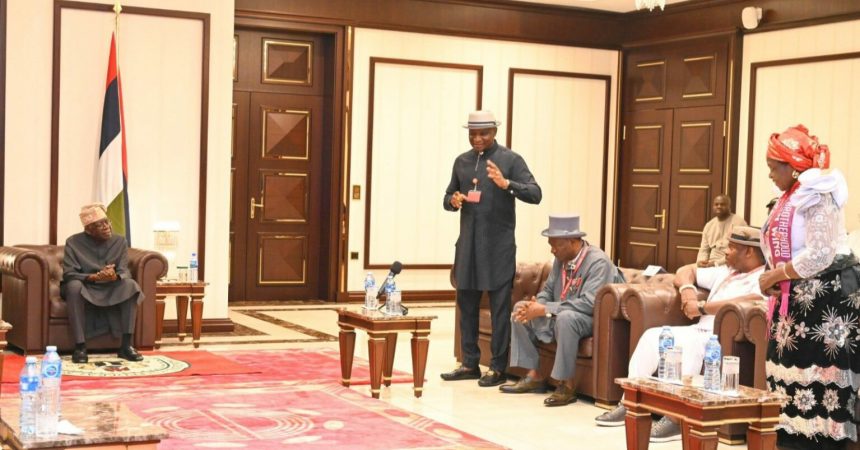
The decision by leaders of the Ogbia Kingdom in Bayelsa and Rivers states on Thursday to publicly urge President Bola Tinubu to seek re-election in 2027, pledging their “full support” for his second term, is more than a routine show of political loyalty to an incumbent.
Read within the broader context of Nigeria’s evolving pre-2027 alignments, it stands as the clearest indication yet that former President Goodluck Jonathan is unlikely to return to the presidential ballot.
EDITOR’S PICKS
Ogbia is not just another Niger Delta community; it is Jonathan’s home. For leaders from such a community to formally back Tinubu — in the open, at the Presidential Villa, and in expansive language praising his leadership and inviting him to contest again — signals a settled political calculation. In Nigerian politics, where ambiguity is often preserved to keep options open, such a public endorsement would be unthinkable if there were any realistic expectation that Jonathan was preparing to challenge the incumbent.
Community leaders are usually the last to defect from a native son with presidential ambitions. Their backing of Tinubu suggests not only an acceptance of political reality, but also foreknowledge that Jonathan will not be on the ballot. The emphasis placed on reciprocity — “you have done us well, and we are behind you” — points to a transactional clarity: Ogbia’s political future, at least at the presidential level, is being negotiated with Tinubu, not reserved for a Jonathan comeback.
This local signal aligns neatly with the national realities confronting any hypothetical Jonathan bid. The Peoples Democratic Party (PDP), which would have been the most natural platform for his return, is in a prolonged state of fragmentation. Leadership crises, unresolved factional disputes and the absence of a coherent national direction have left the party weakened and internally distrustful. For a former president whose political capital rests heavily on consensus and moral authority, returning through a party struggling to hold itself together would carry high political risk and limited guarantees.
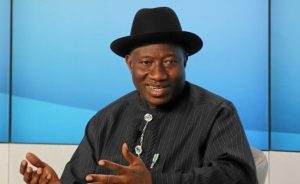
Even outside the PDP, the alternatives are scarcely more accommodating. The African Democratic Congress (ADC), often cited in speculative conversations as a possible coalition vehicle, is already shaped by entrenched interests. Former Vice President Atiku Abubakar’s influence looms large, while other power blocs aligned with figures like former Anambra State Governor, Peter Obi, dominate the party. There is little evidence that such a platform would be willing, or structurally able, to clear the field for Jonathan, let alone offer him the uncontested moral centre he enjoyed in 2011.
Crucially, the political posture of Jonathan’s own household reinforces this reading. Former First Lady Patience Jonathan has already publicly ruled out her husband’s return to Aso Rock and openly endorsed Tinubu’s second-term ambition, framing her position in both personal and political terms. It is difficult to imagine a serious presidential project proceeding in defiance of such an unequivocal position from within the immediate family.
Taken together, these strands form a coherent picture. Jonathan’s community leaders are aligning with Tinubu; his most viable former party is diminished; alternative platforms are crowded and factionalised; and his wife has already chosen sides. The Ogbia endorsement of Tinubu, therefore, is not an isolated act of courtesy, it is a political punctuation mark. It effectively closes the chapter on months of speculation and suggests that, whatever nostalgia or arguments may be advanced in public, Jonathan himself has moved on.
FURTHER READING
In that sense, the visit to the Presidential Villa tells us less about Tinubu’s ambitions, which are already evident, and far more about Jonathan’s intentions.
Philip Ibitoye is a Special Correspondent with EKO HOT BLOG. Click here to find daily analysis and critical insight on trending issues in Lagos and other parts of Nigeria.
Click here to watch the video of the week below: